Traumatic Brain Injury and All-Cause and Dementia-Related Mortality in the Framingham Heart Study
Rebecca Burton, Shruti Durape, Eden Price, Kurtis Chien-Young, Prajakta Joshi, Eukyung Yhang, Yulin Liu, Sherral Devine, Ashita S. Gurnani, Ting Fang Alvin Ang, Douglas I. Katz, Michael L. Alosco, Yorghos Tripodis, Rhoda Au, Kristen Dams-O’Connor, Jesse Mez

TL;DR
Traumatic brain injuries, often caused by falls in older adults, are linked to higher long-term mortality rates, especially from dementia.
Contribution
This study shows that traumatic brain injury is associated with increased dementia-related mortality over decades.
Findings
TBI incidence was 7.02 per 1000 person-years in the original cohort and 9.11 in the offspring cohort.
TBI was associated with increased all-cause mortality (HR 1.15) and dementia-related mortality (HR 1.60 for mild TBI).
Falls were the most common cause of TBI in both cohorts, especially in older age.
Abstract
What is the incidence of traumatic brain injury (TBI), and is TBI associated with long-term all-cause and dementia-related mortality? In this cohort study of 10 333 participants in the Framingham Heart Study followed from 1948 to 2022, TBI most often occurred in late life due to falls, with an incidence of 7.02 (original cohort) and 9.11 (offspring cohort) TBI events per 1000 person-years. TBI was associated with increased all-cause and dementia-related mortality but not with non–dementia-related mortality. The findings of this study suggest that preventing falls to reduce TBI could have important implications for dementia and mortality. This cohort study uses data from the Framingham Heart Study original and offspring cohorts followed from 1948 to 2022 to assess whether traumatic brain injury (TBI) incidence is associated with long-term all-cause and dementia-related mortality.…
Genes, proteins, chemicals, diseases, species, mutations and cell lines named across the full text — each resolved to its canonical identifier and authoritative record.
Click any figure to enlarge with its caption.
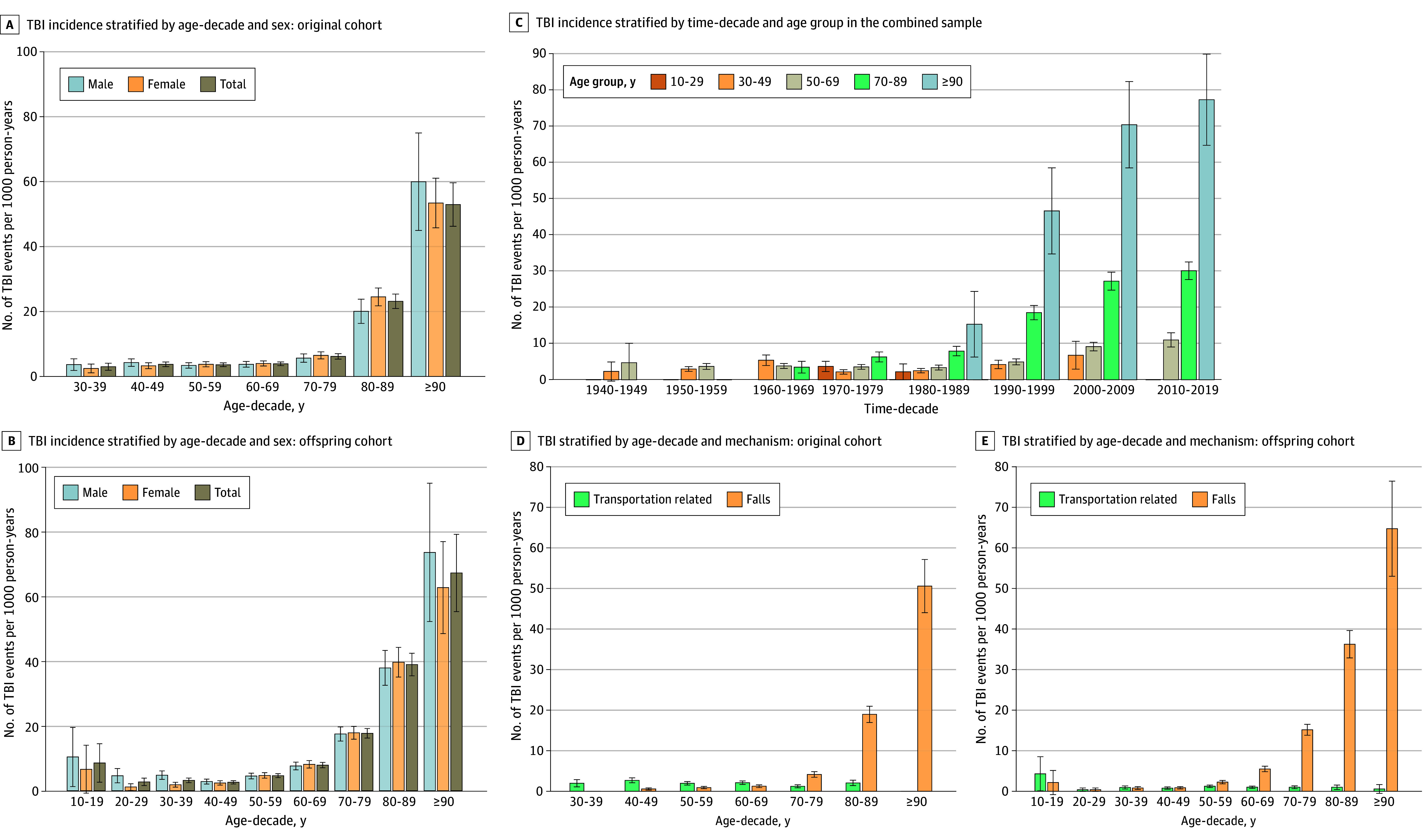 Figure 1
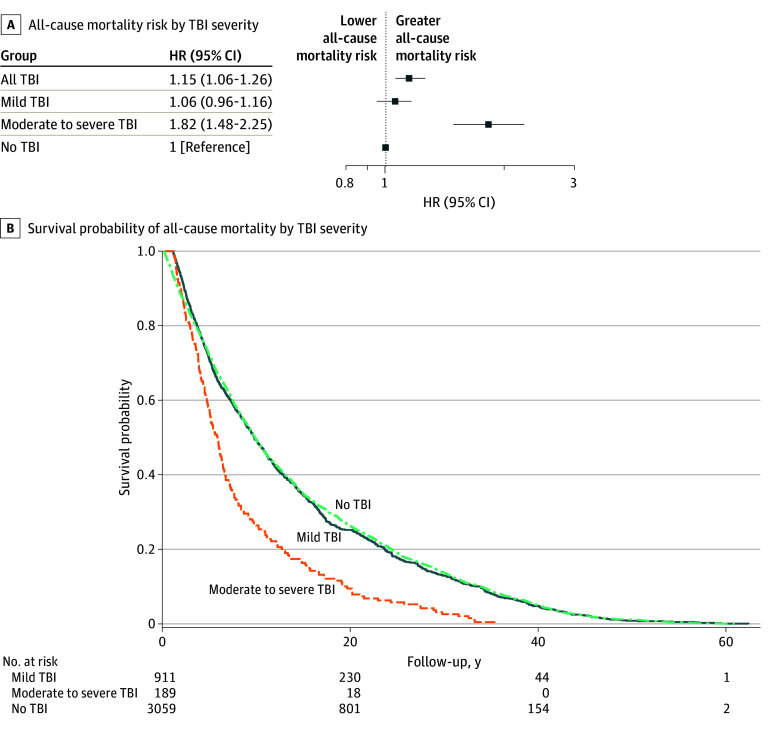 Figure 2
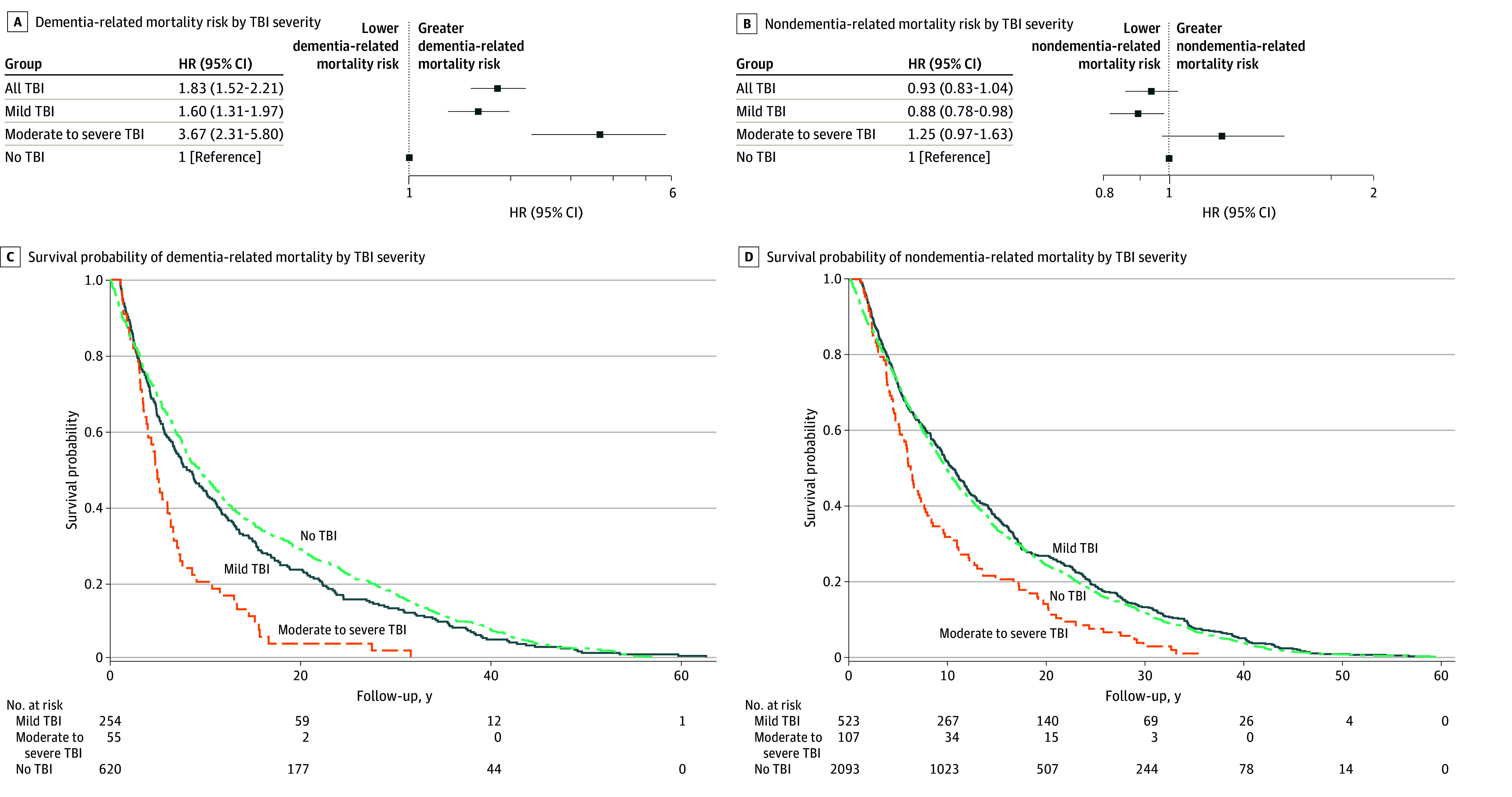 Figure 3
Peer Reviews
No public reviews on file for this paper yet. If you reviewed it on a platform where reviews are public (OpenReview, ICLR, NeurIPS, ICML), you can paste yours below so the community can read it here.
Videos
No videos yet. Explain this paper in a talk, walkthrough, or lecture? Add one.
Taxonomy
TopicsTraumatic Brain Injury Research · Traumatic Brain Injury and Neurovascular Disturbances · Trauma and Emergency Care Studies