Detection of Δ9-Tetrahydrocannabinol Impairment Using Resting-State Functional Near-Infrared Spectroscopy: A Randomized Clinical Trial
Moshe Berchansky, A. Eden Evins, Bryn Evohr, Zachary Himmelsbach, Gladys N. Pachas, Keerthana Deepti Karunakaran, Bracha Laufer Goldshtein, Nisan Ozana, Jodi M. Gilman

TL;DR
A portable brain imaging tool called fNIRS can detect cannabis impairment more accurately and quickly than traditional roadside tests.
Contribution
This study shows that resting-state fNIRS outperforms field sobriety tests in detecting THC impairment with higher accuracy and fewer false positives.
Findings
Resting-state fNIRS achieved an ROC-AUC of 0.87 and accuracy of 0.90 in detecting THC impairment.
fNIRS had a significantly lower false-positive rate (0.05) compared to field sobriety tests (0.34).
fNIRS performed better in precision, accuracy, and ROC-AUC than traditional behavioral assessments.
Abstract
This crossover trial compares the accuracy of resting-state functional near-infrared spectroscopy vs standard field sobriety testing to detect ∆9-tetrahydrocannabinol (THC) impairment among adults who use cannabis. Can a portable neuroimaging method (functional near-infrared spectroscopy [fNIRS]) improve detection of impairment due to ∆9-tetrahydrocannabinol (THC)–induced intoxication over current benchmark behavioral assessments? In this crossover trial of 183 adults who received doses of THC and/or placebo, 6-minute fNIRS measurements of resting prefrontal cortex activity identified THC impairment with superior accuracy compared with 45-minute expanded field sobriety tests and with comparable accuracy to fNIRS measurements conducted during attention task performance. These findings suggest that portable fNIRS neuroimaging provides more objective, accurate, and rapid detection of…
Genes, proteins, chemicals, diseases, species, mutations and cell lines named across the full text — each resolved to its canonical identifier and authoritative record.
Click any figure to enlarge with its caption.
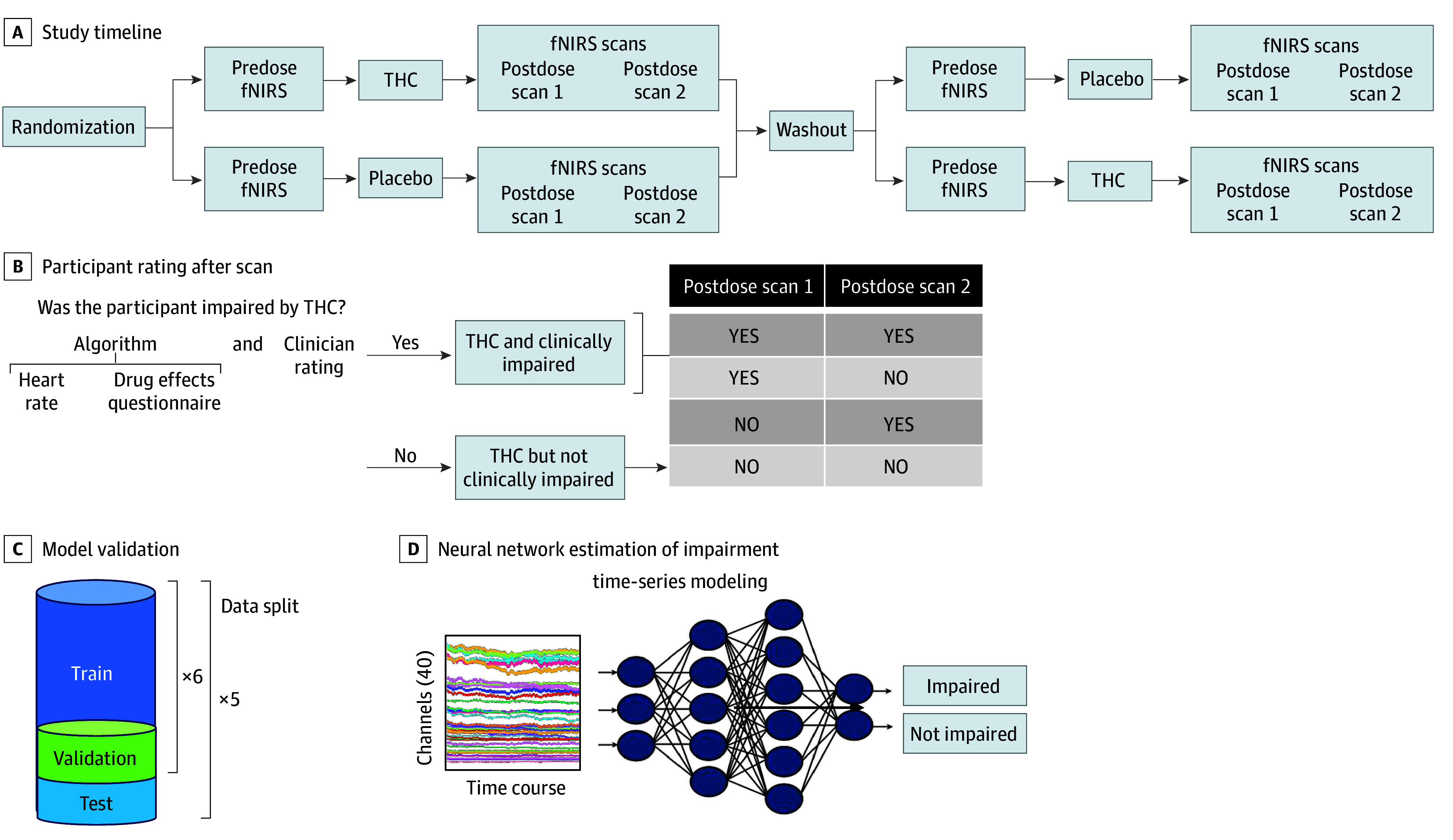 Figure 1
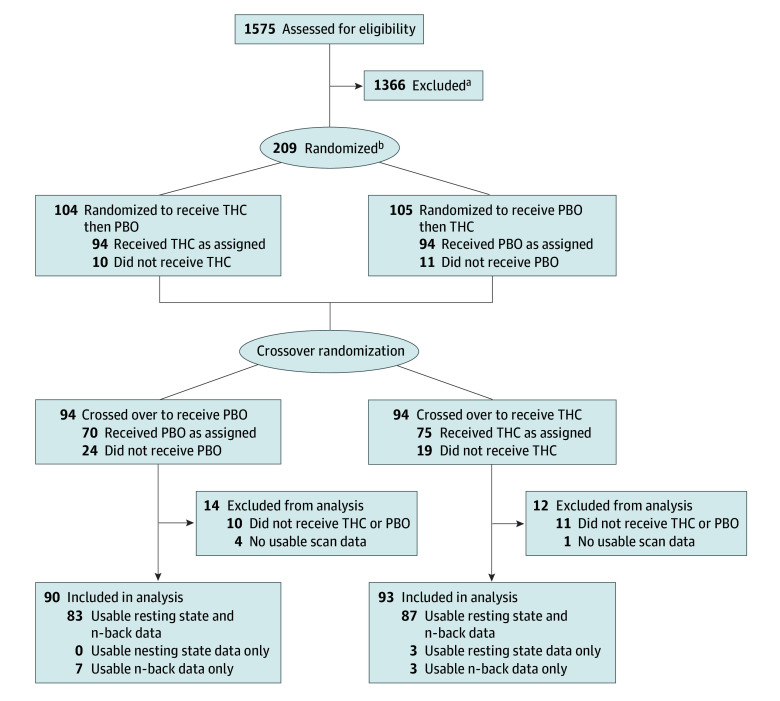 Figure 2
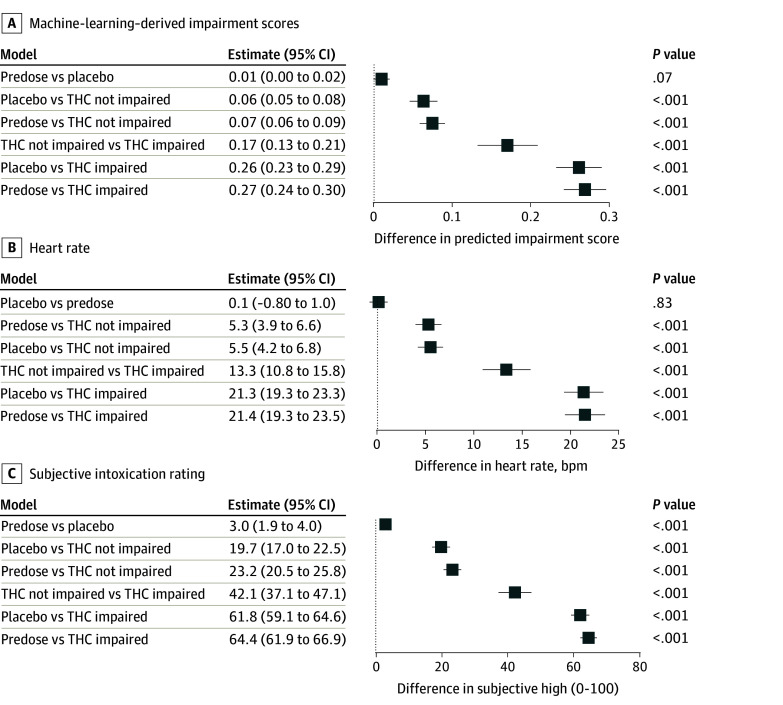 Figure 3
Peer Reviews
No public reviews on file for this paper yet. If you reviewed it on a platform where reviews are public (OpenReview, ICLR, NeurIPS, ICML), you can paste yours below so the community can read it here.
Videos
No videos yet. Explain this paper in a talk, walkthrough, or lecture? Add one.
Taxonomy
TopicsOptical Imaging and Spectroscopy Techniques · Cannabis and Cannabinoid Research · Opioid Use Disorder Treatment