Knockdown of armc3 Impairs Motile Cilia Function in Schmidtea mediterranea
Chayanika Gogoi, Rachel Pitt, Kate Mazur, Ramyasri Naraharisetti, Kristen Johnson

TL;DR
This study shows that reducing armc3 in Schmidtea mediterranea impairs cilia structure and movement, which could help understand human ciliopathies.
Contribution
The novel finding is that ARMC3 is crucial for motile cilia function in Schmidtea mediterranea.
Findings
Knockdown of armc3 reduced cilia length by 48.9% and gliding speed by 63.7%.
Abnormal cilia distribution was observed in the anterior region of knockdown planaria.
Abstract
Cilia are microtubule-based structures lining epithelial surfaces of many organs and play an essential role in diverse metabolic and developmental processes. Structural or functional disruptions of cilia can lead to ciliopathies affecting multiple organs. Knocking down armc3 in Schmidtea mediterranea revealed reduction in cilia length of 48.9% compared to the control, accompanied by 63.7% reduction in gliding speed. Additionally, knockdown planaria displayed abnormal cilia distribution, particularly in the anterior region. These findings suggest that ARMC3 is essential for maintaining proper motile cilia structure and function and highlight its potential relevance for understanding ciliopathies in humans.
Genes, proteins, chemicals, diseases, species, mutations and cell lines named across the full text — each resolved to its canonical identifier and authoritative record.
Click any figure to enlarge with its caption.
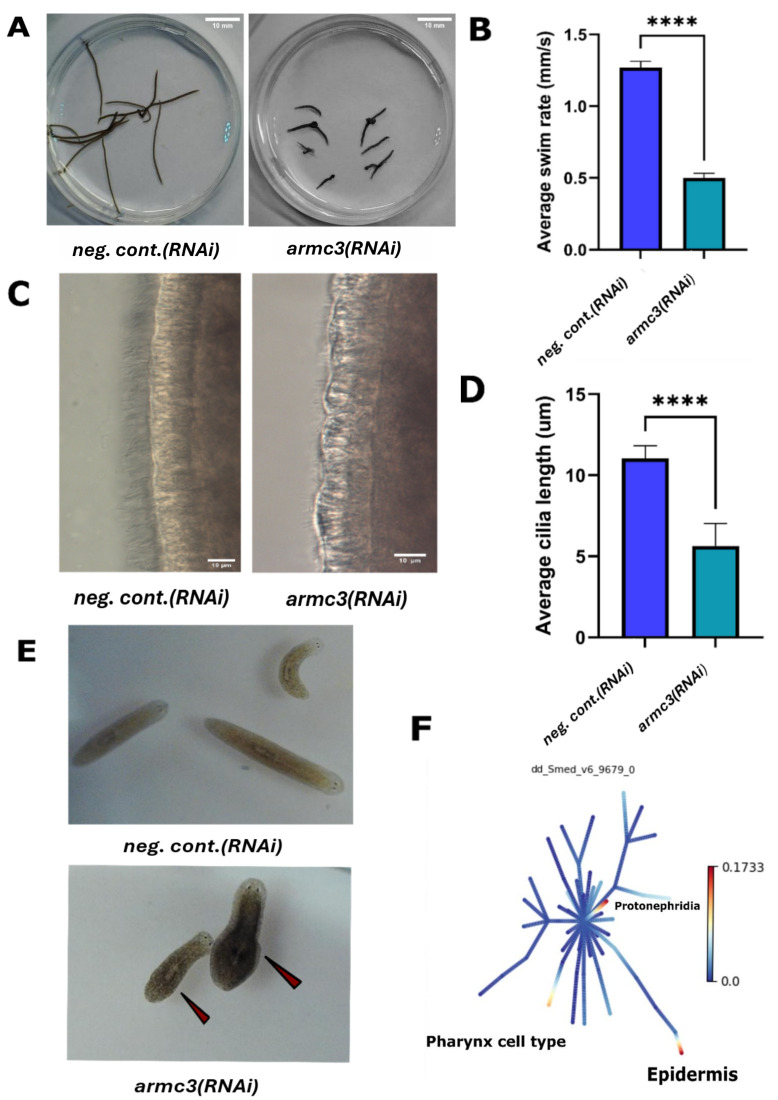 Figure 1
Peer Reviews
No public reviews on file for this paper yet. If you reviewed it on a platform where reviews are public (OpenReview, ICLR, NeurIPS, ICML), you can paste yours below so the community can read it here.
Videos
No videos yet. Explain this paper in a talk, walkthrough, or lecture? Add one.
Taxonomy
TopicsGenetic and Kidney Cyst Diseases · Microtubule and mitosis dynamics · Cerebrospinal fluid and hydrocephalus