The forbidden doubling: exploring rare spermatocyte polyploidy in mammals
Sergey Matveevsky, Oxana Kolomiets, Tatiana Grishaeva, Aleksey Bogdanov, Valentina Tambovtseva, Irina Bakloushinskaya

TL;DR
This study explores rare cases of polyploid spermatocytes in subterranean rodents and identifies meiotic anomalies that may prevent their progression.
Contribution
The study reveals novel meiotic features and potential checkpoint mechanisms in rare polyploid spermatocytes of subterranean rodents.
Findings
Tetraploid spermatocytes show symmetric and asymmetric chromosome quadrivalents with partner-switching.
Altered recombination patterns and chromatin inactivation are observed in these spermatocytes.
Shelterin complexes and LINC connections are present at chromosome ends, similar to normal spermatocytes.
Abstract
We first studied several rare cases of over-diploid spermatocyte emergence using advanced immunocytochemical methods and a cross-species approach in subterranean rodents Ellobius tancrei (Blasius, 1884), E. alaicus Vorontsov et al., 1969, E. talpinus (Pallas, 1770), and Nannospalax leucodon (Nordmann, 1840) (all belong to the order Rodentia). The tetraploid spermatocytes exhibited specific features during meiotic prophase I, including symmetric and asymmetric chromosome quadrivalents with partner-switching, extended asynapsis, altered recombination patterns, and variable chromatin inactivation. These anomalies suggest that meiotic checkpoints, which are potentially triggered by failed synapsis or incomplete sex chromosome silencing, may act to prevent progression of polyploid spermatocytes. However, the quadrivalents assembled shelterin complexes at chromosome ends, as observed in E.…
Genes, proteins, chemicals, diseases, species, mutations and cell lines named across the full text — each resolved to its canonical identifier and authoritative record.
Click any figure to enlarge with its caption.
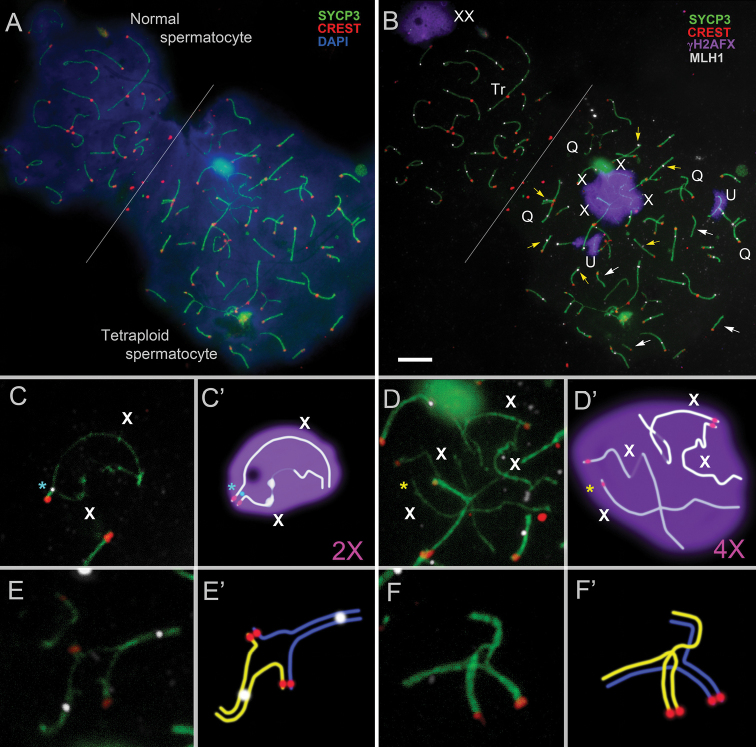 Figure 1
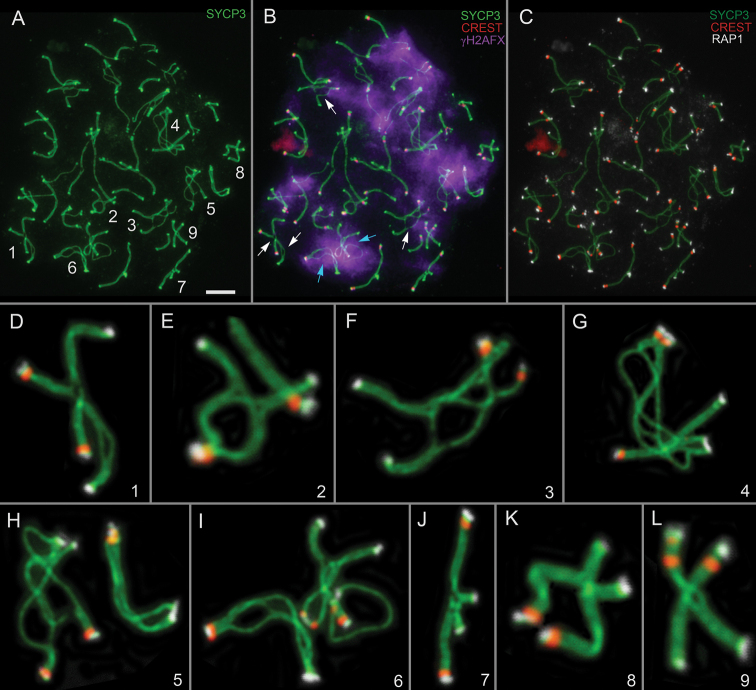 Figure 2
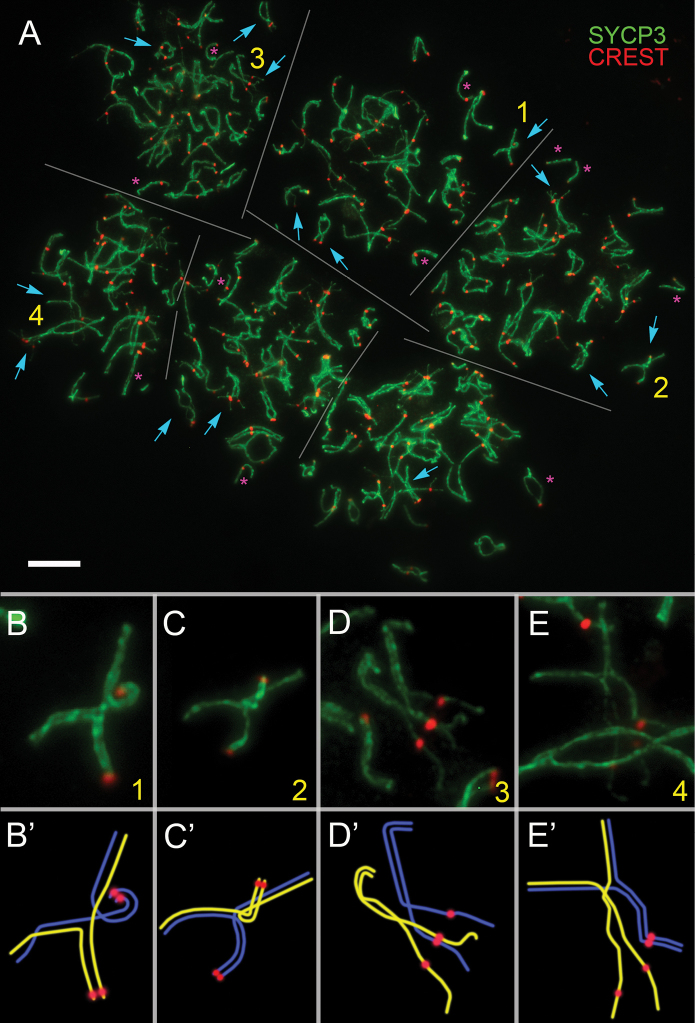 Figure 3
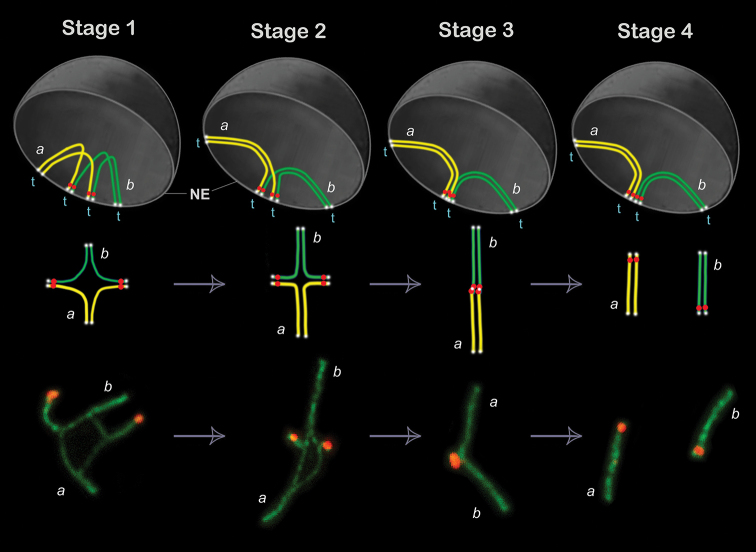 Figure 4
Peer Reviews
No public reviews on file for this paper yet. If you reviewed it on a platform where reviews are public (OpenReview, ICLR, NeurIPS, ICML), you can paste yours below so the community can read it here.
Videos
No videos yet. Explain this paper in a talk, walkthrough, or lecture? Add one.
Taxonomy
TopicsSperm and Testicular Function · Chromosomal and Genetic Variations · Genetic and Clinical Aspects of Sex Determination and Chromosomal Abnormalities