Complete mitochondrial genome of Echinorhynchus gadi (Acanthocephala, Echinorhynchida) and its phylogenetic implications
FeiMing Chen, JinWei Gao, Yu Huang, Hao Wu, Min Xie, ZhenZhen Xiong, JiaYu Wu, Jia Cai, Rong Xu, Xiao Jin, Rui Song, DongSheng Ou

TL;DR
This paper reports the first complete mitochondrial genome of Echinorhynchus gadi, providing insights into its evolution and phylogenetic relationships.
Contribution
The study presents the first complete mitochondrial genome of the genus Echinorhynchus, filling a critical genomic gap.
Findings
The complete mitochondrial genome of Echinorhynchus gadi is 17,696 bp long and contains 39 genes.
Phylogenetic analysis places Echinorhynchus gadi and E. truttae in a well-supported monophyletic clade.
The genome includes tandem repeats and pseudogene fragments, suggesting a tandem duplication and random loss mechanism.
Abstract
The Echinorhynchidae has a long research history, but its mitochondrial genome evolution remains poorly understood, hindering phylogenetic resolution. In this study, we report the first complete mitochondrial genome of the genus Echinorhynchus, obtained from its type species, Echinorhynchus gadi. The circular mitogenome was 17,696 bp in length and contained 39 genes: 12 protein-coding genes (lacking atp8), two ribosomal RNA genes, and 25 transfer RNA genes, including two extra copies of trnW and one extra copy of trnV. Five non-coding regions were identified; the major non-coding region contained tandem repeats and pseudogene fragments, consistent with a tandem duplication and random loss mechanism. Phylogenetic analysis based on the concatenated amino acid sequences of the 12 protein-coding genes placed E. gadi and E. truttae in a well-supported monophyletic clade representing the…
Genes, proteins, chemicals, diseases, species, mutations and cell lines named across the full text — each resolved to its canonical identifier and authoritative record.
Click any figure to enlarge with its caption.
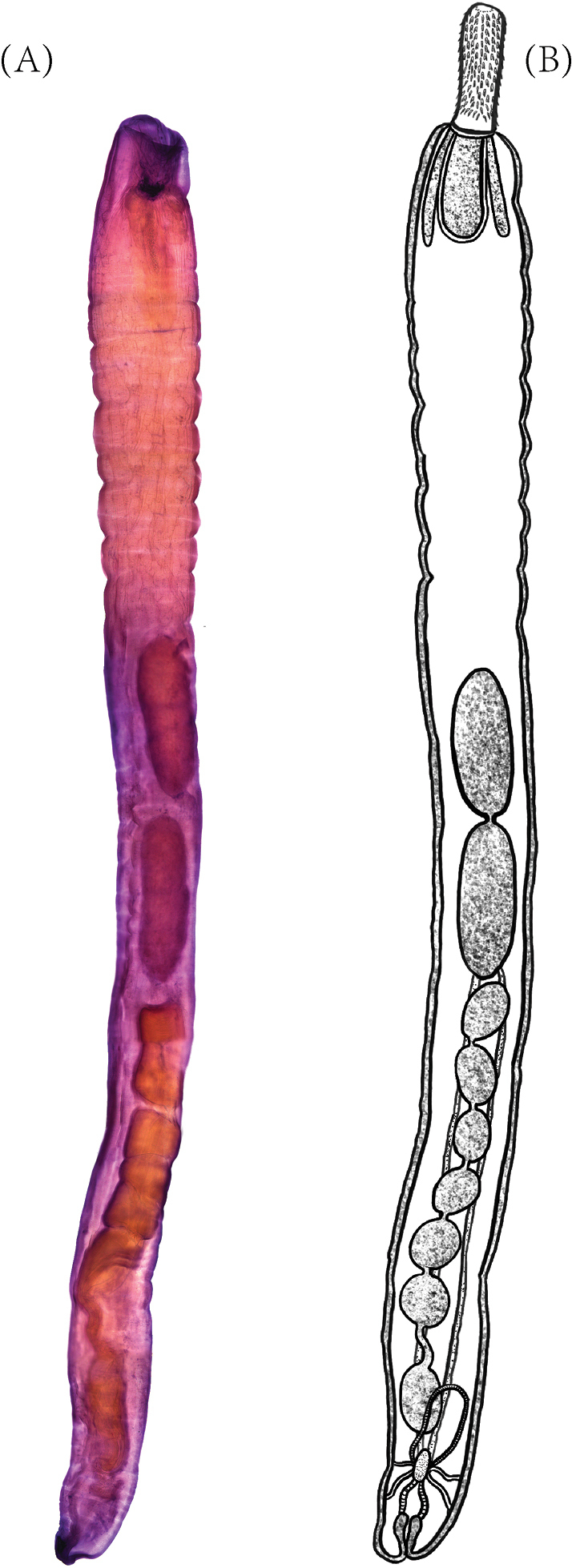 Figure 1
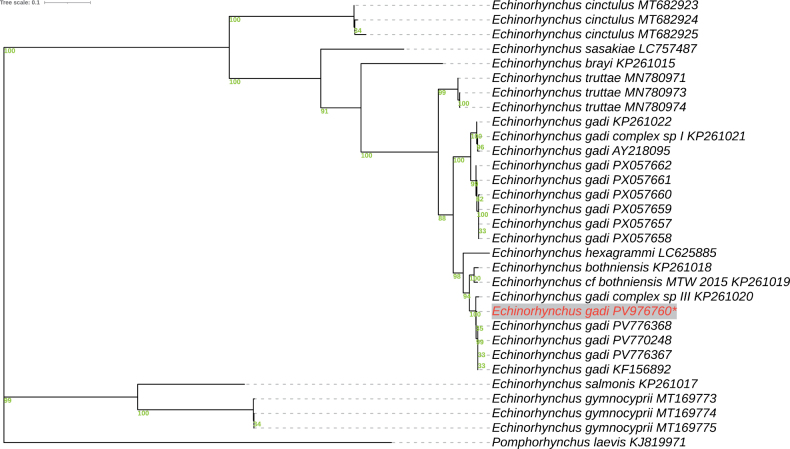 Figure 2
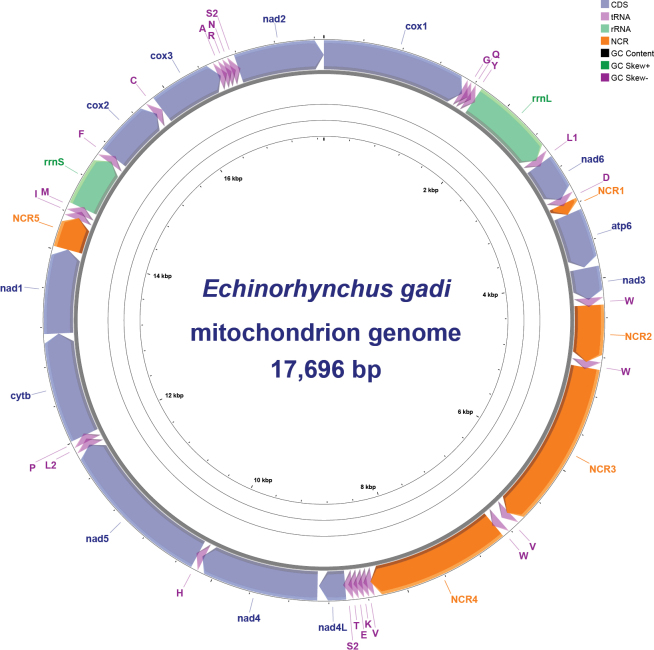 Figure 3
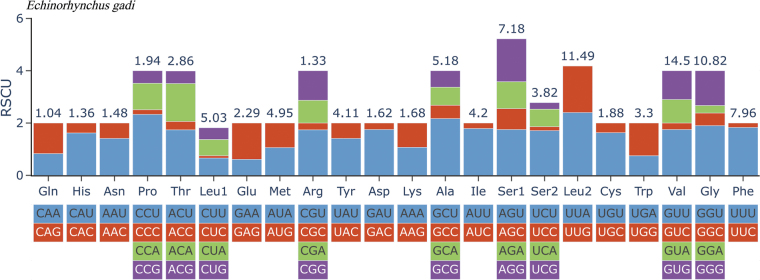 Figure 4
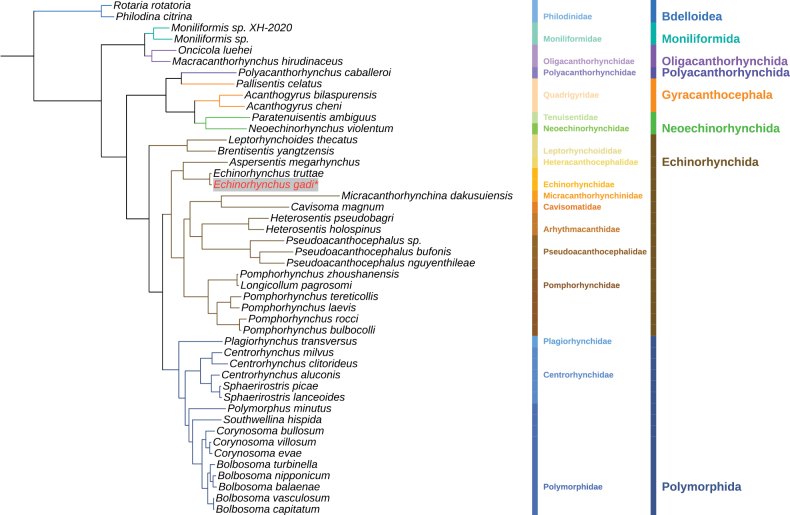 Figure 5
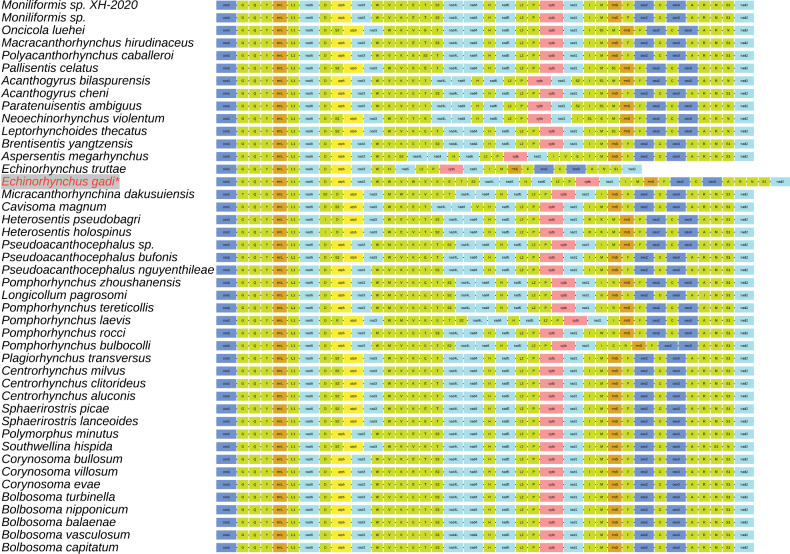 Figure 6
Peer Reviews
No public reviews on file for this paper yet. If you reviewed it on a platform where reviews are public (OpenReview, ICLR, NeurIPS, ICML), you can paste yours below so the community can read it here.
Videos
No videos yet. Explain this paper in a talk, walkthrough, or lecture? Add one.
Taxonomy
TopicsParasite Biology and Host Interactions · Genomics and Phylogenetic Studies · Protist diversity and phylogeny