Polymorphic Ventricular Tachycardia From Purkinje Network Within Deep Intertrabecular Recesses in Left Ventricular Excessive Trabeculation
Tabito Kino, Akihiko Nogami, Yuichi Hanaki, Yuki Komatsu, Kazuhiko Yumoto

TL;DR
A case study shows that Purkinje fibers in deep heart structures can cause dangerous arrhythmias, and ablation can effectively treat them.
Contribution
Demonstrates successful catheter ablation targeting Purkinje fibers in left ventricular excessive trabeculation for treating polymorphic ventricular tachycardia.
Findings
Electroanatomical mapping identified Purkinje and delayed potentials in a deeply recessed trabecular region.
Catheter ablation targeting these signals eliminated inducible polymorphic ventricular tachycardia.
The patient remained free of malignant arrhythmias for 11 years post-procedure.
Abstract
Left ventricular excessive trabeculation (LVET) is associated with malignant ventricular arrhythmias. Polymorphic ventricular tachycardia (PVT) remains particularly challenging, with limited evidence supporting catheter ablation (CA). A 53-year-old woman with LVET presented with drug-refractory PVT triggered by short-coupling ventricular premature contractions. Electroanatomical mapping revealed Purkinje and delayed potentials within the left ventricular septum, localized at the base of a recessed trabecular region. CA targeting these signals successfully eliminated inducible PVT. The patient has remained free from recurrent malignant arrhythmias over 11 years of follow-up. This case highlights the role of the Purkinje fiber network within deep trabeculations in triggering life-threatening arrhythmias. Few reports describe effective CA of PVT in LVET, underscoring the novelty and…
Genes, proteins, chemicals, diseases, species, mutations and cell lines named across the full text — each resolved to its canonical identifier and authoritative record.
Click any figure to enlarge with its caption.
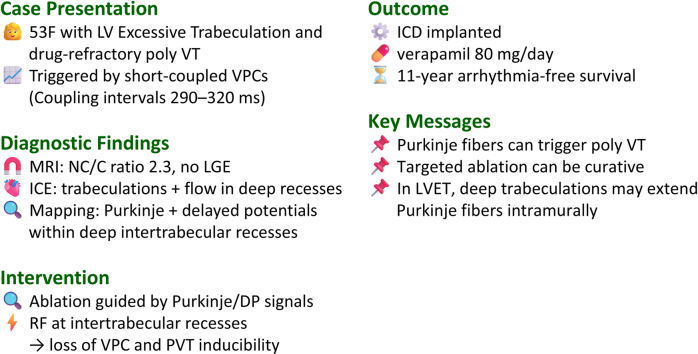 Figure 1
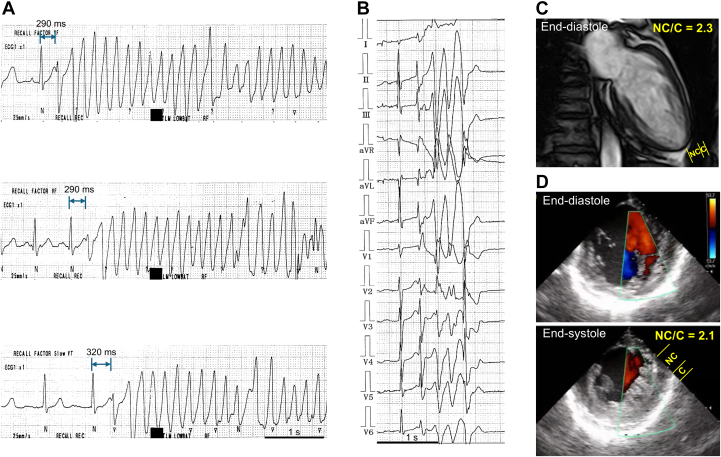 Figure 2
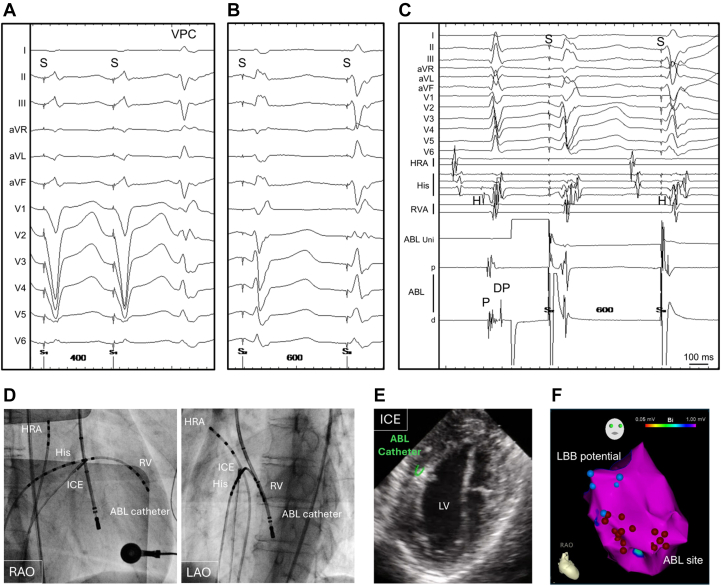 Figure 3
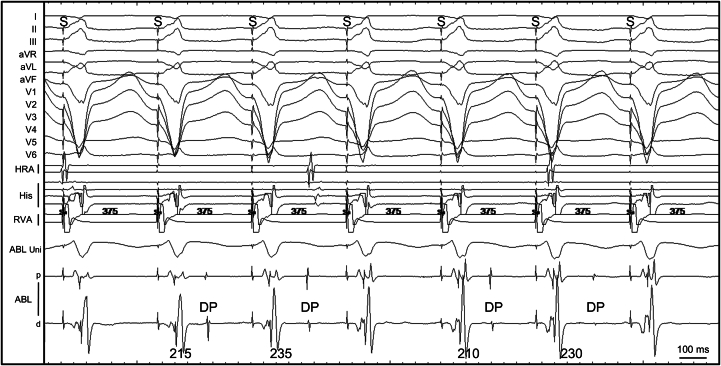 Figure 4
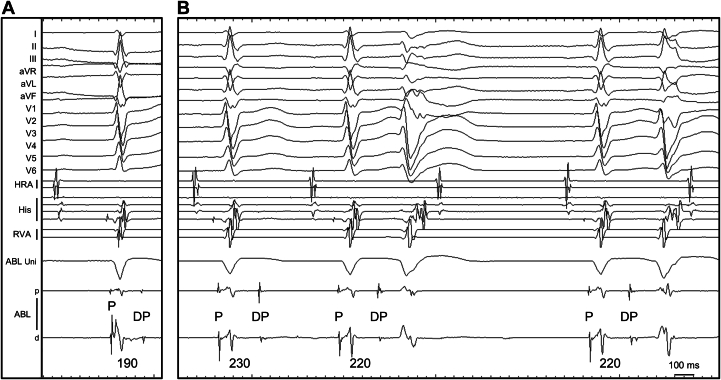 Figure 5
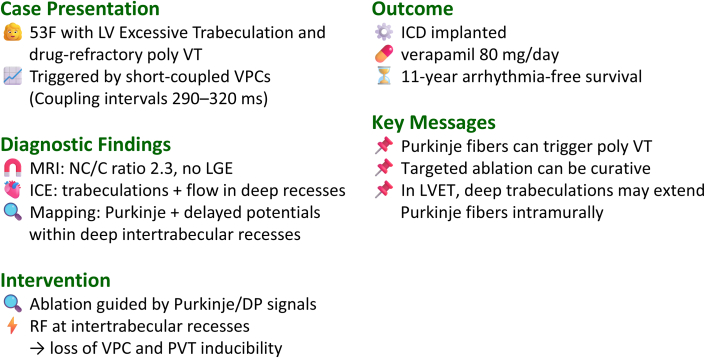 Figure 6
Peer Reviews
No public reviews on file for this paper yet. If you reviewed it on a platform where reviews are public (OpenReview, ICLR, NeurIPS, ICML), you can paste yours below so the community can read it here.
Videos
No videos yet. Explain this paper in a talk, walkthrough, or lecture? Add one.
Taxonomy
TopicsCardiac electrophysiology and arrhythmias · Cardiac Arrhythmias and Treatments · Congenital heart defects research