Computational modeling reveals cognitive processes in simple rodent depression tests
Zhihan Li, Tianyu Lu, Jiaozhao Yan, Xiang Zhang, Yun-Feng Li

TL;DR
Researchers developed a new method to analyze rodent depression tests, revealing that different cognitive processes drive behavior in these tests and change over time.
Contribution
A novel computational framework with automated tracking and modeling reveals distinct cognitive processes in depression-like behavior tests.
Findings
Forced swim and tail suspension tests involve partially distinct cognitive processes.
Cognitive drivers shift from learning to consequence sensitivity over time during the tests.
Abstract
Simple behavioral tests like the forced swim test (FST) and tail suspension test (TST) are widely used to assess depression-like behaviors in rodents, primarily measuring immobility time. However, this approach can oversimplify behavioral readouts and obscure cognitive processes driving behavior, leaving the relationship between increased immobility and cognitive biases unclear. Here, we developed the SwimStruggleTracker (SST) to extract fine-grained behavioral trajectories and integrate computational modeling to systematically analyze behavior. Our findings show that behavior in the FST and TST follows reinforcement learning principles involving learning, consequence perception, and decision-making. Notably, the cognitive processes underlying behavior differ between the two tests, challenging the assumption that they are interchangeable for cross-validation. Regression analyses…
Genes, proteins, chemicals, diseases, species, mutations and cell lines named across the full text — each resolved to its canonical identifier and authoritative record.
Click any figure to enlarge with its caption.
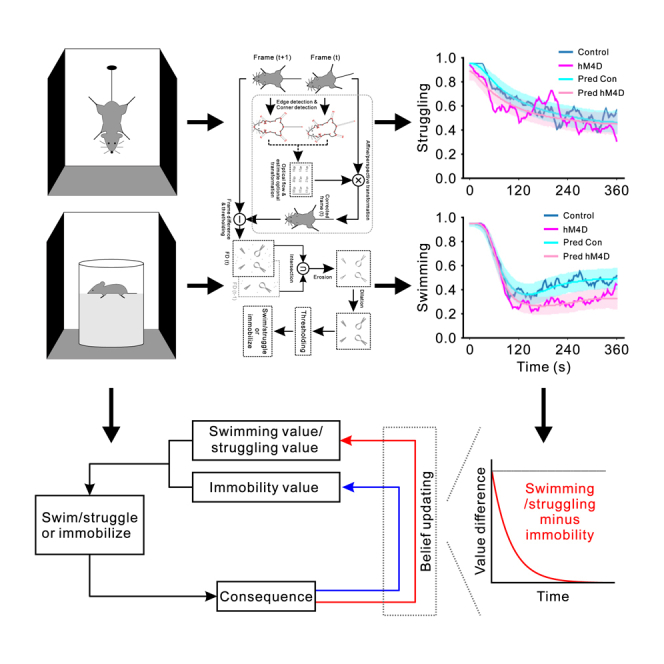 Figure 1
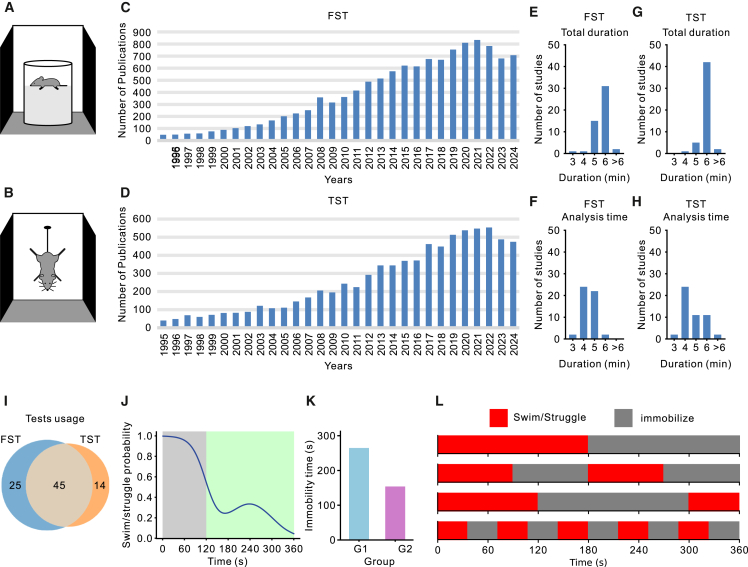 Figure 2
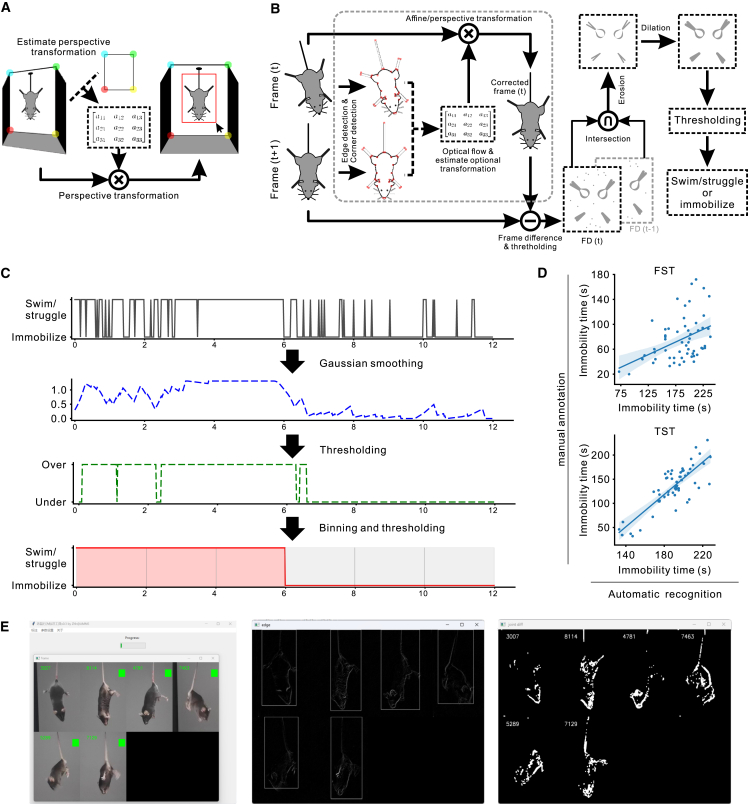 Figure 3
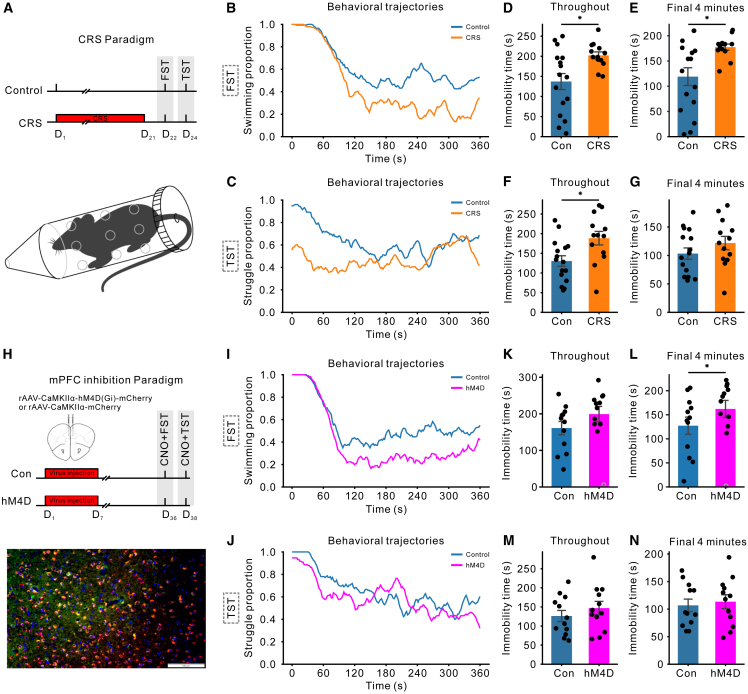 Figure 4
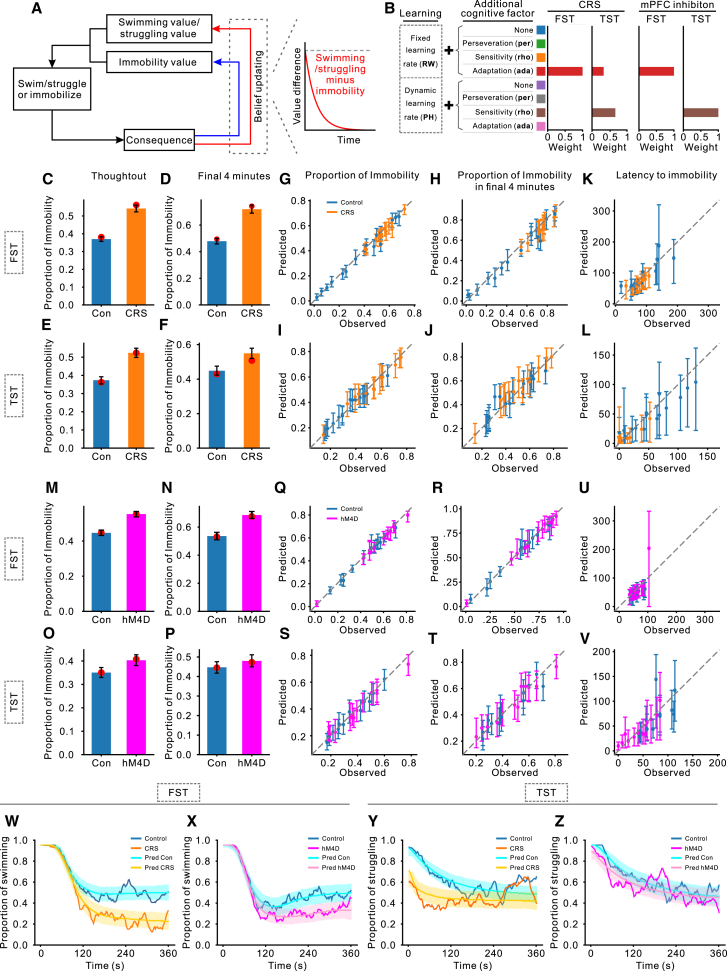 Figure 5
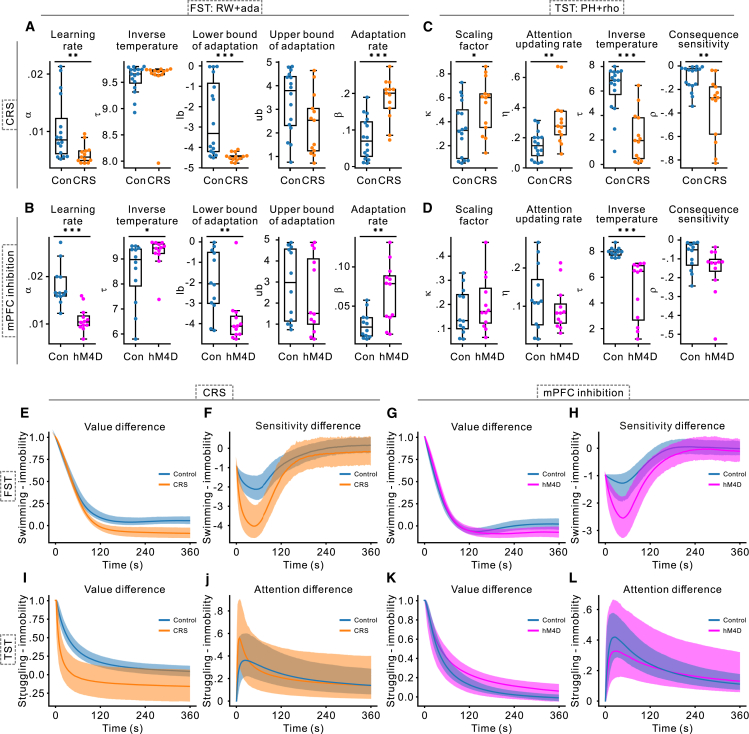 Figure 6
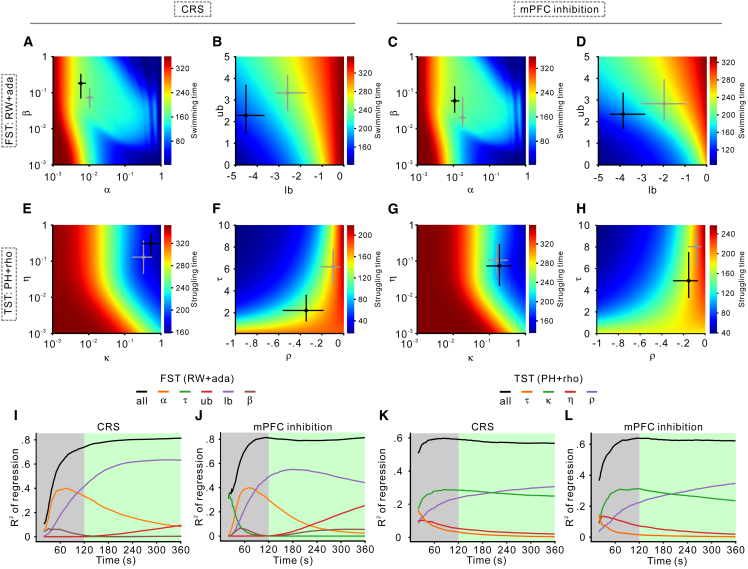 Figure 7
Peer Reviews
No public reviews on file for this paper yet. If you reviewed it on a platform where reviews are public (OpenReview, ICLR, NeurIPS, ICML), you can paste yours below so the community can read it here.
Videos
No videos yet. Explain this paper in a talk, walkthrough, or lecture? Add one.
Taxonomy
TopicsZebrafish Biomedical Research Applications · Neuroendocrine regulation and behavior · Memory and Neural Mechanisms