Spatial ploidy inference using quantitative imaging
Nicholas J. Russell, Paulo B. Belato, Lilijana Sarabia Oliver, Archan Chakraborty, Adrienne H.K. Roeder, Donald T. Fox, Pau Formosa-Jordan

TL;DR
iSPy is a new method that uses imaging to map ploidy levels in intact tissues, helping researchers study how chromosome copy numbers vary across different organisms and biological conditions.
Contribution
iSPy introduces a high-throughput pipeline for spatial ploidy inference in intact tissues using unsupervised learning.
Findings
iSPy generates spatial ploidy maps without destroying tissue architecture.
The method is validated in Arabidopsis, Drosophila, and human tissues.
iSPy enables rapid and accurate quantification of nuclear ploidy.
Abstract
Polyploidy (whole-genome duplication) is a common yet under-surveyed property of tissues across multicellular organisms. Polyploidy plays a critical role during tissue development, following acute stress, and during disease progression. Common methods to reveal polyploidy involve either destroying tissue architecture by cell isolation or tedious identification of individual nuclei in intact tissue. Therefore, there is a critical need for rapid and high-throughput ploidy quantification using images of nuclei in intact tissues. Here, we present iSPy (inferring Spatial Ploidy), an unsupervised learning pipeline that is designed to create a spatial map of nuclear ploidy across a tissue of interest. We demonstrate the use of iSPy in Arabidopsis, Drosophila, and human tissue. iSPy can be adapted for a variety of tissue preparations, including whole mount and sectioned. This high-throughput…
Genes, proteins, chemicals, diseases, species, mutations and cell lines named across the full text — each resolved to its canonical identifier and authoritative record.
Click any figure to enlarge with its caption.
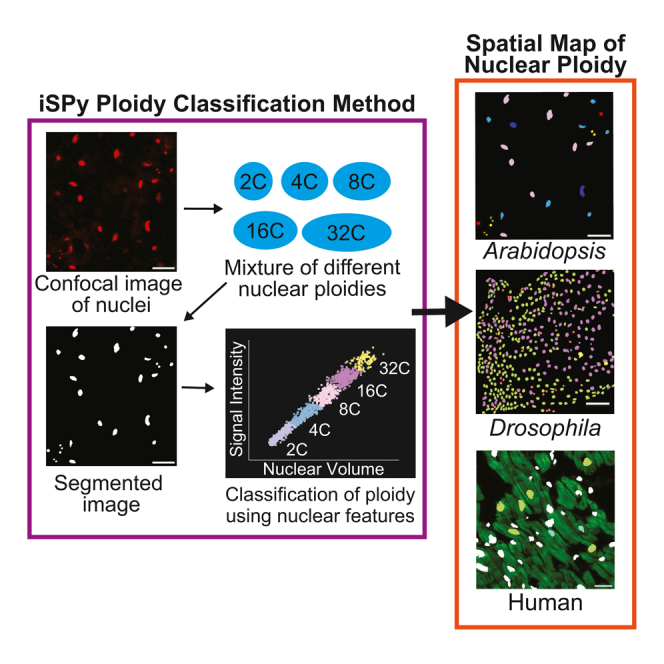 Figure 1
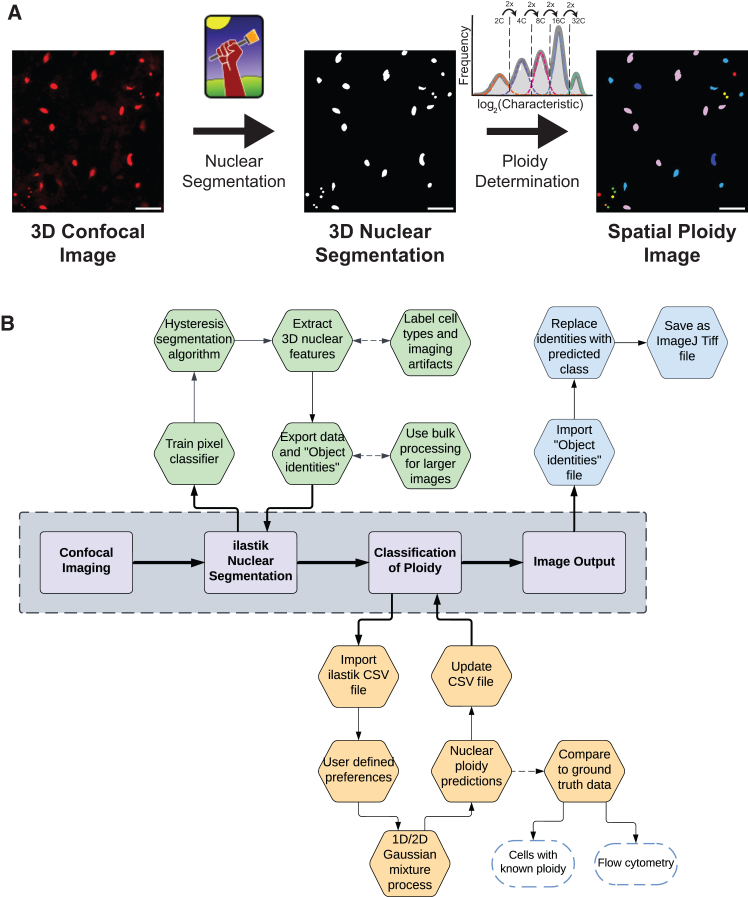 Figure 2
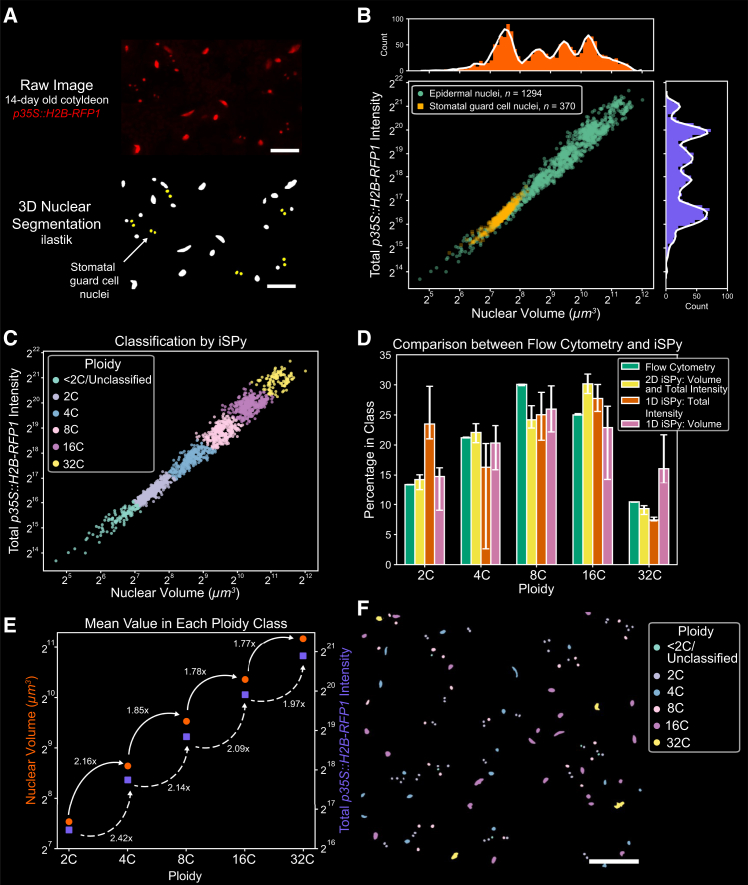 Figure 3
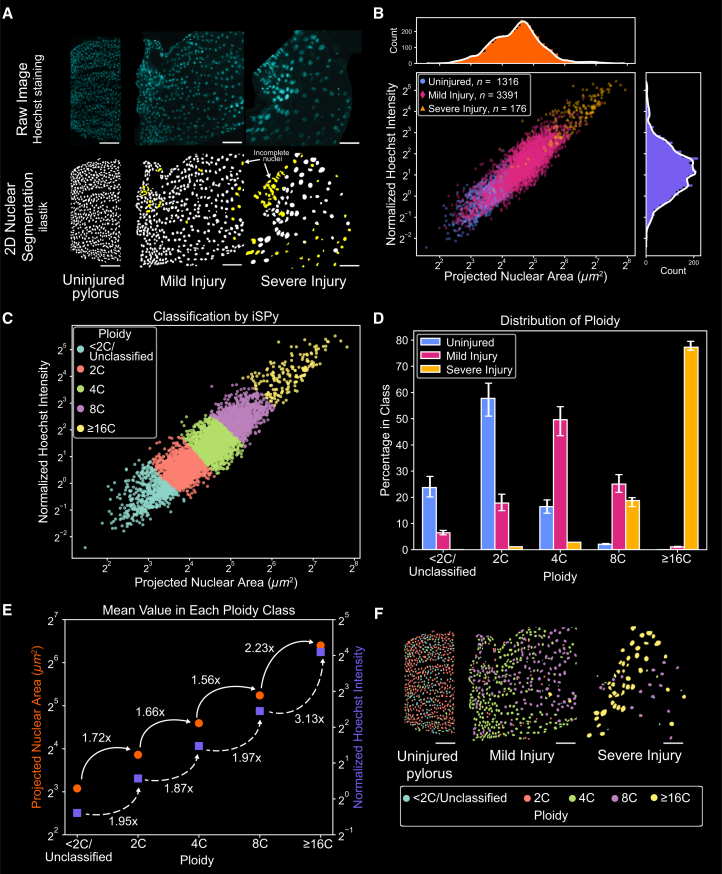 Figure 4
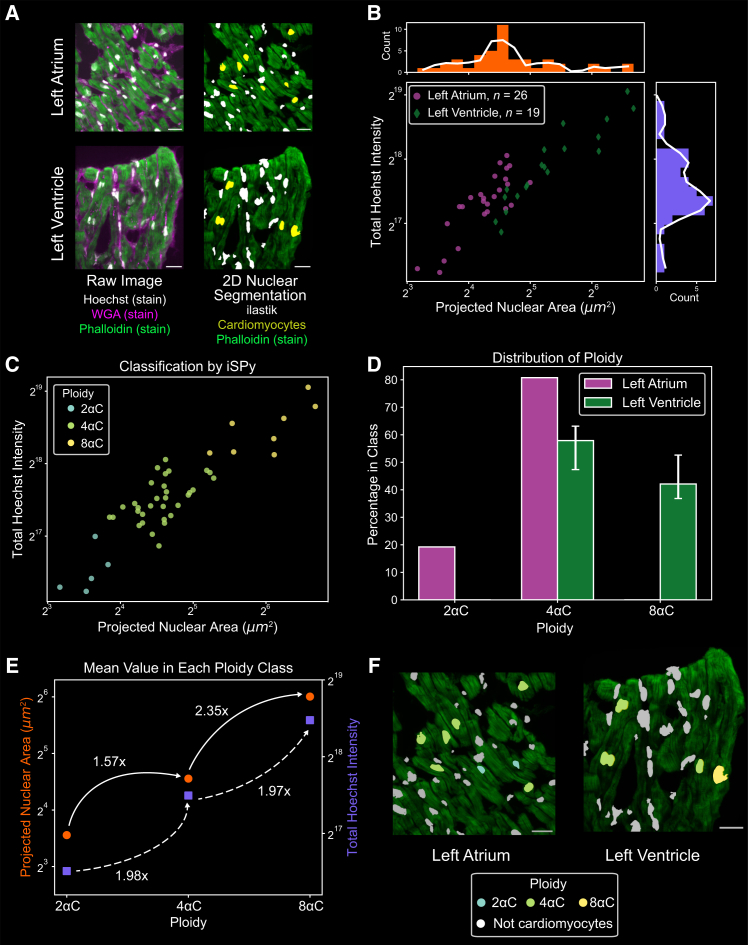 Figure 5
Peer Reviews
No public reviews on file for this paper yet. If you reviewed it on a platform where reviews are public (OpenReview, ICLR, NeurIPS, ICML), you can paste yours below so the community can read it here.
Videos
No videos yet. Explain this paper in a talk, walkthrough, or lecture? Add one.
Taxonomy
TopicsNuclear Structure and Function · Chromosomal and Genetic Variations · Microtubule and mitosis dynamics