Temporal reassignment and correspondence evaluation with quality control for time-course imaging of 3D cell culture
Eric M. Cramer, Tamara Lopez-Vidal, Jeanette Johnson, Vania Wang, Daniel R. Bergman, Ashani Weeraratna, Richard Burkhart, Elana J. Fertig, Jacquelyn W. Zimmerman, Laura M. Heiser, Young Hwan Chang

TL;DR
TRACE-QC is a tool that improves the accuracy of time-lapse imaging in 3D cell cultures by correcting mislabeling and displacement issues.
Contribution
TRACE-QC introduces a Procrustes-based method for correcting mislabeling and displacement in 3D cell culture imaging without experimental changes.
Findings
TRACE-QC accurately reorders and aligns spheroid positions across time points.
Validation with simulated data confirmed the method's accuracy and robustness.
The tool revealed and corrected frequent displacement in tumor spheroid imaging.
Abstract
Longitudinal imaging of 3D cell cultures like tumor organoids and spheroids offers crucial insights into cancer progression and treatment. However, spatial displacement during time-course imaging, caused by matrix detachment or experimental artifacts, can confound analyses. We present TRACE-QC, an application of the Procrustes technique to evaluate data integrity and rectify mislabeling in longitudinal imaging of 3D cell culture. Our algorithm integrates permutation-based optimization with Procrustes analysis. By using X and Y coordinates of images, it accurately reorders, matches, and aligns object positions across time points, correcting for global well rotations and translations, along with local spheroid movements. Validation with simulated data confirmed its accuracy and robustness. Applied to longitudinal imaging of tumor spheroids, our algorithm revealed frequent displacement…
Genes, proteins, chemicals, diseases, species, mutations and cell lines named across the full text — each resolved to its canonical identifier and authoritative record.
Click any figure to enlarge with its caption.
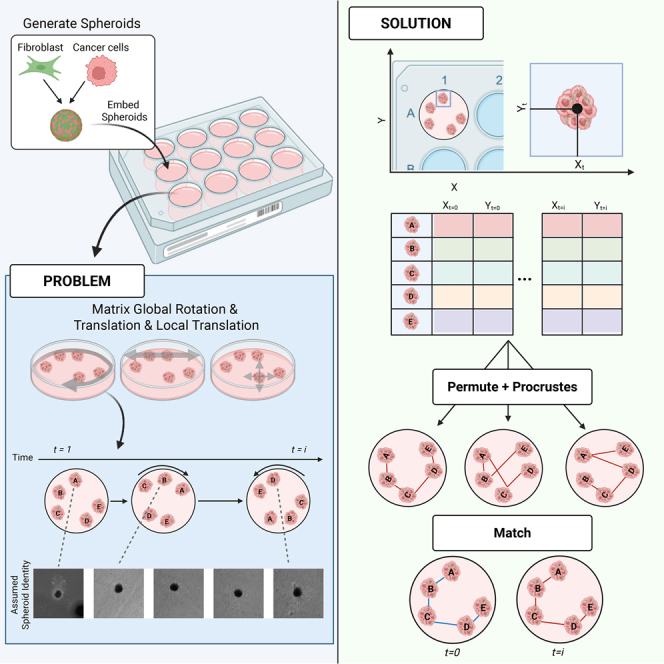 Figure 1
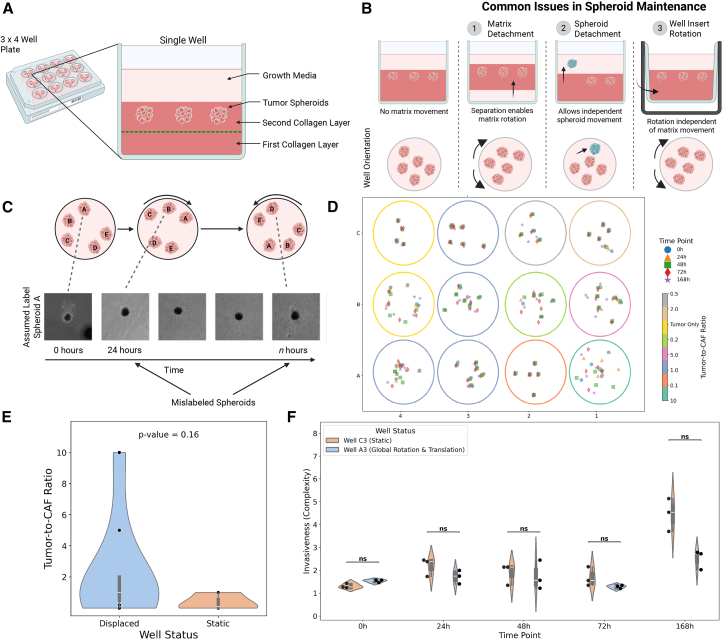 Figure 2
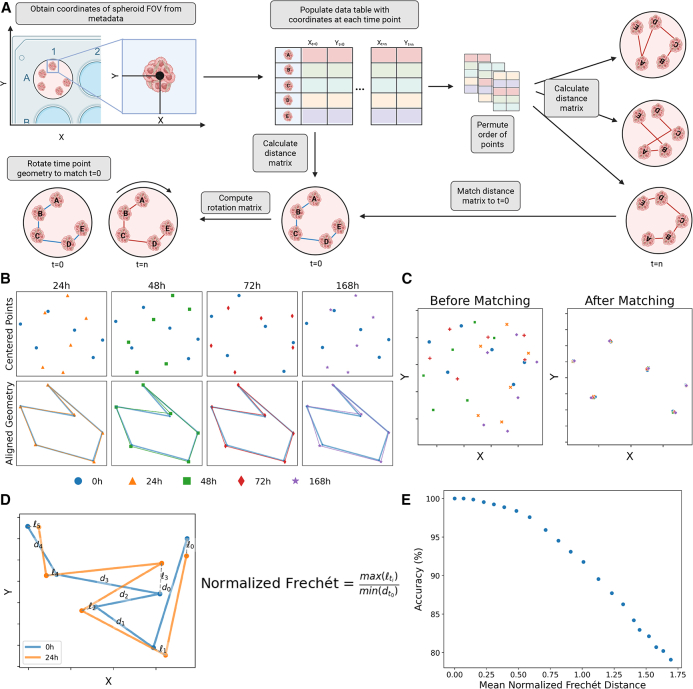 Figure 3
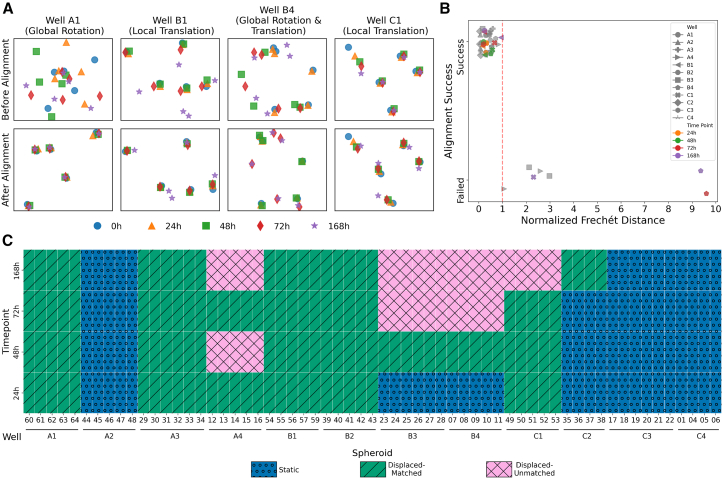 Figure 4
Peer Reviews
No public reviews on file for this paper yet. If you reviewed it on a platform where reviews are public (OpenReview, ICLR, NeurIPS, ICML), you can paste yours below so the community can read it here.
Videos
No videos yet. Explain this paper in a talk, walkthrough, or lecture? Add one.
Taxonomy
TopicsCell Image Analysis Techniques · Medical Image Segmentation Techniques · Advanced Fluorescence Microscopy Techniques