The chromosomal genome sequence of the sponge Phakellia ventilabrum (Linnaeus, 1767) and its associated microbial metagenome sequences
Sergi Taboada, Ana Riesgo, Kathrin Busch, Dirk Erpenbeck, Ute Hentschel, Carles Galià, Graeme Oatley, Elizabeth Sinclair, Eerik Aunin, Noah Gettle, Camilla Santos, Michael Paulini, Haoyu Niu, Victoria McKenna, Rebecca O’Brien, Arzu Karahan, Poppy Hesketh-Best

TL;DR
This paper presents the genome sequence of the sponge Phakellia ventilabrum and its associated microbial genomes, providing insights into both the sponge and its symbiotic microbes.
Contribution
The study provides a high-quality chromosomal genome assembly and metagenome sequences of Phakellia ventilabrum and its associated microbes.
Findings
The sponge genome is assembled into 25 chromosomal pseudomolecules with 21,622 protein-coding genes.
Thirty-three binned genomes were generated, including eight high-quality MAGs from diverse taxa.
The mitochondrial genome is 24.36 kilobases in length.
Abstract
We present a genome assembly from a specimen of Phakellia ventilabrum (Porifera; Demospongiae; Bubarida; Bubaridae). The genome sequence has a total length of 211.92 megabases. Most of the assembly (99.97%) is scaffolded into 25 chromosomal pseudomolecules. The mitochondrial genome has also been assembled and is 24.36 kilobases in length. Gene annotation of this assembly by Ensembl identified 21 622 protein-coding genes. Thirty-three binned genomes were generated from the metagenome assembly, of which eight were classified as high-quality metagenome assembled genomes (MAGs) and of which four of the MAGs are fully circular. The MAGs were taxonomically assigned to Pseudomonadota (i.e. Candidatus Poriferihabitaceae), Nitrospirota, Nitrospinota, and the archaeal Nitrosopumilus clade.
Genes, proteins, chemicals, diseases, species, mutations and cell lines named across the full text — each resolved to its canonical identifier and authoritative record.
Click any figure to enlarge with its caption.
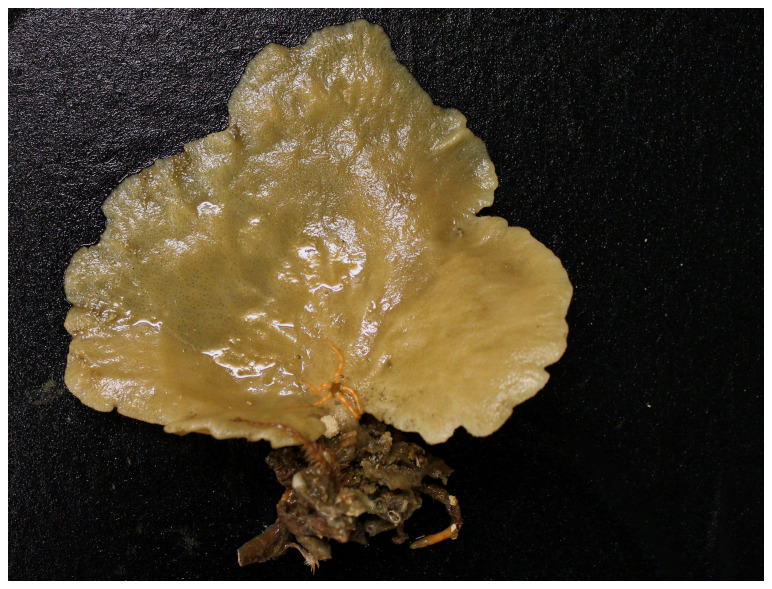 Figure 1
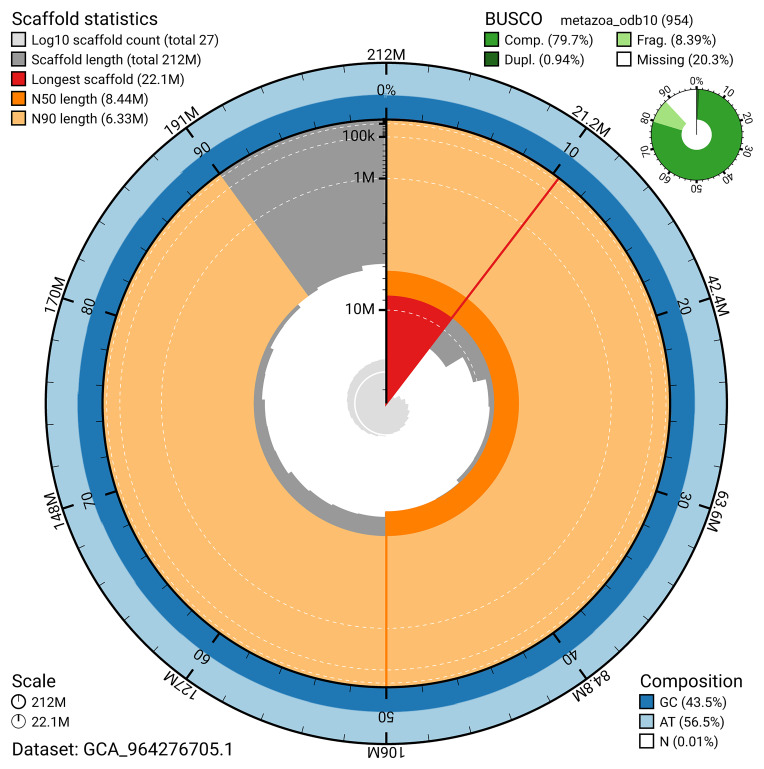 Figure 2
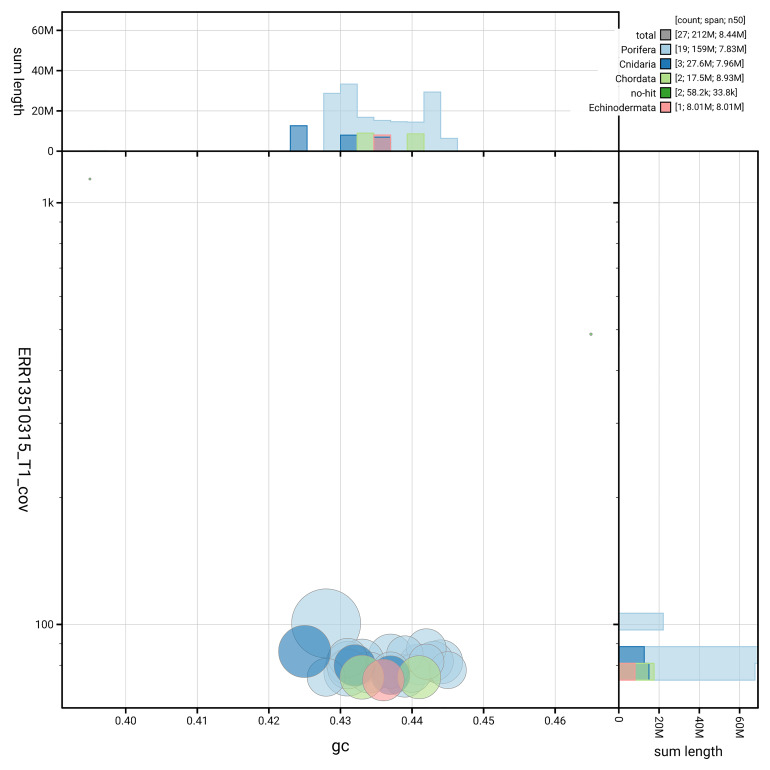 Figure 3
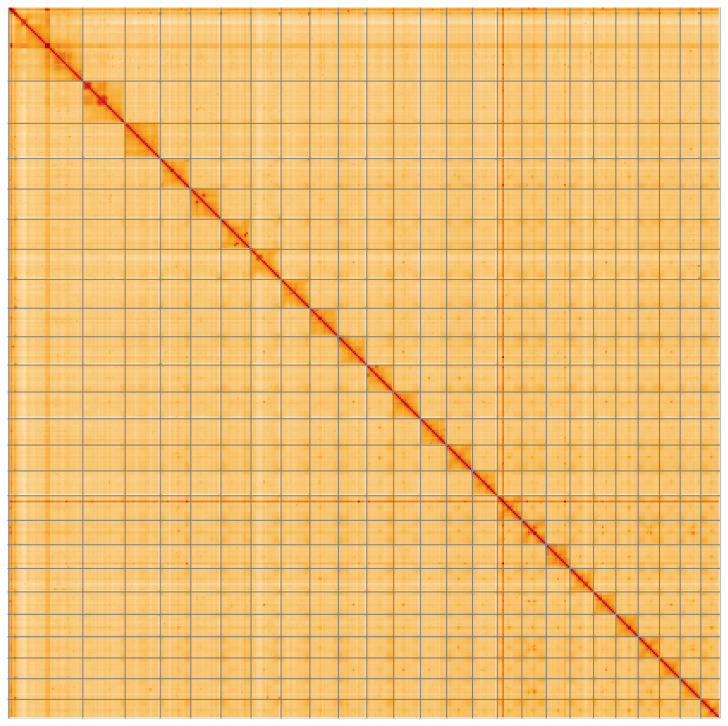 Figure 4
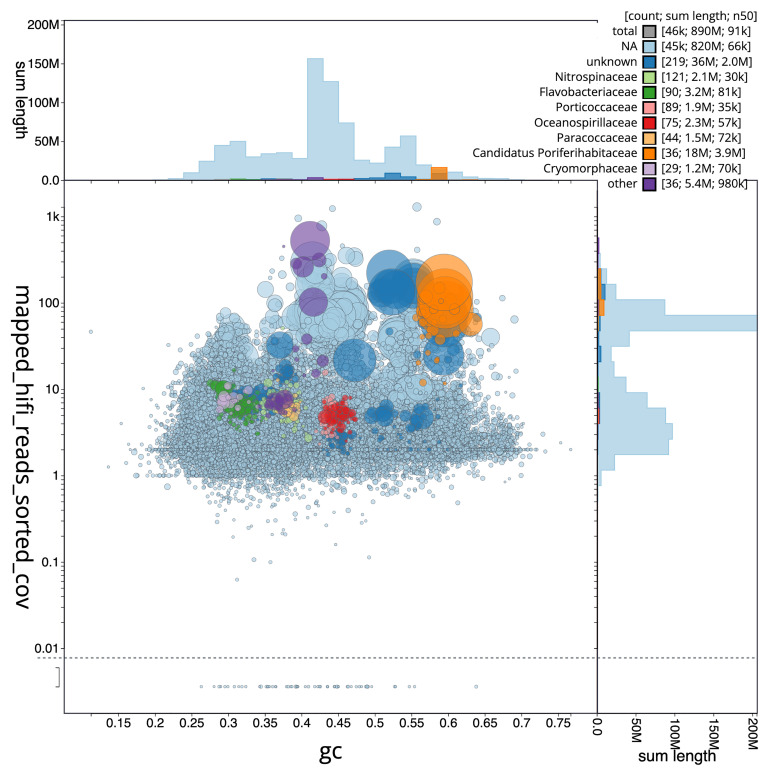 Figure 5
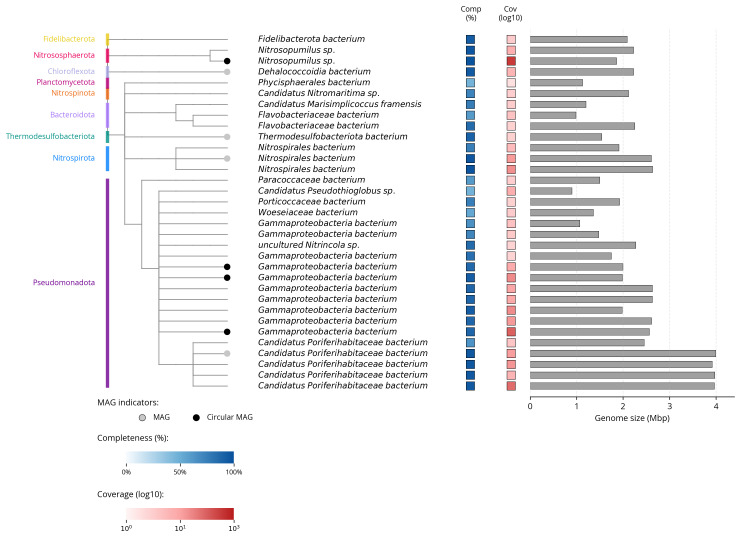 Figure 6
Peer Reviews
No public reviews on file for this paper yet. If you reviewed it on a platform where reviews are public (OpenReview, ICLR, NeurIPS, ICML), you can paste yours below so the community can read it here.
Videos
No videos yet. Explain this paper in a talk, walkthrough, or lecture? Add one.
Taxonomy
TopicsMarine Sponges and Natural Products · Genomics and Phylogenetic Studies · Microbial Natural Products and Biosynthesis