Characterization of the CRISPR1-Cas array and its subtyping potential in Enterococcus faecalis from Malaysia
Jia Qi Beh, Nazmul Hasan Muzahid, Jar Hui Mar, Calvin Bok Sun Goh, Marie Andrea Laetitia Huët, Shu Yong Lim, Sadequr Rahman

TL;DR
This study characterizes the CRISPR1-Cas system in Enterococcus faecalis from Malaysia and shows its potential for strain typing and surveillance.
Contribution
The study introduces novel primers for CRISPR1-cas and demonstrates its subtyping potential in E. faecalis.
Findings
Half of the isolates carried the CRISPR1-cas9 locus, and CRISPR1 arrays were amplified in 12 out of 13 isolates with the cas9 gene.
CRISPR1-cas differs from CRISPR2 in spacer identities and terminal repeat sequences, despite similar array lengths and repeats.
Combined CRISPR1-cas and CRISPR2 typing offers discriminatory power comparable to MLST at lower sequencing costs.
Abstract
Enterococcus faecalis is a gram-positive bacterium and a common cause of hospital-associated infections. Three major CRISPR loci have been discovered in this species, namely, CRISPR1-cas, CRISPR2 and CRISPR3-cas. We developed novel primers which target the CRISPR1-cas loci in E. faecalis and tested these primers on 26 E. faecalis isolates isolated from diverse settings from Segamat, Malaysia. Half of the isolates were found to carry the CRISPR1-cas9 locus, and the CRISPR1 array was successfully amplified in 12 out of 13 isolates that contained the cas9 gene. Characterization of the CRISPR array shows that CRISPR1-cas shares similar array length and typical repeat sequences with CRISPR2 but differs significantly in terms of spacer identities and terminal repeat (TR) sequences. Most CRISPR spacers encode for chromosomal DNA sequences. Genotype characterization based on ancestral spacer…
Genes, proteins, chemicals, diseases, species, mutations and cell lines named across the full text — each resolved to its canonical identifier and authoritative record.
Click any figure to enlarge with its caption.
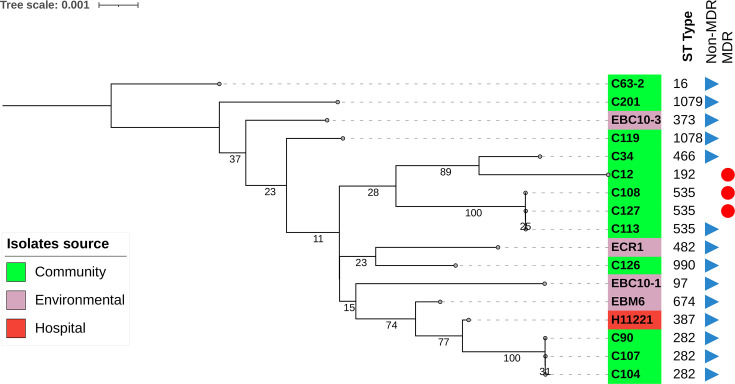 Figure 1
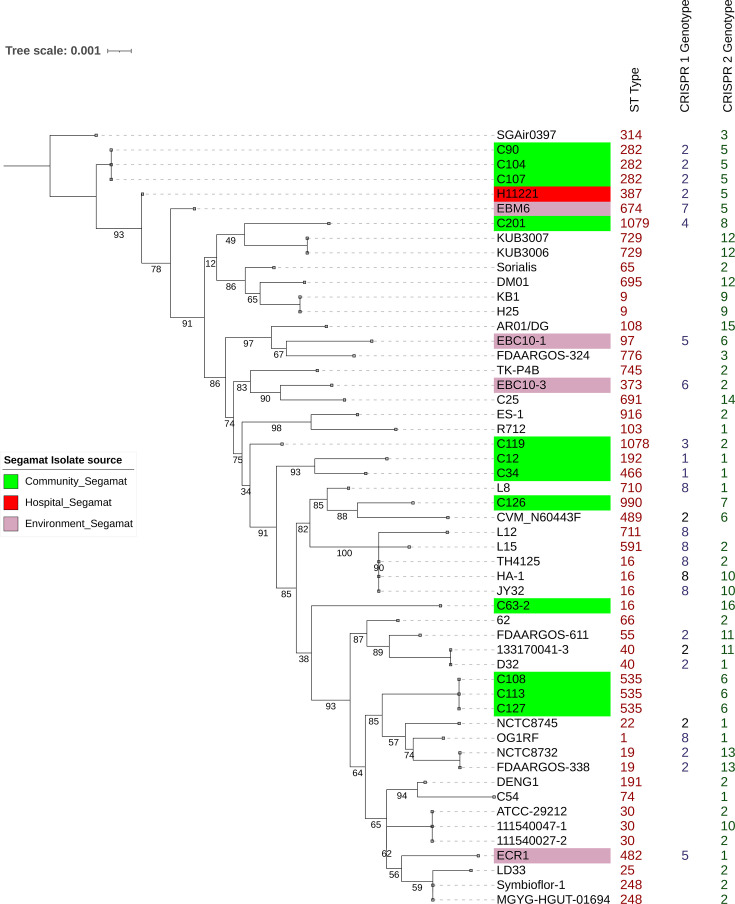 Figure 2
Peer Reviews
No public reviews on file for this paper yet. If you reviewed it on a platform where reviews are public (OpenReview, ICLR, NeurIPS, ICML), you can paste yours below so the community can read it here.
Videos
No videos yet. Explain this paper in a talk, walkthrough, or lecture? Add one.
Taxonomy
TopicsCRISPR and Genetic Engineering · Antimicrobial Resistance in Staphylococcus · Whipple's Disease and Interleukins