Patient-derived organoid xenografts model esophageal cancer cachexia and enable assessment of anti-inflammatory drug repositioning
Bryan Chee-chad Lung, Alvin Ka-kiu Leung, Carissa Wing-Yan Wong, Ian Yu-hong Wong, Cheryl Chee Heng Lung, Anthony Wing-ip Lo, Josephine Mun-Yee Ko, Wei Dai, Dora Lai-wan Kwong, Simon Law, Maria Li Lung, Valen Zhuoyou Yu

TL;DR
This study introduces a new mouse model of esophageal cancer cachexia using patient-derived organoids and shows that drugs targeting macrophages can reduce cachexia symptoms.
Contribution
The novel contribution is the development of a patient-derived organoid xenograft model that authentically replicates ESCC-associated cachexia and demonstrates macrophage-targeting drugs as potential treatments.
Findings
PDOX models exhibit heterogeneous cachexia phenotypes including weight loss and elevated pro-inflammatory cytokines.
Rosiglitazone and PLX3397 significantly reduced cachexia symptoms by targeting macrophages.
Transcriptomic analysis confirmed suppression of pro-cachectic cytokine signaling by the drugs.
Abstract
Esophageal squamous cell carcinoma (ESCC) is highly associated with cancer cachexia, a wasting syndrome lacking effective treatments. Existing animal models fail to capture key clinical and biological features of this condition. Here, we established a panel of patient-derived organoid xenograft (PDOX) models that authentically replicate the heterogeneity of ESCC-associated cachexia in immunodeficient mice. PDOX lines exhibited slow tumor growth compared with traditional ESCC xenografts. Heterogeneous cachexia phenotypes in PDOX-bearing mice, as compared with non-tumor-bearing mice, including body weight loss, reduction in adipose tissue, reduced grip strength, and elevated pro-inflammatory cytokines, were observed. Using this platform, we tested two macrophage-targeting interventions: 10 mg/kg/day rosiglitazone, a PPAR-γ agonist, and 40 mg/kg/day pexidartinib (PLX3397), a CSF1R…
Genes, proteins, chemicals, diseases, species, mutations and cell lines named across the full text — each resolved to its canonical identifier and authoritative record.
Click any figure to enlarge with its caption.
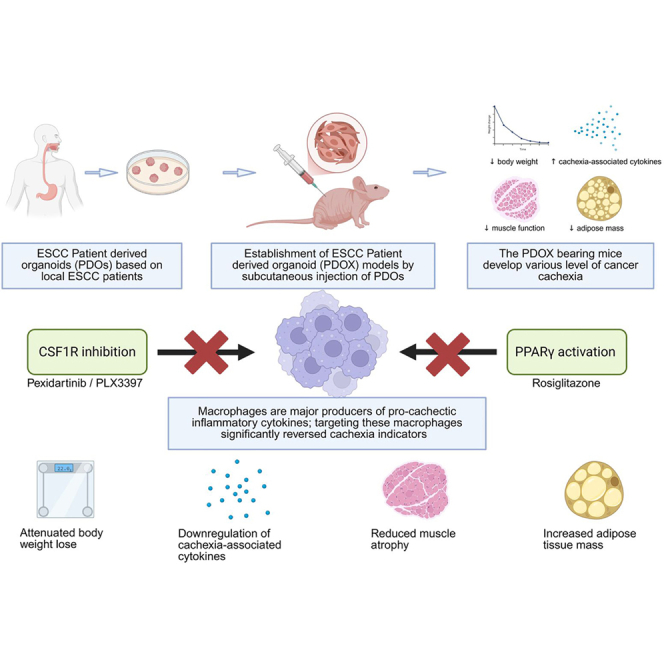 Figure 1
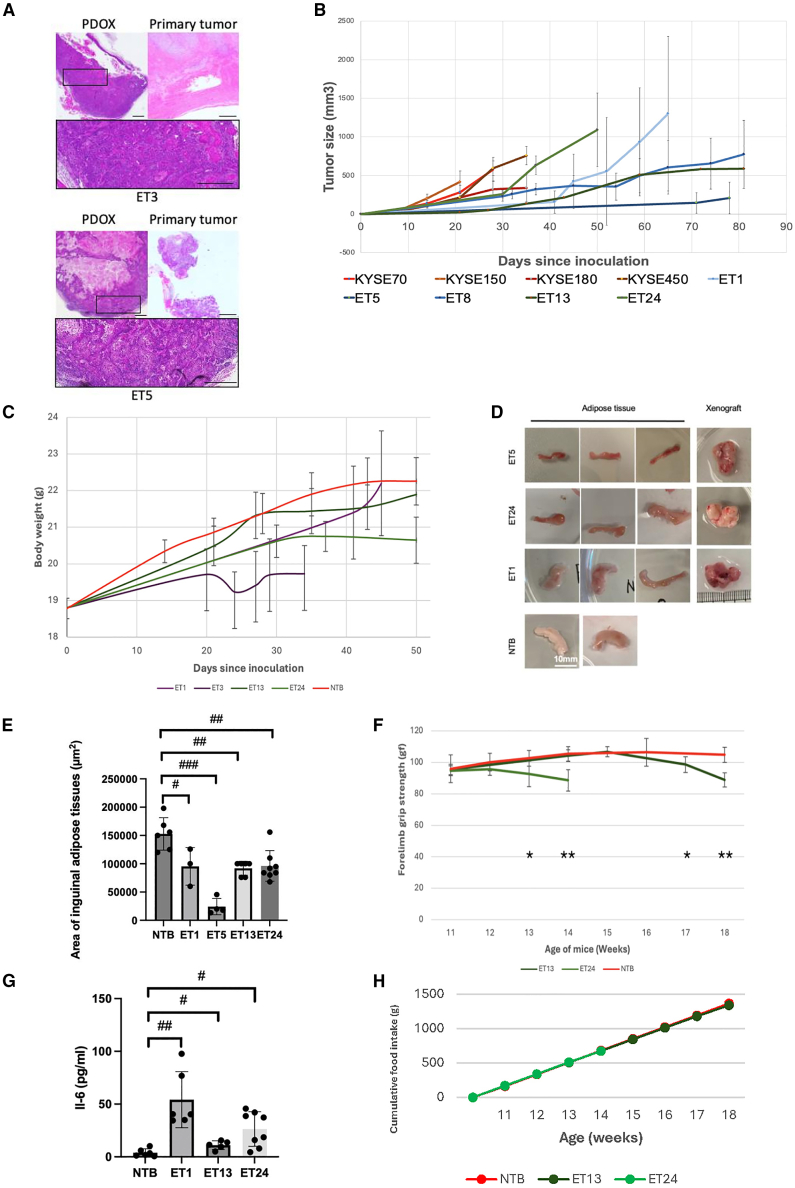 Figure 2
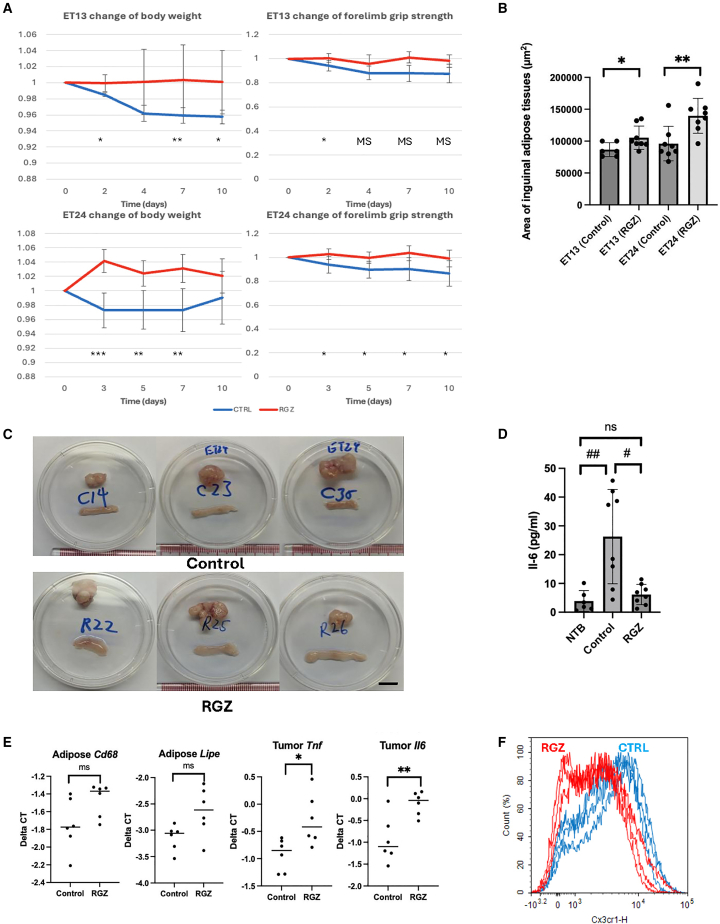 Figure 3
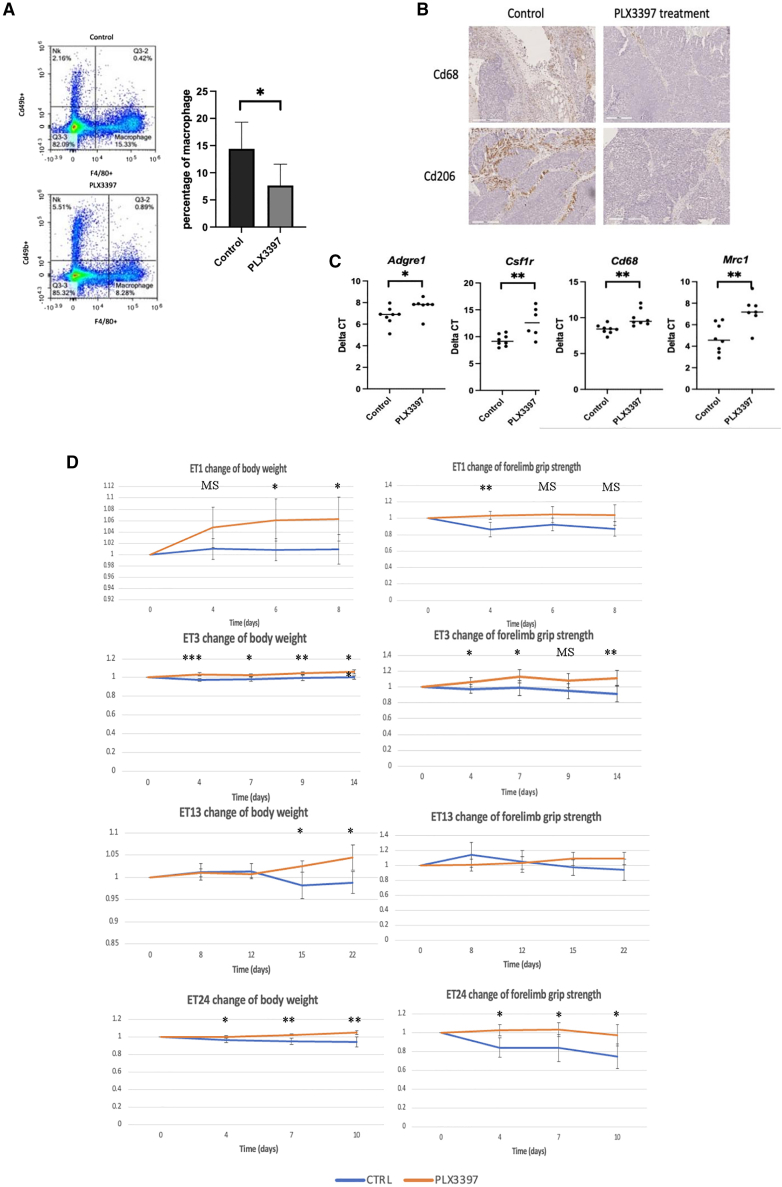 Figure 4
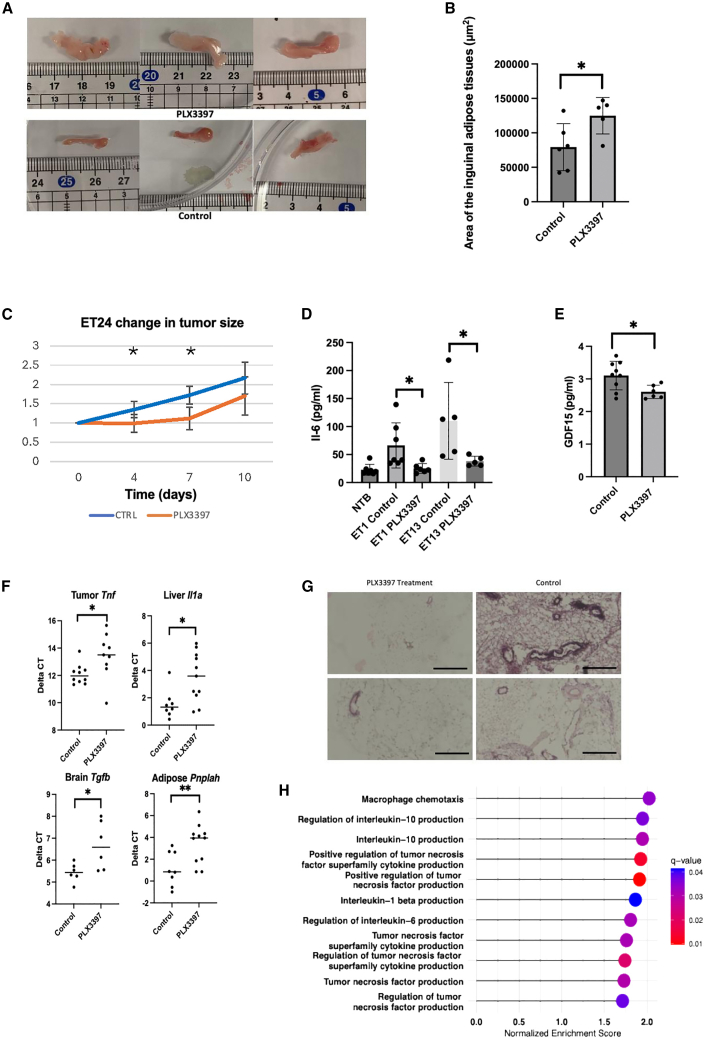 Figure 5
Peer Reviews
No public reviews on file for this paper yet. If you reviewed it on a platform where reviews are public (OpenReview, ICLR, NeurIPS, ICML), you can paste yours below so the community can read it here.
Videos
No videos yet. Explain this paper in a talk, walkthrough, or lecture? Add one.
Taxonomy
TopicsImmune cells in cancer · Nutrition and Health in Aging · Cancer Research and Treatments