Comprehensive and Rapid Chemical Profiling of Cirsium japonicum DC Utilizing UHPLC‐Q‐Orbitrap MS With Parallel Reaction Monitoring
Jia-Yi Wang, Yu-Feng Zou, Kai-Lin Li, Yi-Fan Chen, Ling Liu, Shu-Sen Wu, Hui Li

TL;DR
This study provides a detailed chemical analysis of Cirsium japonicum, identifying 94 compounds that could help understand its medicinal properties and improve quality control.
Contribution
The study introduces a comprehensive and rapid chemical profiling method for Cirsium japonicum using advanced mass spectrometry techniques.
Findings
A total of 94 compounds were identified, including 57 organic acids, 25 flavonoids, and 3 phenylpropanoids.
Chlorogenic acid was found to dominate the organic acid fraction, which may contribute to hemostatic effects.
The identified compounds can serve as potential biomarkers for standardizing and controlling the quality of C. japonicum medicinal products.
Abstract
Cirsium japonicum, a traditional medicinal plant, has been widely used for its therapeutic properties in treating various ailments. However, a comprehensive analysis of its chemical composition remains limited, hindering a full understanding of its chemical basis and pharmacological activities. This study aims to identify and characterize the chemical constituents of C. japonicum using ultra‐high‐performance liquid chromatography coupled with quadrupole‐Orbitrap mass spectrometry (UHPLC‐Q‐Exactive Orbitrap MS) and parallel reaction monitoring (PRM). A total of 94 compounds were identified, including 57 organic acids, 25 flavonoids, 3 phenylpropanoids, and 9 other components, with chlorogenic acid dominating the organic acid fraction. Organic acids and caffeic acid, among organic acid compounds, exhibit hemostatic effects based on prior evidence. The UHPLC‐Q‐Exactive Orbitrap MS‐based…
Genes, proteins, chemicals, diseases, species, mutations and cell lines named across the full text — each resolved to its canonical identifier and authoritative record.
Click any figure to enlarge with its caption.
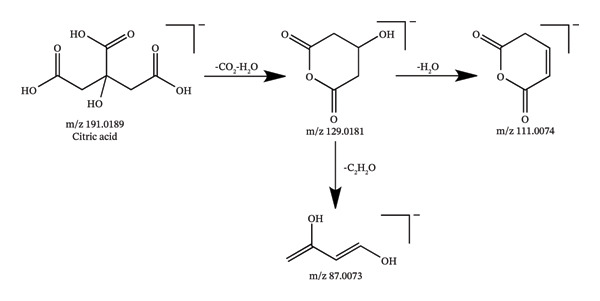 Figure 1
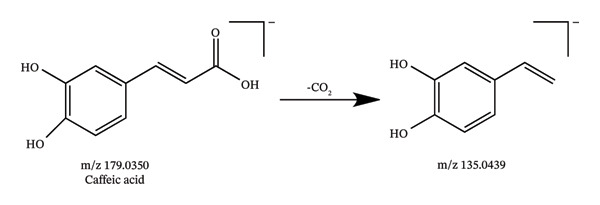 Figure 2
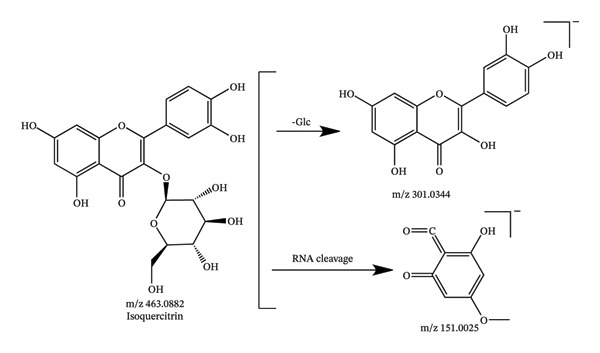 Figure 3
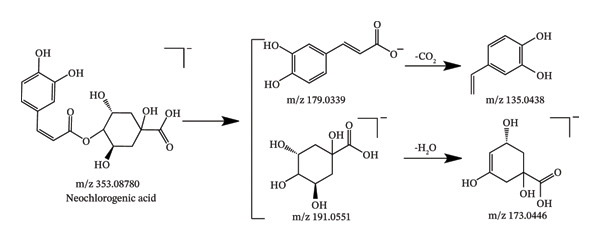 Figure 4
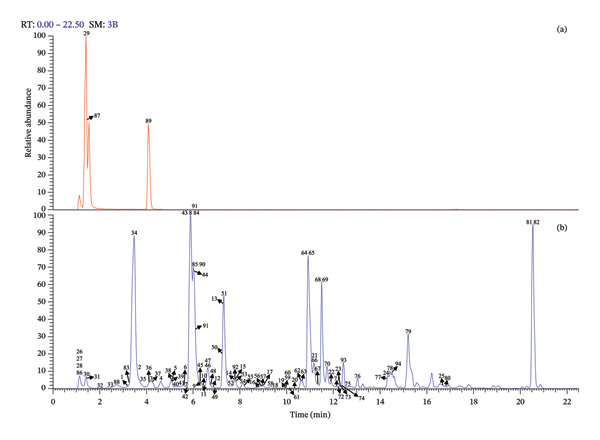 Figure 5
Peer Reviews
No public reviews on file for this paper yet. If you reviewed it on a platform where reviews are public (OpenReview, ICLR, NeurIPS, ICML), you can paste yours below so the community can read it here.
Videos
No videos yet. Explain this paper in a talk, walkthrough, or lecture? Add one.
Taxonomy
TopicsSilymarin and Mushroom Poisoning · Plant-derived Lignans Synthesis and Bioactivity · Fungal Biology and Applications