Endonuclease V activated Pyrococcus furiosus Argonaute for the detection of food contaminated bacteria
Yiheng Shi, Pei Gao, Di Wu, Yongning Wu, Guoliang Li

TL;DR
A new method using a heat-resistant enzyme and a nuclease to detect bacteria in food contamination is developed, offering a flexible and sensitive detection tool.
Contribution
A primer design using deoxy inosine base with endonuclease V to activate PfAgo for universal nucleic acid detection is introduced.
Findings
The detection limit of the method is 0.04 ng/μL DNA.
The method successfully detects food contaminated bacteria.
The approach is a universal tool for detecting nucleic acid-containing organisms like pathogens and viruses.
Abstract
Pyrococcus furiosus Argonaute (PfAgo) is a novel programmable nuclease that has been used in nucleic acid detection due to its excellent performance. Traditional PfAgo based detection methods relies on the input of exogenous guide DNA (gDNA), which restricted its flexibility and universality in application. Here, we designed primers with deoxy inosine base which can be recognized and cleaved by endonuclease V, following turn into gDNA to activate PfAgo for target gene detection. Therefore, an Endo V activated PfAgo based nucleic acid detection (VPN) method was developed. The detection limit of this method was 0.04 ng/μL DNA. Moreover, the method was successfully applied to the detection of food contaminated bacteria. This approach provided a universal and power tool for the detection of nucleic acid-containing organisms such as pathogens, viruses, and tumor cells.
Genes, proteins, chemicals, diseases, species, mutations and cell lines named across the full text — each resolved to its canonical identifier and authoritative record.
Click any figure to enlarge with its caption.
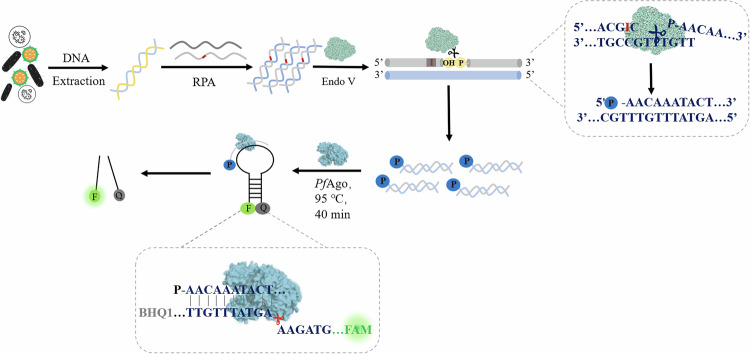 Figure 1
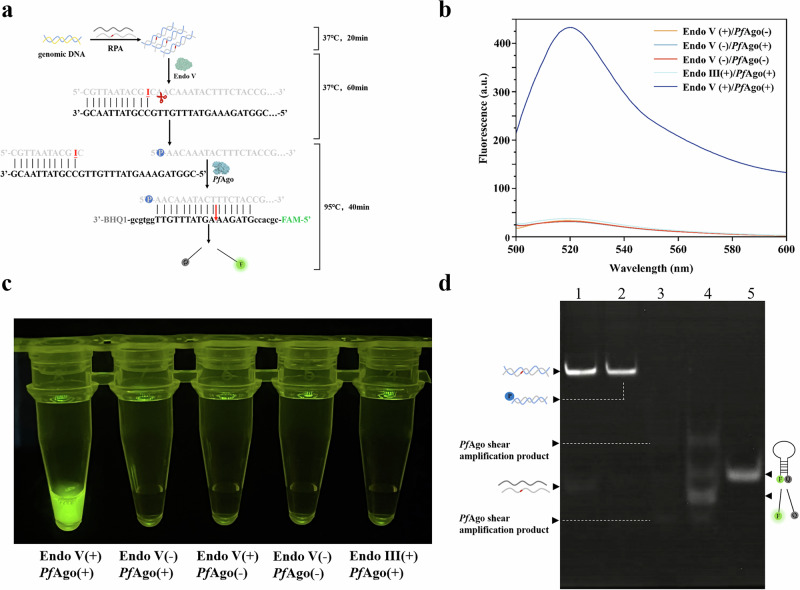 Figure 2
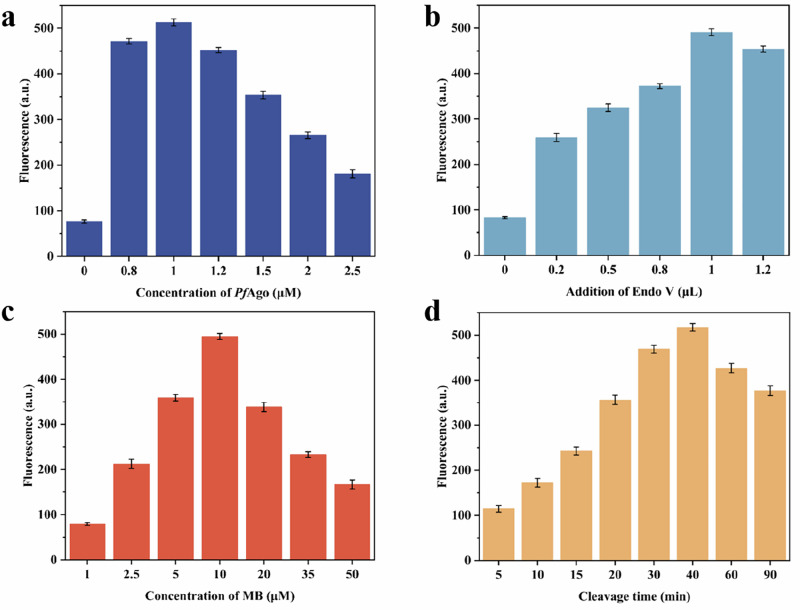 Figure 3
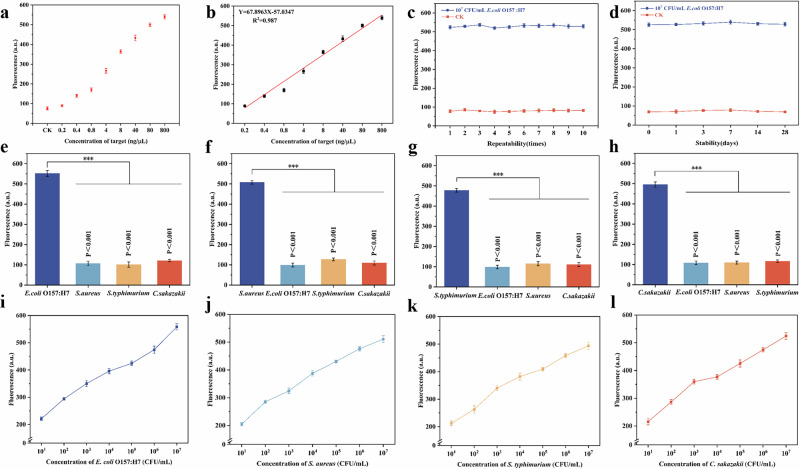 Figure 4
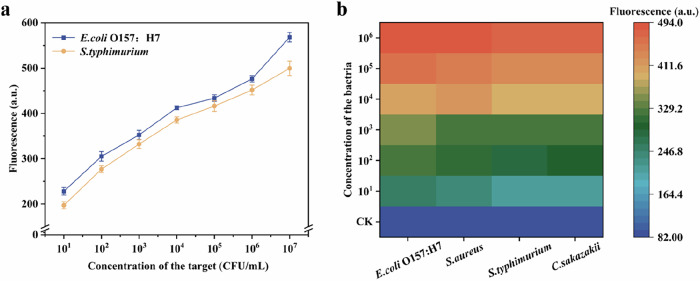 Figure 5
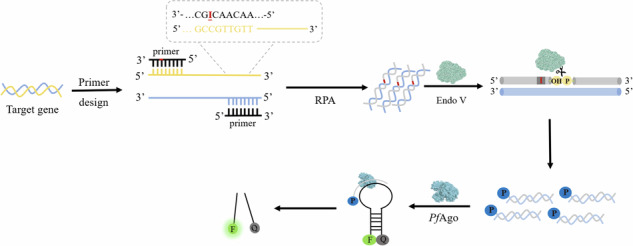 Figure 6
Peer Reviews
No public reviews on file for this paper yet. If you reviewed it on a platform where reviews are public (OpenReview, ICLR, NeurIPS, ICML), you can paste yours below so the community can read it here.
Videos
No videos yet. Explain this paper in a talk, walkthrough, or lecture? Add one.
Taxonomy
TopicsAdvanced biosensing and bioanalysis techniques · CRISPR and Genetic Engineering · Bacterial Genetics and Biotechnology