Salmonella typhimurium co-expressing cytolysin A and hyaluronidase suppresses tumor growth and metastasis
Khuynh Van Nguyen, Dinh-Huy Nguyen, Hien Thi-Thu Ngo, Sung-Hwan You, So-young Kim, Yeongjin Hong, Jung-Joon Min

TL;DR
An engineered Salmonella strain that secretes two proteins significantly reduces tumor growth and prevents cancer spread in mice.
Contribution
A Salmonella strain engineered to co-express cytolysin A and hyaluronidase shows enhanced antitumor efficacy.
Findings
CNC018pCH induces tumor cell death through PANoptosis, activating the immune system.
HysA degrades hyaluronic acid, improves bacterial tumor penetration, and inhibits metastasis.
The engineered strain generates memory responses, protecting mice from tumor rechallenge.
Abstract
Recently, various attenuated bacteria have been studied as cancer therapies due to their unique characteristics, which include tumor-targeting bioactivity and immunogenicity. Previously, we reported a Salmonella typhimurium strain, CNC018, which is attenuated by 10⁵–10⁶-fold compared with the wild-type strain but retains tumor-targeting specificity. However, although these bacteria suppress tumors at the early stage in mice, the tumors often regrow at later stages. Therefore, to increase antitumor efficacy, we used a doxycycline-inducible system to engineer this strain (CNC018pCH) to secrete both cytolysin A (ClyA) and hyaluronidase (HysA), a pore-forming toxin that kills tumor cells and an enzyme that disrupts the tumor microenvironment, respectively. Local secretion of ClyA from CNC018pCH triggered tumor cell death through pyroptosis, apoptosis, and necrosis (PANoptosis) in a…
Genes, proteins, chemicals, diseases, species, mutations and cell lines named across the full text — each resolved to its canonical identifier and authoritative record.
Click any figure to enlarge with its caption.
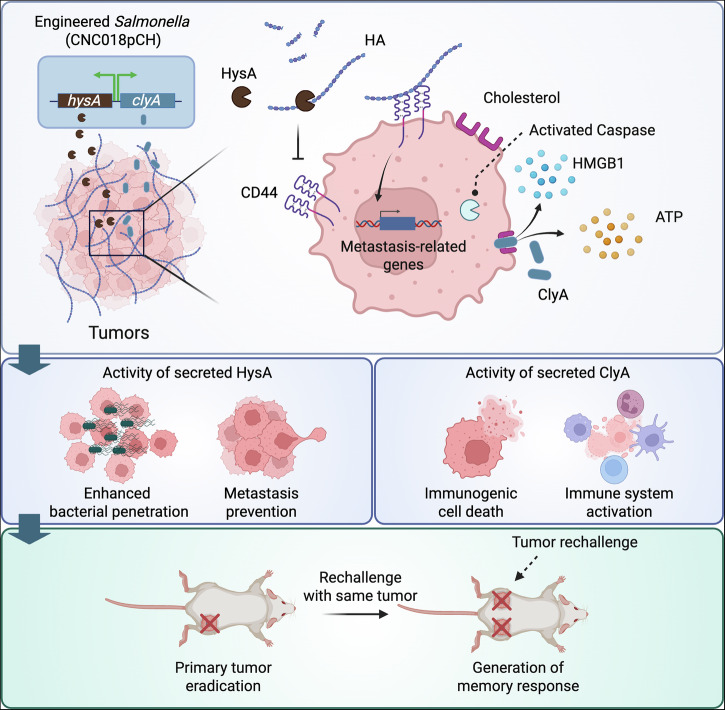 Figure 1
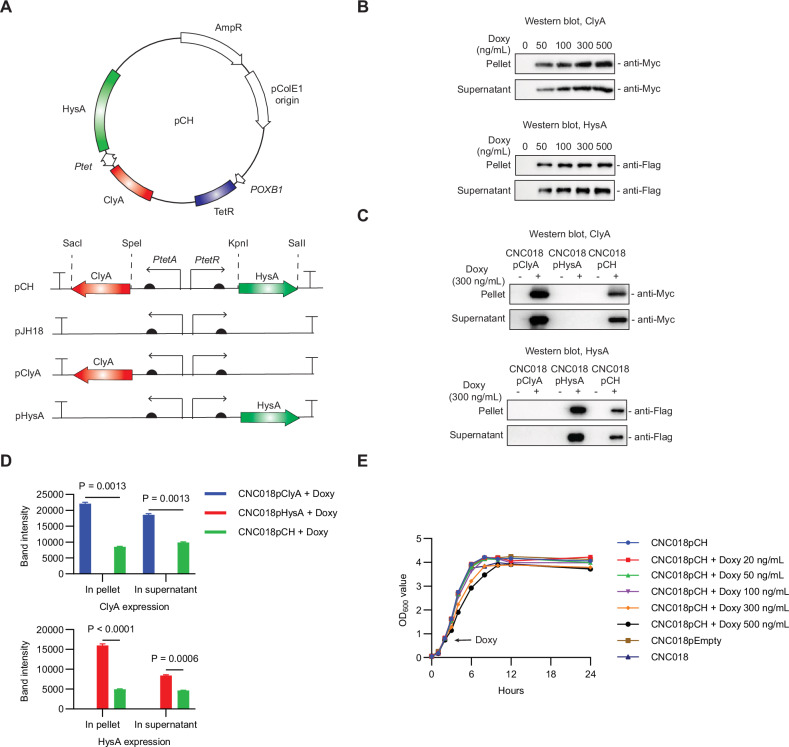 Figure 2
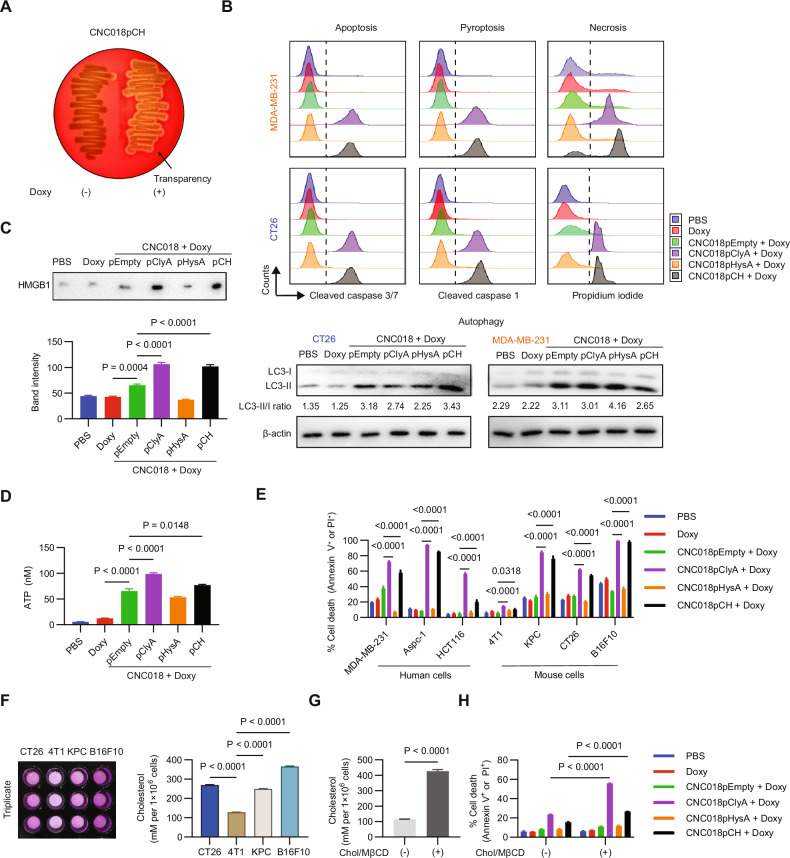 Figure 3
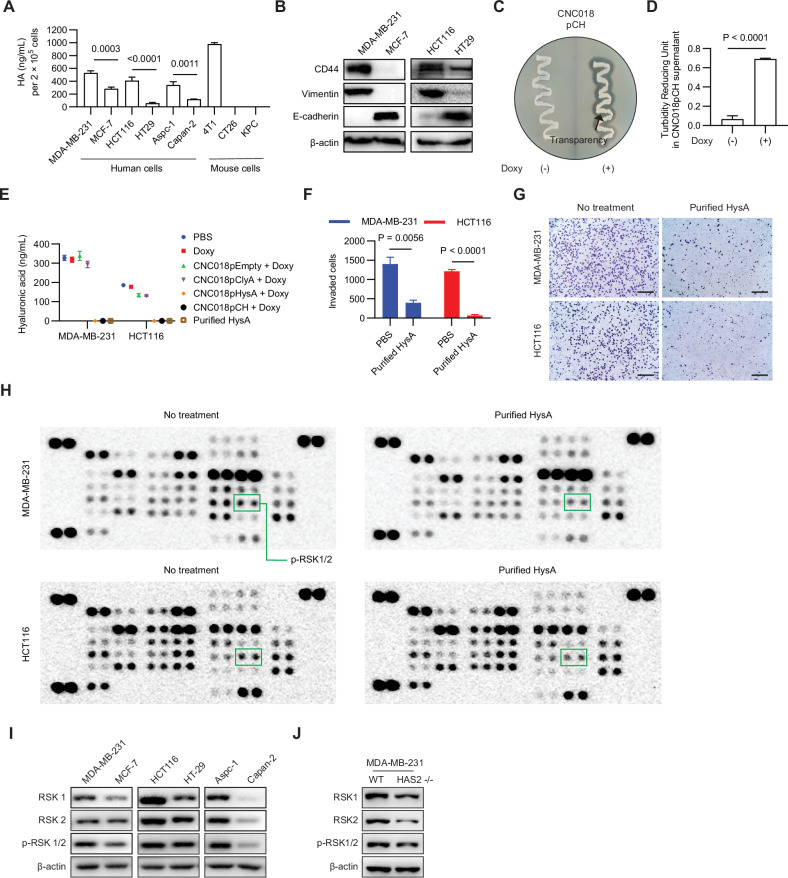 Figure 4
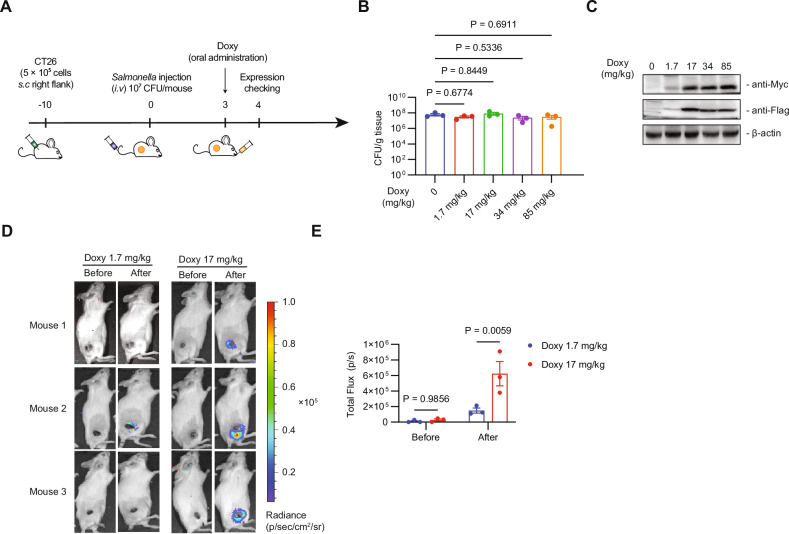 Figure 5
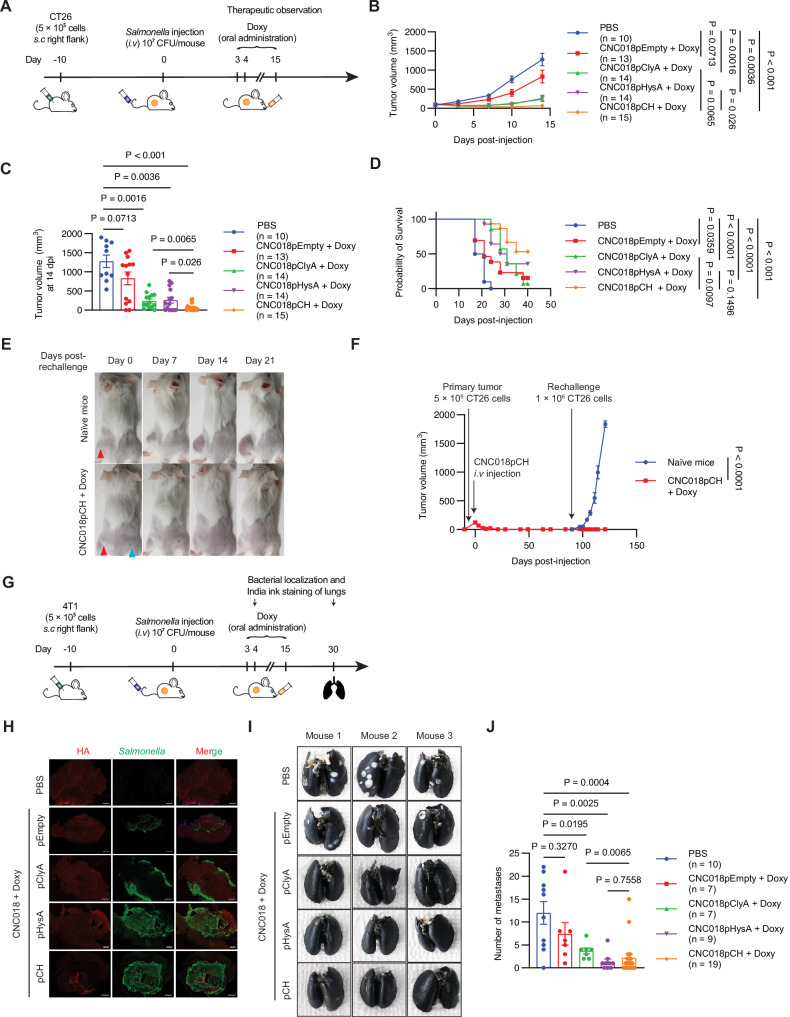 Figure 6
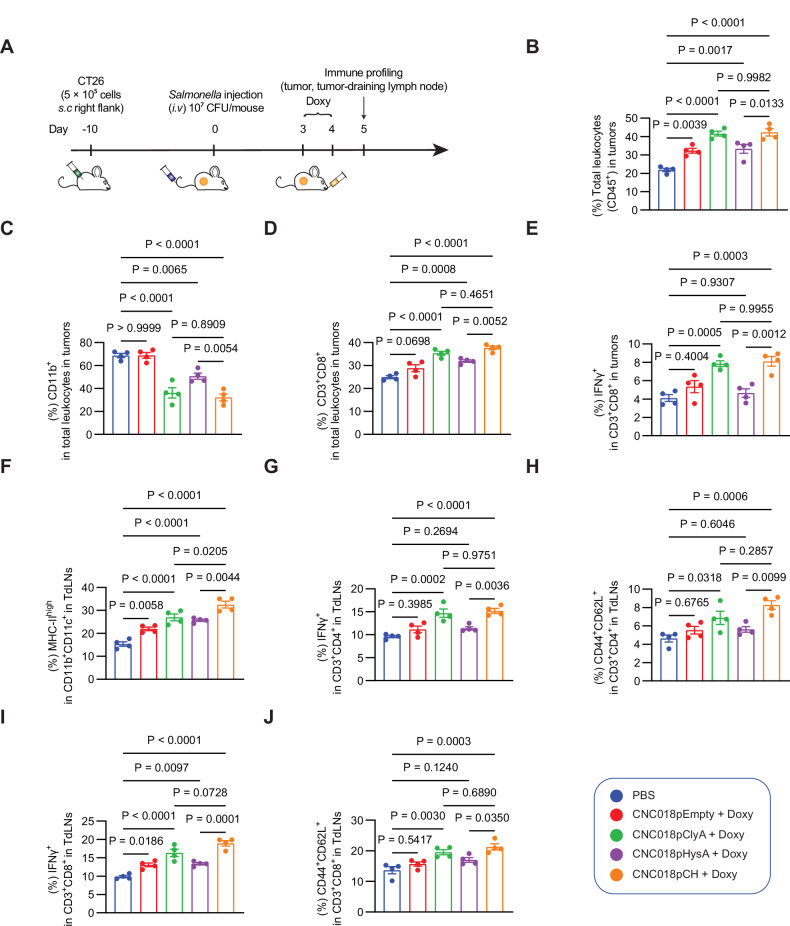 Figure 7
Peer Reviews
No public reviews on file for this paper yet. If you reviewed it on a platform where reviews are public (OpenReview, ICLR, NeurIPS, ICML), you can paste yours below so the community can read it here.
Videos
No videos yet. Explain this paper in a talk, walkthrough, or lecture? Add one.
Taxonomy
TopicsCancer Research and Treatments · Salmonella and Campylobacter epidemiology · Bacteriophages and microbial interactions