Biogeographic history of the Late Pleistocene and Holocene European small hamsters (subfamily Cricetinae)
Barbara Bujalska, Michał Golubiński, Danijela Popović, Claudio Berto, Nicholas J. Conard, Anna Lemanik, Elisa Luzi, Zoran Marković, Adam Nadachowski, Vasil Popov, Ivan Horáček, Mateusz Baca

TL;DR
The study shows that European small hamsters during the Late Pleistocene and Holocene originated from Asian populations, not from long-term European isolation.
Contribution
The study provides new insights into the biogeographic history of European small hamsters using mitochondrial genome analysis.
Findings
Late Pleistocene Central European hamster samples belonged to a species now found in Asia.
Balkan and Anatolian samples were identified as grey dwarf hamsters, with divergence from modern populations.
Findings suggest population continuity or repeated expansions from Asian sources rather than prolonged European isolation.
Abstract
The prevailing paleobiogeographic hypothesis suggests that many steppe and tundra-steppe taxa currently found in Central Asia expanded into Europe during Pleistocene glacial periods, when open habitats dominated. However, previous studies have shown that one such species, the European narrow-headed vole (Stenocranius anglicus), diverged from its Asiatic counterparts over 200 thousand years ago, implying its prolonged isolation and survival in European refugia through the Eemian interglacial period. To test whether this was an exception or part of a broader pattern, we analysed the mitochondrial genomes from 33 Late Pleistocene and Holocene small hamster (Cricetinae) remains from Central and Western Europe, the Balkans, and Anatolia, all previously identified morphologically as grey dwarf hamster (Nothocricetulus migratorius). Contrary to expectations, 16 Late Pleistocene Central…
Genes, proteins, chemicals, diseases, species, mutations and cell lines named across the full text — each resolved to its canonical identifier and authoritative record.
Click any figure to enlarge with its caption.
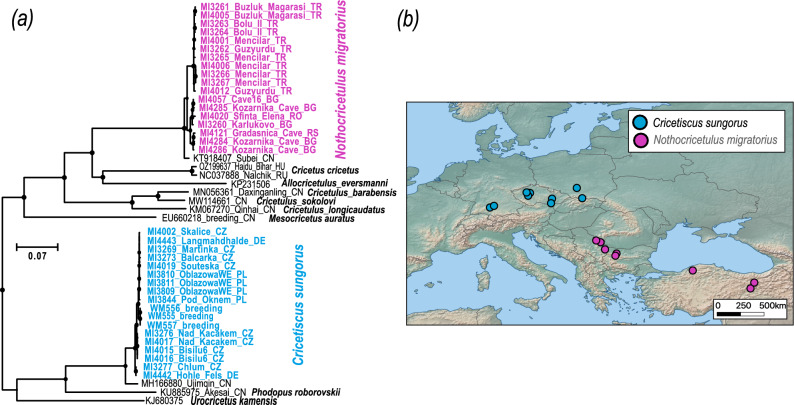 Figure 1
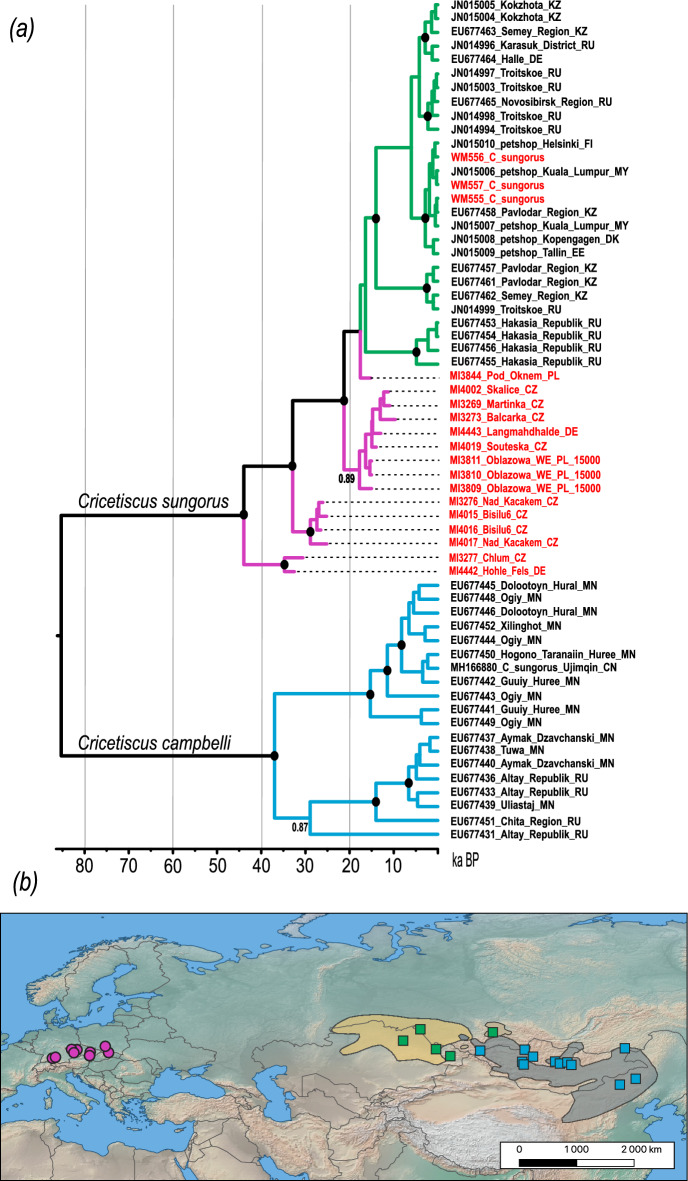 Figure 2
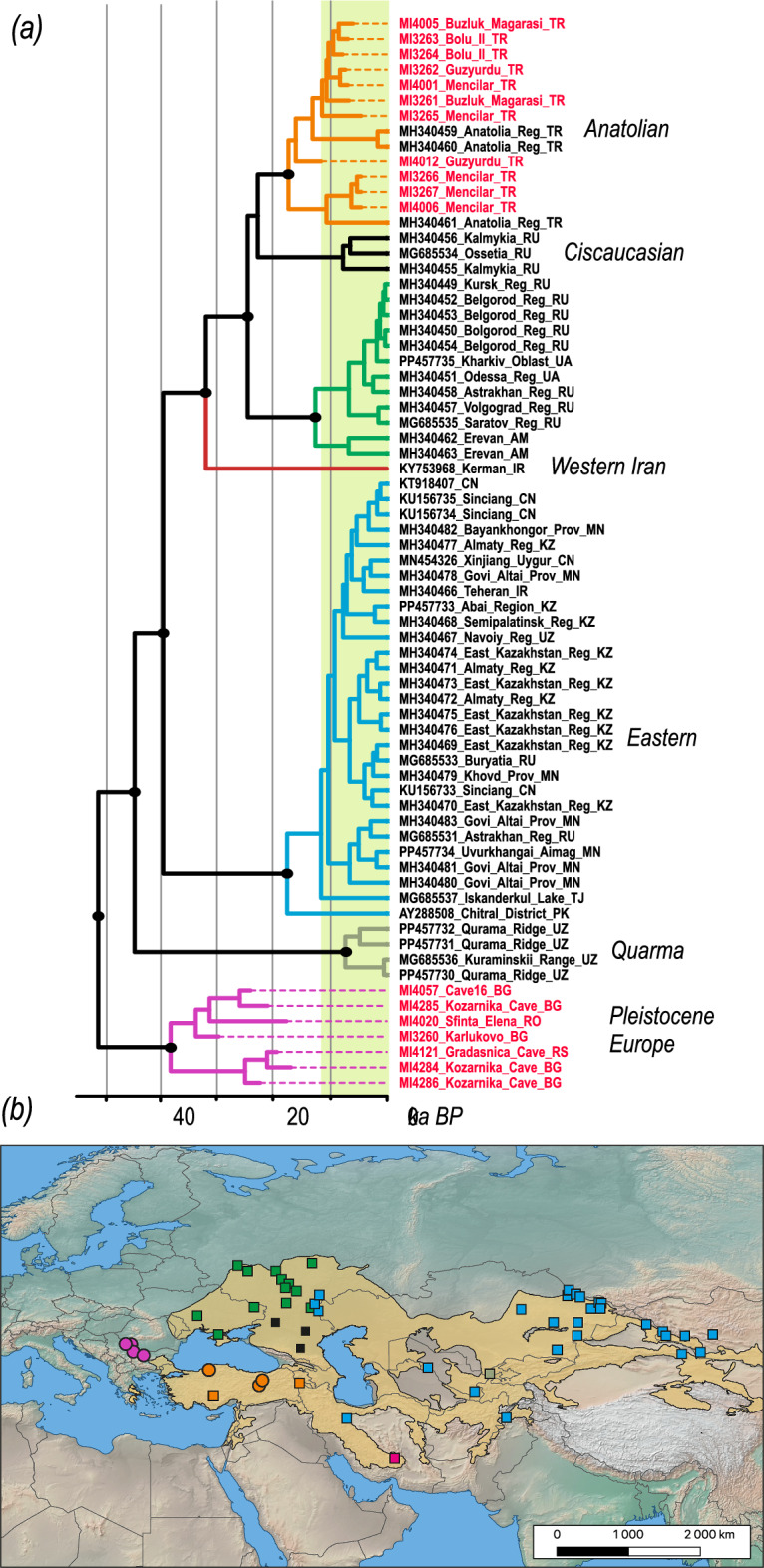 Figure 3
Peer Reviews
No public reviews on file for this paper yet. If you reviewed it on a platform where reviews are public (OpenReview, ICLR, NeurIPS, ICML), you can paste yours below so the community can read it here.
Videos
No videos yet. Explain this paper in a talk, walkthrough, or lecture? Add one.
Taxonomy
TopicsEvolution and Paleontology Studies · Pleistocene-Era Hominins and Archaeology · Animal Ecology and Behavior Studies