PRICKLE3 protects VANGL proteins from CK1-mediated phosphorylation and RNF43-mediated degradation
Katarzyna A. Radaszkiewicz, Tomasz W. Radaszkiewicz, Pavla Kolářová, Petra Paclíková, Kristína Gömöryová, Šárka Novotná, Lorena Agostini Maia, Tereza Číhalová, Yao Le, Tomáš Bárta, Kateřina Hanáková, Anna Hýsková, Konstantinos Tripsianes, Zbyněk Zdráhal, Christoph Winkler

TL;DR
PRICKLE3 helps stabilize key proteins in the WNT/PCP pathway by blocking their phosphorylation and degradation, which is important for cell polarity in vertebrates.
Contribution
PRICKLE3 is identified as a novel regulator of WNT/PCP signaling through CK1ε and RNF43 modulation.
Findings
PRICKLE3 stabilizes VANGL1/2 by preventing CK1ε-mediated phosphorylation.
PRICKLE3 suppresses RNF43 to increase VANGL accumulation at the plasma membrane.
PRICKLE3's role is distinct from PRICKLE1 in WNT/PCP signaling.
Abstract
The PRICKLE proteins (PRICKLE1–PRICKLE4) play essential roles in the WNT/planar cell polarity (WNT/PCP) pathway in vertebrates. This signaling system governs cell polarity, tissue architecture, and coordinated cell movements, yet the specific roles and molecular mechanisms of individual PRICKLE members within this pathway are poorly understood. Here, we identify PRICKLE3 as a previously unrecognized, central regulator of WNT/PCP signaling in human cells, Xenopus laevis and zebrafish (Danio rerio) embryos. Using enhanced proximity biotinylation (miniTurboID) combined with mass spectrometry, we found PRICKLE3 enriched at the plasma membrane, where it associates with core WNT/PCP proteins, including VANGL1 and VANGL2. Through immunoblotting, live imaging and functional assays, we further demonstrated that PRICKLE3 selectively enhances VANGL1/2 stability by protecting them from Casein…
Genes, proteins, chemicals, diseases, species, mutations and cell lines named across the full text — each resolved to its canonical identifier and authoritative record.
Click any figure to enlarge with its caption.
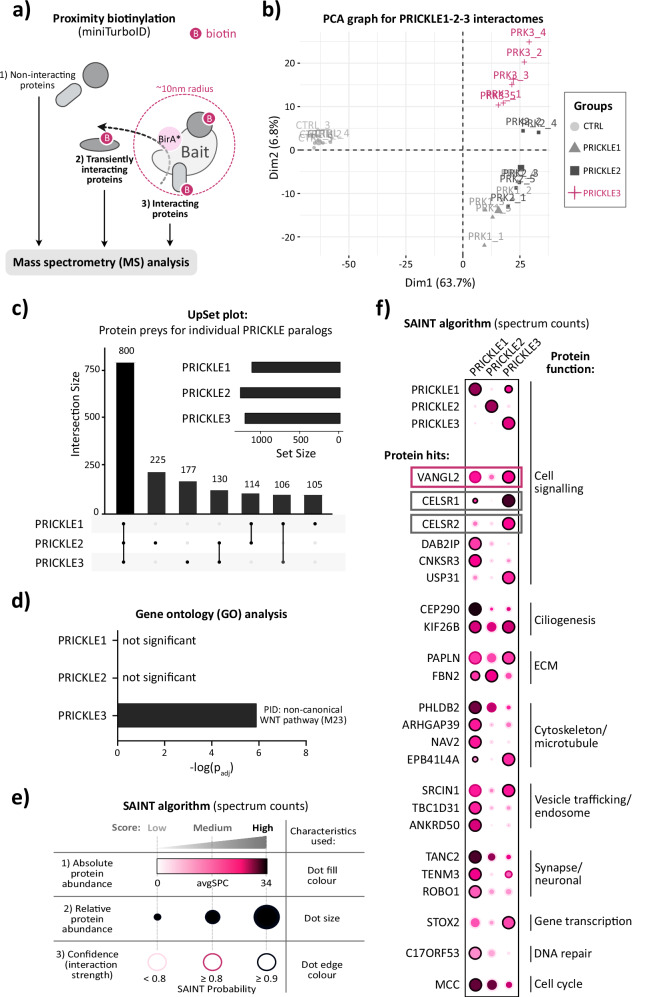 Figure 1
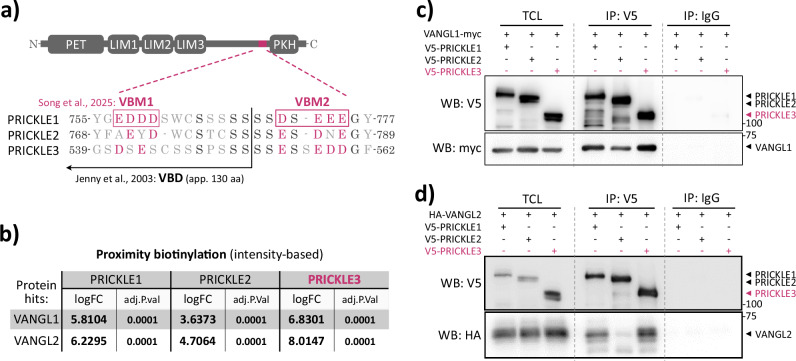 Figure 2
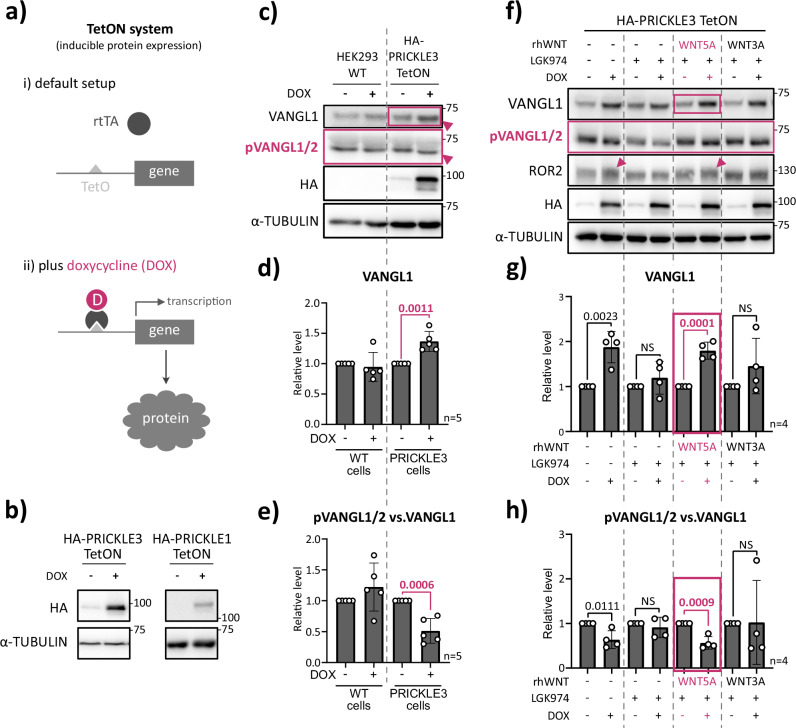 Figure 3
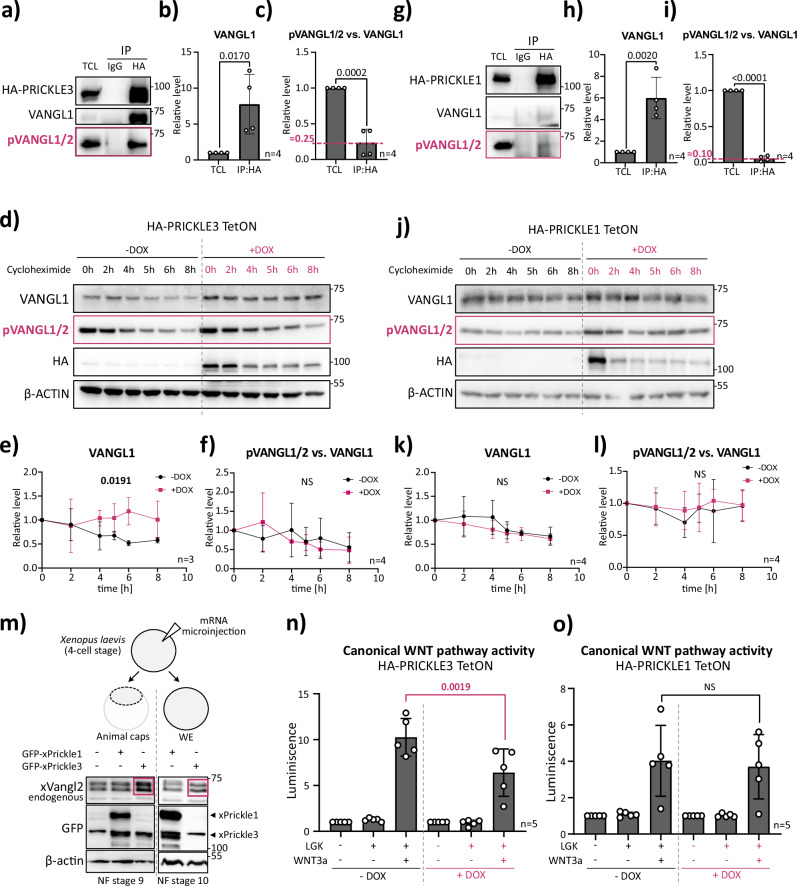 Figure 4
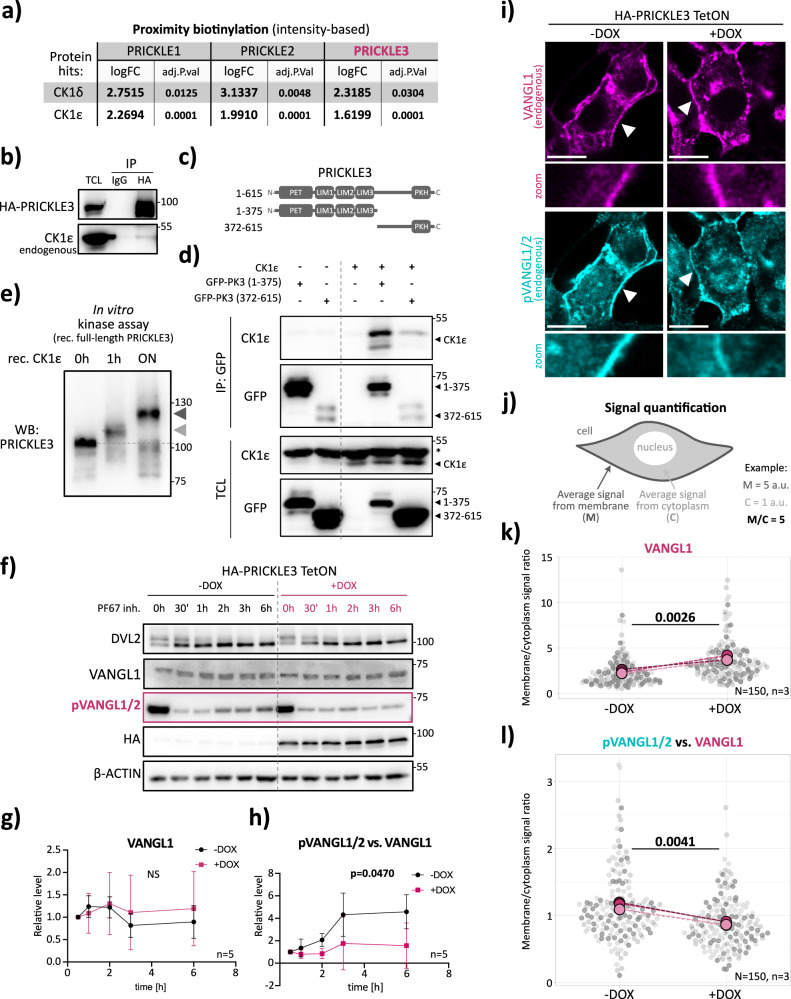 Figure 5
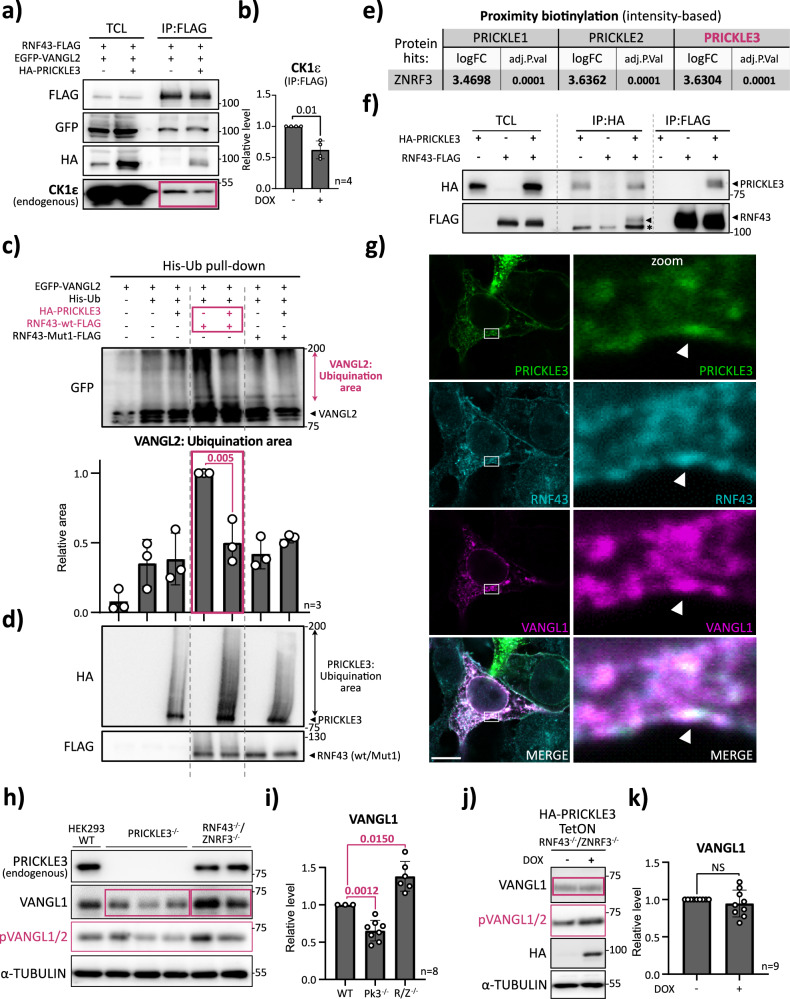 Figure 6
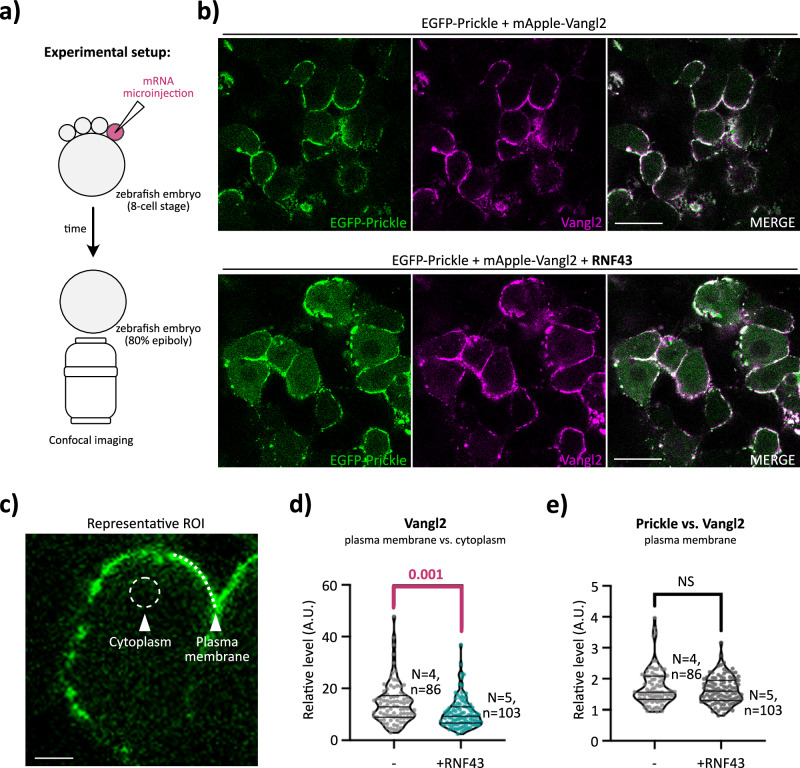 Figure 7
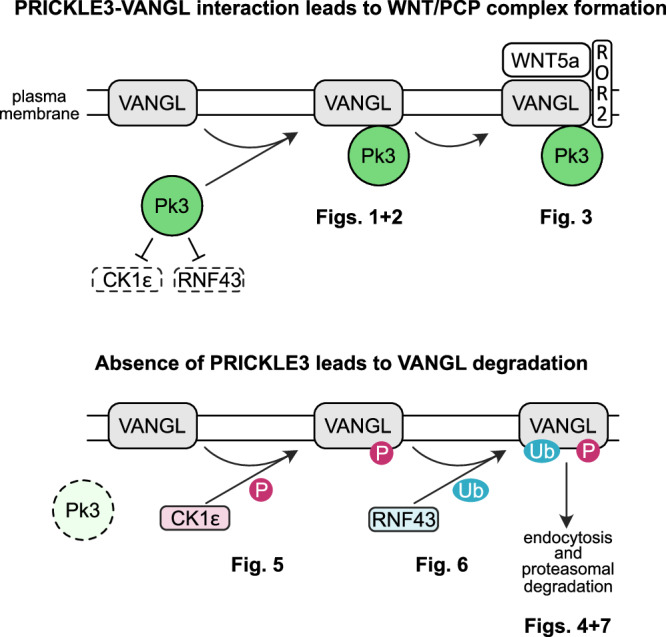 Figure 8
Peer Reviews
No public reviews on file for this paper yet. If you reviewed it on a platform where reviews are public (OpenReview, ICLR, NeurIPS, ICML), you can paste yours below so the community can read it here.
Videos
No videos yet. Explain this paper in a talk, walkthrough, or lecture? Add one.
Taxonomy
TopicsWnt/β-catenin signaling in development and cancer · Genetic and Kidney Cyst Diseases · Microtubule and mitosis dynamics