Comparative genomic and phylogenetic analyses of the mitogenome of Graptopetalum Paraguayense (N. E. Br.) Walth. 1938
Xue Zhou, Qingming Ren, Chuqi Lin, Zhirui Li, Lin Zhou, Fei Xiong, Xi Du

TL;DR
This study reports the first complete mitochondrial genome of Graptopetalum paraguayense, revealing insights into its structure, RNA editing, and evolutionary adaptations.
Contribution
The paper provides the first complete mitogenome of G. paraguayense and identifies adaptive evolution through positive selection and interorganellar gene transfer.
Findings
The mitogenome is 242,059 bp with 50 genes and 599 RNA editing sites.
Positive selection was detected in ccmB and nad7 genes.
Evidence of chloroplast-to-mitochondrial DNA transfer was found.
Abstract
Graptopetalum paraguayense is a perennial succulent plant with ornamental, ecological, and medicinal value. Here, we present the first complete mitogenome of G. paraguayense, assembled as a circular molecule of 242,059 bp with a GC content of 43.65%. The genome contains 50 genes, including 31 protein-coding genes (PCGs), 13 tRNAs, 3 rRNAs, and 3 pseudogenes. A total of 599 RNA editing sites were identified, with a predominant effect of altering amino acid hydrophobicity (47.41% were hydrophilic-to-hydrophobic conversions). Codon usage bias analysis revealed a preference for GCU (Ala), CGA (Arg), and UUA (Leu), with the stop codon UAA exhibiting the highest RSCU value (1.94). A total of 122 repetitive sequences were identified, comprising 59 simple sequence repeats (SSRs), 1 tandem repeat, and 62 dispersed repeats. Evolutionary analysis indicated positive selection on ccmB and nad7…
Genes, proteins, chemicals, diseases, species, mutations and cell lines named across the full text — each resolved to its canonical identifier and authoritative record.
Click any figure to enlarge with its caption.
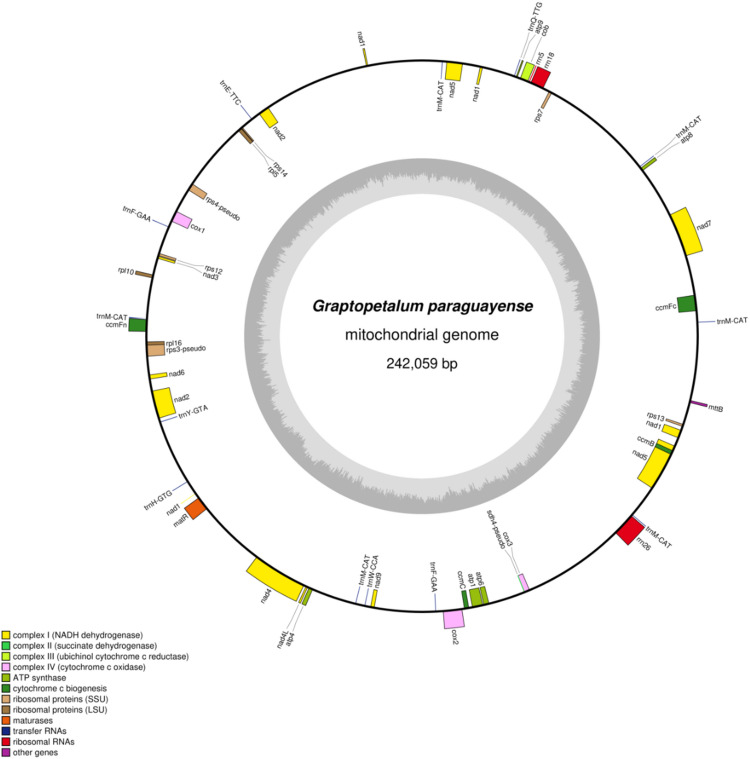 Figure 1
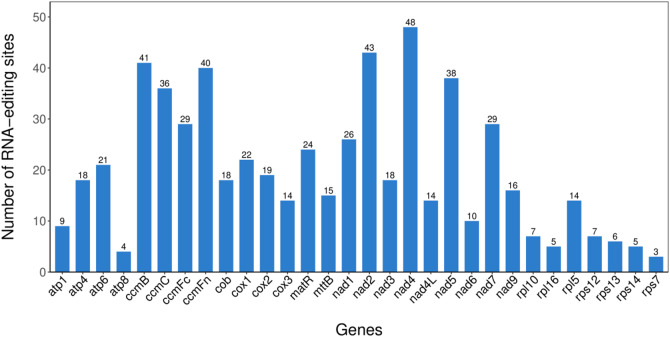 Figure 2
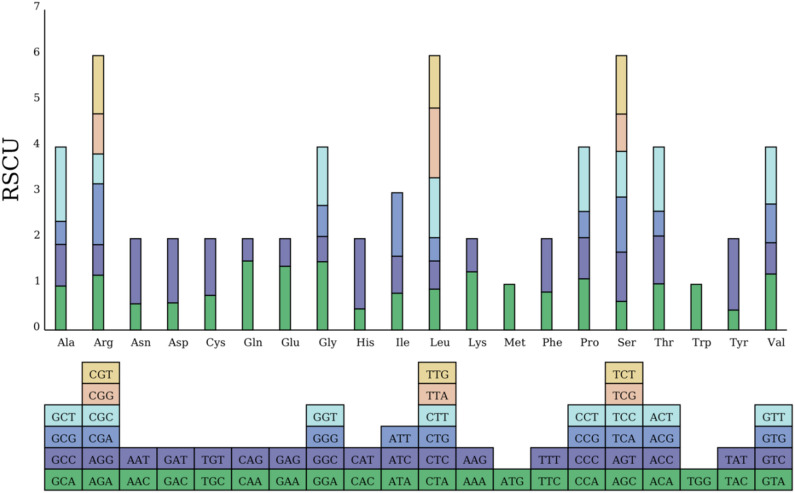 Figure 3
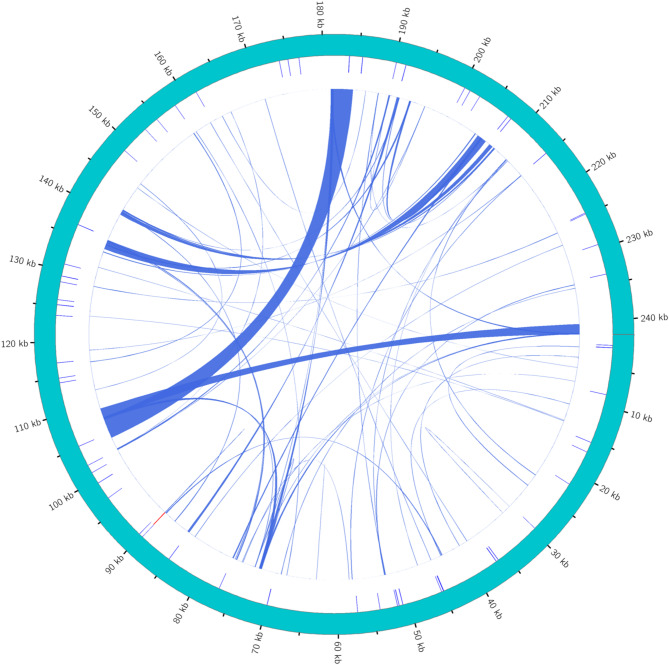 Figure 4
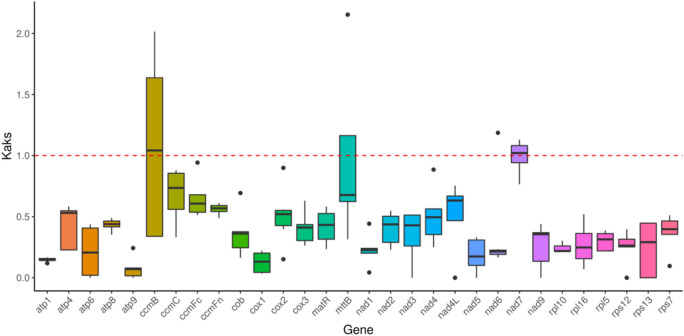 Figure 5
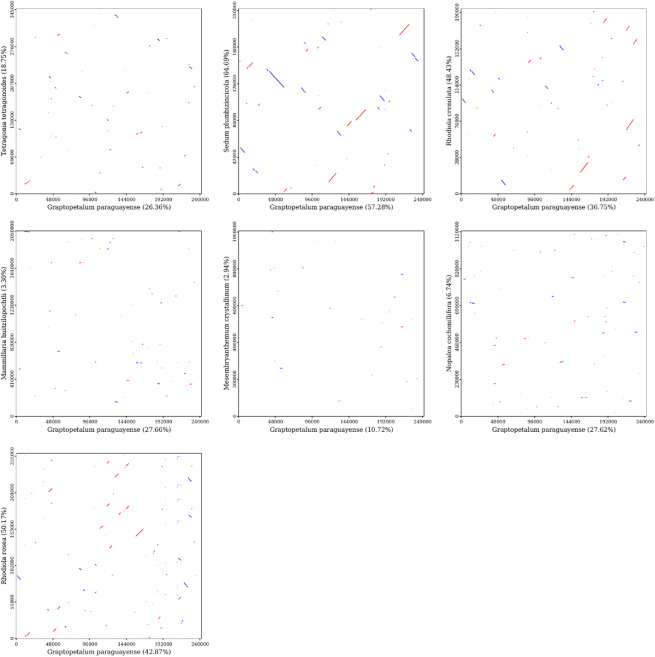 Figure 6
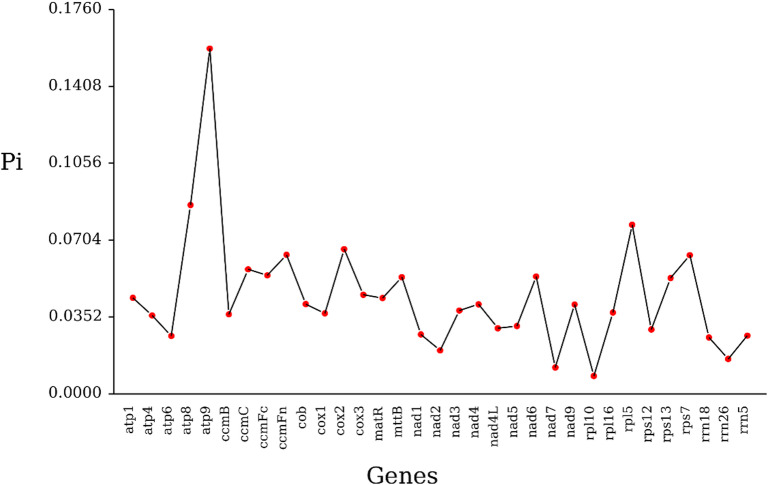 Figure 7
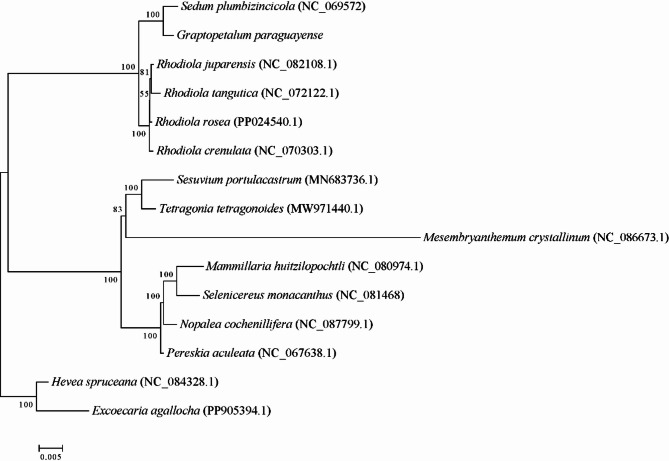 Figure 8
Peer Reviews
No public reviews on file for this paper yet. If you reviewed it on a platform where reviews are public (OpenReview, ICLR, NeurIPS, ICML), you can paste yours below so the community can read it here.
Videos
No videos yet. Explain this paper in a talk, walkthrough, or lecture? Add one.
Taxonomy
TopicsGenomics and Phylogenetic Studies · Photosynthetic Processes and Mechanisms · Traditional and Medicinal Uses of Annonaceae