Tropical-leaning Atlantic Oscillation favors more typhoons toward Asian high-latitude cities
Zeming Wu, Chundi Hu, Wenju Cai, Chengyang Zhang, Tao Lian, Gang Huang, Renguang Wu, Lifei Lin, Dake Chen

TL;DR
A new climate pattern called TAO may cause typhoons to move toward high-latitude East Asian cities as the climate warms.
Contribution
The discovery of the Tropical-leaning Atlantic Oscillation (TAO) as a predictor of typhoon track shifts in the Northwest Pacific.
Findings
Springtime TAO explains 56% of typhoon track variation variance in July–September.
TAO is linked to cross-seasonal temperature anomalies that steer typhoons toward high-latitude cities.
Climate models suggest increasing TAO events may shift typhoon activity poleward with global warming.
Abstract
Poleward migration of Northwest Pacific typhoons brings severe impacts on East Asian high-latitude cities, yet early typhoon climate prediction remains a long-standing scientific challenge. Here we reveal a seemingly-familiar-yet-strange climate oscillation phenomenon, which we name Tropical-leaning Atlantic Oscillation (TAO). Statistical results show that springtime TAO can explain 56% of the variance in a dominant dipole mode of typhoon track variations during July–September of 1979–2023, suggesting that it possesses a robust predictive skill of peak-season typhoon tracks four months in advance. Specifically, springtime TAO is characterized by a sea-level pressure seesaw between the tropical North Atlantic and the Hudson Bay-Davis Strait, relating to the meridional shift of North America-Atlantic subtropical jet stream. It generates cross-seasonal North Atlantic-and-Pacific surface…
Genes, proteins, chemicals, diseases, species, mutations and cell lines named across the full text — each resolved to its canonical identifier and authoritative record.
Click any figure to enlarge with its caption.
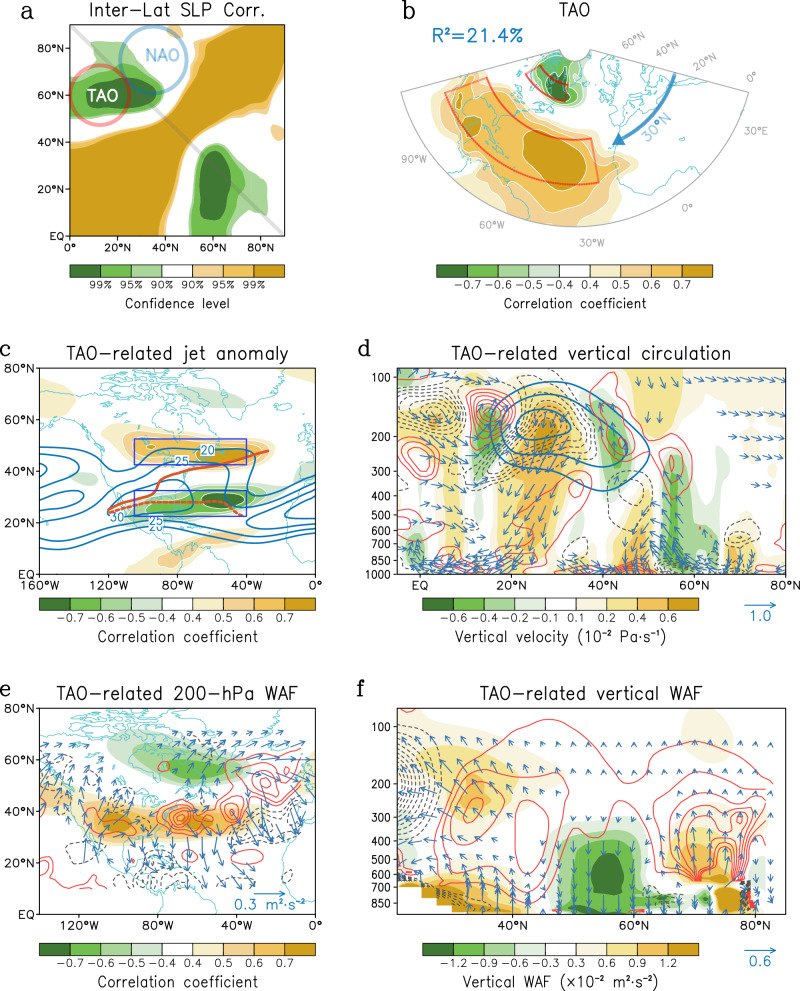 Figure 1
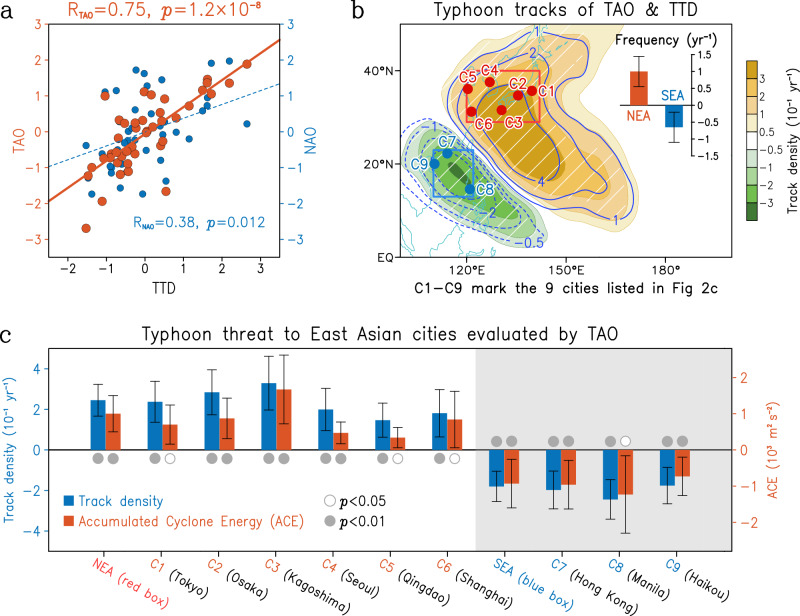 Figure 2
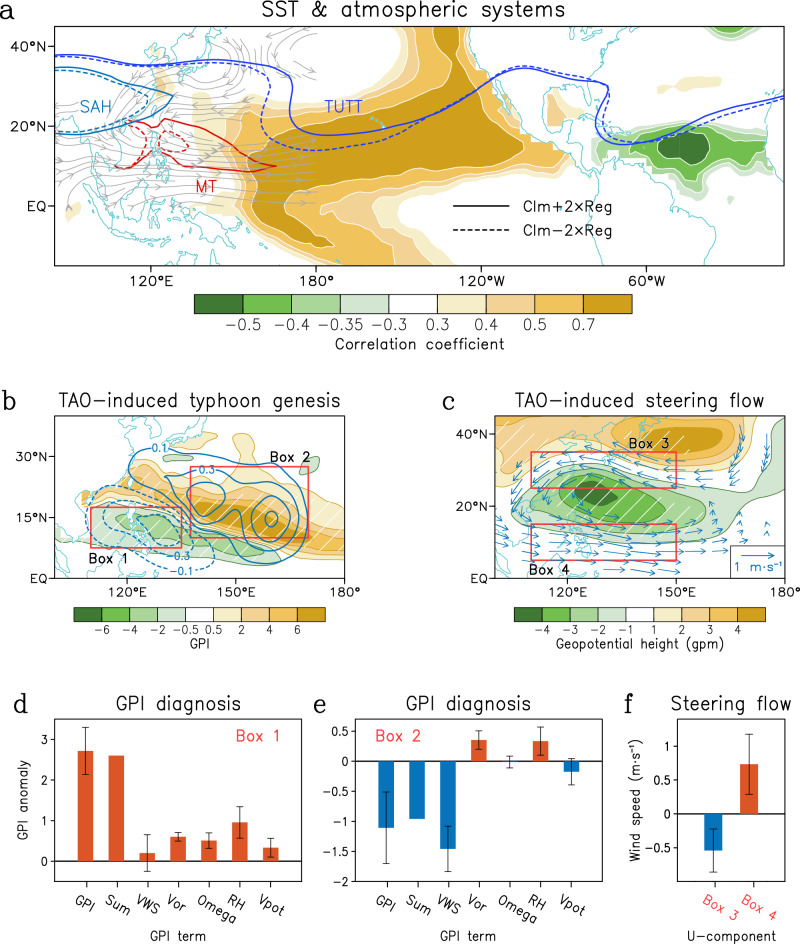 Figure 3
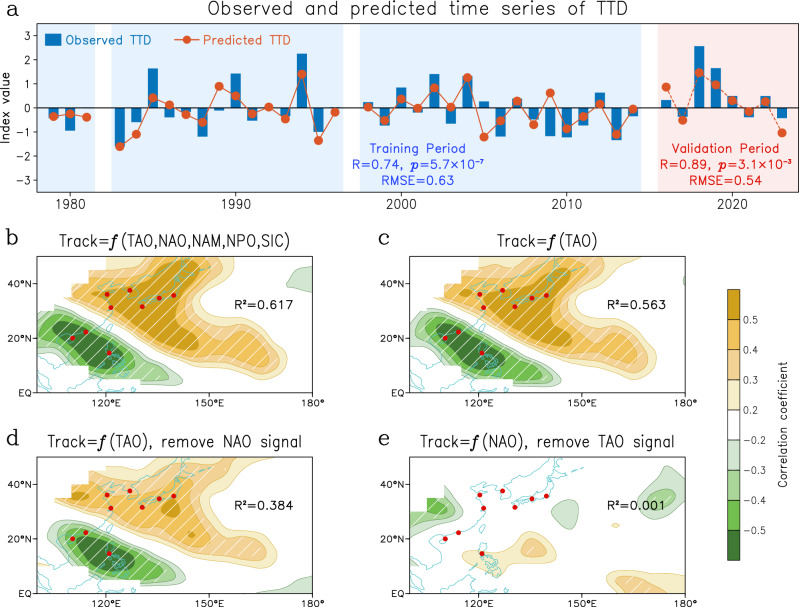 Figure 4
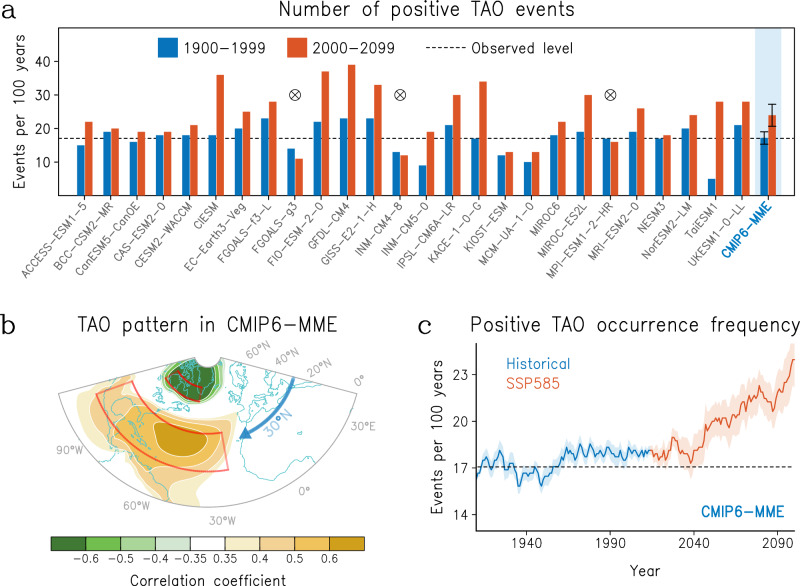 Figure 5
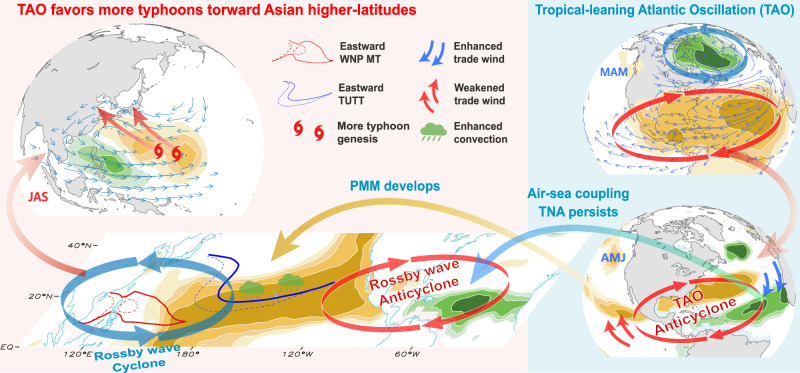 Figure 6
Peer Reviews
No public reviews on file for this paper yet. If you reviewed it on a platform where reviews are public (OpenReview, ICLR, NeurIPS, ICML), you can paste yours below so the community can read it here.
Videos
No videos yet. Explain this paper in a talk, walkthrough, or lecture? Add one.
Taxonomy
TopicsTropical and Extratropical Cyclones Research · Climate variability and models · Oceanographic and Atmospheric Processes