Urothelium marker UPK2 identifies aggressive colorectal cancers with distinct molecular and histological features
Ville K. Äijälä, Jouni Härkönen, Päivi Sirniö, Tuomo Mantere, Hanna Elomaa, Onni Sirkiä, Akseli Kehusmaa, Henna Karjalainen, Meeri Kastinen, Vilja V. Tapiainen, Maarit Ahtiainen, Olli Helminen, Erkki-Ville Wirta, Jukka Rintala, Sanna Meriläinen, Juha Saarnio, Tero Rautio

TL;DR
UPK2 identifies a subset of aggressive colorectal cancers with unique features and poor outcomes, suggesting potential for targeted treatments.
Contribution
Identification of UPK2 as a marker for aggressive CRCs with distinct molecular and histological features.
Findings
UPK2-positive CRCs are associated with advanced stage, lymphovascular invasion, and poor survival.
UPK2 marks tumors with reduced immune infiltration and molecular features like TP53 mutation and CMS4 subtype.
UPK2-positive tumors show keratinization and squamous differentiation markers like KRT17 and DSG3.
Abstract
Uroplakin-2 (UPK2) is a relatively specific marker for urothelial cancer, often used in the differential diagnosis of tumors of unknown origin. UPK2 expression has been observed in colorectal cancers (CRCs), prompting further investigation. UPK2 expression was analyzed in two independent CRC cohorts (N = 1851) and The Cancer Genome Atlas (N = 467). We investigated the histopathological, immunological, molecular, and clinical characteristics of UPK2-positive CRCs. UPK2 was expressed in 12% of CRCs and associated with adverse features including advanced stage, lymphovascular invasion, tumor budding, and micropapillary growth (p < 0.01). UPK2 positivity correlated with higher CRC-specific mortality in both cohorts (Cohort 1: HR 1.97, 95% CI 1.00–3.88; Cohort 2: HR 3.33, 95% CI 2.15–5.16). In the larger cohort, this association remained independent of other prognostic parameters (HR 2.31,…
Genes, proteins, chemicals, diseases, species, mutations and cell lines named across the full text — each resolved to its canonical identifier and authoritative record.
Click any figure to enlarge with its caption.
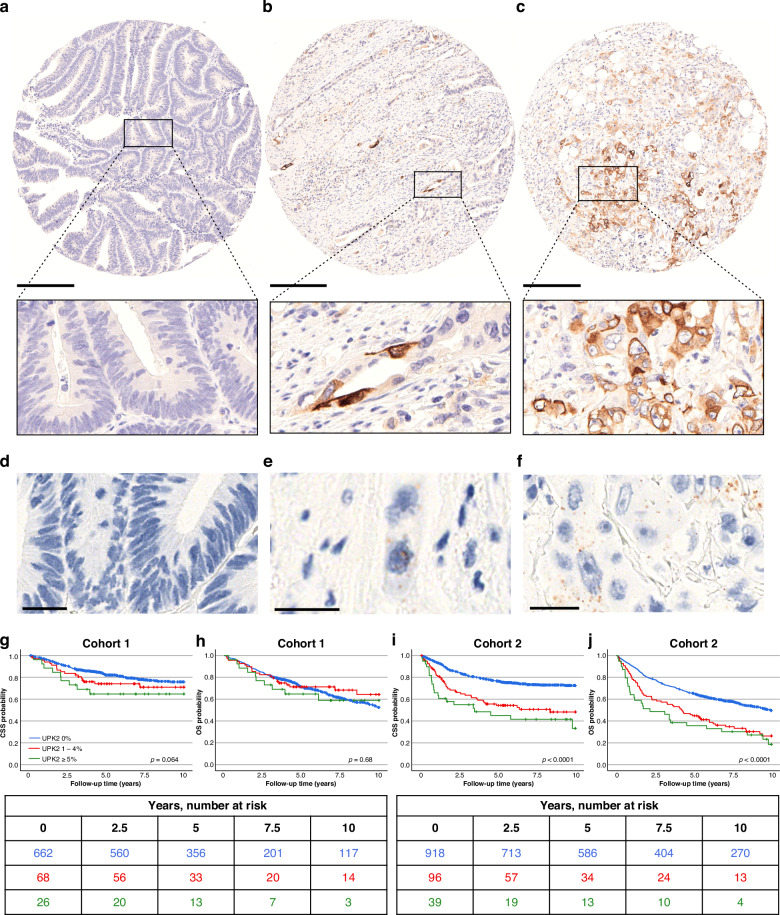 Figure 1
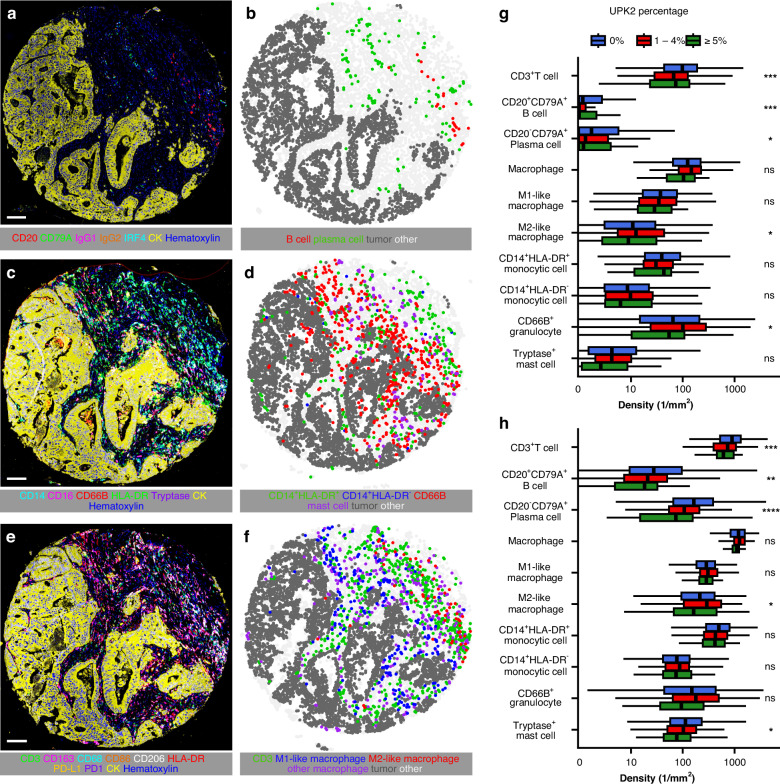 Figure 2
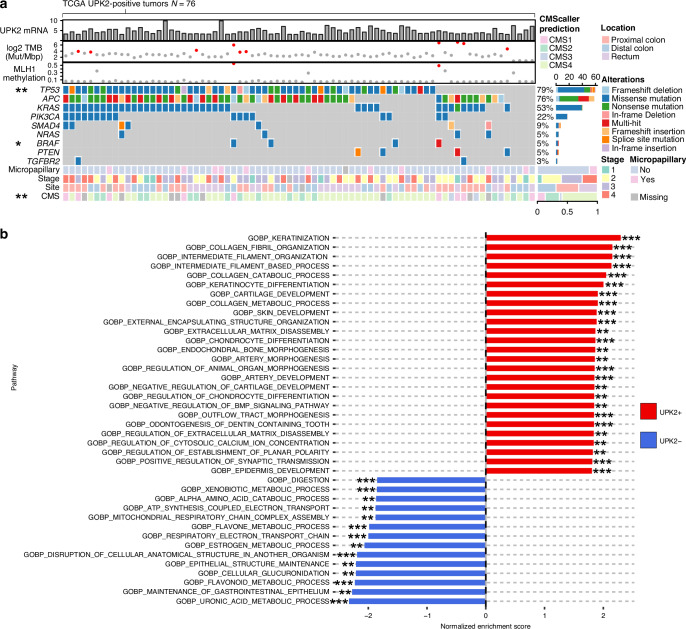 Figure 3
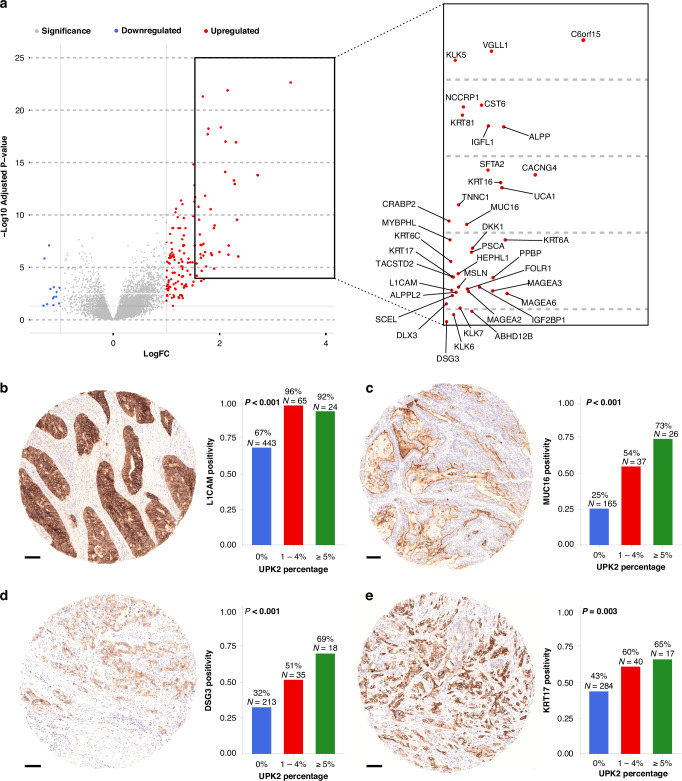 Figure 4
Peer Reviews
No public reviews on file for this paper yet. If you reviewed it on a platform where reviews are public (OpenReview, ICLR, NeurIPS, ICML), you can paste yours below so the community can read it here.
Videos
No videos yet. Explain this paper in a talk, walkthrough, or lecture? Add one.
Taxonomy
TopicsNuclear Structure and Function · Endoplasmic Reticulum Stress and Disease · Telomeres, Telomerase, and Senescence