Neonatal hyperoxia exposure causes cerebellar lesions and behavioral abnormalities in rats
Sakiko Suzuki, Takahiro Kanzawa, Ryoko Shimode, Yukina Takamoto, Kazuto Ueda, Ryosuke Miura, Toshihiko Suzuki, Naoki Tajiri, Hideki Hida, Yoshiyuki Takahashi, Masahiro Hayakawa, Yoshiaki Sato

TL;DR
Exposure to high oxygen levels in newborn rats causes cerebellar damage and behavioral issues, similar to neurological problems in preterm infants.
Contribution
This study reveals novel cerebellar-level mechanisms linking neonatal hyperoxia exposure to neurological deficits in rats.
Findings
Prolonged hyperoxia exposure in neonatal rats causes motor, cognitive, and social behavioral impairments.
Hyperoxia leads to delayed granule cell migration and abnormal Purkinje cell dendritic development in rat cerebellum.
Chronic hyperoxia exposure is associated with impaired myelination in cerebellar tissue.
Abstract
In humans, fetal cerebellar development peaks during the final stages of pregnancy. Preterm infants experience hyperoxia (excessive oxygen) outside the uterus. Hyperoxia exposure causes neurological deficits in preterm infants. However, detailed mechanisms underlying hyperoxia-induced neurological deficits remain unclear. Previous studies on neurological deficits have focused on cerebral lesions. However, recently, cerebellar lesions have been observed on brain magnetic resonance imaging in preterm infants. We herein aimed to investigate behavioral and cerebellar tissue–level changes in Sprague–Dawley rat neonates exposed to 83% hyperoxia from within 24 h of birth to 14 days of age. In rats, cerebellar development peaks in the first postnatal week. We elucidated the mechanism by which hyperoxia exposure causes neurological deficits in these rats. We found that prolonged hyperoxia…
Genes, proteins, chemicals, diseases, species, mutations and cell lines named across the full text — each resolved to its canonical identifier and authoritative record.
Click any figure to enlarge with its caption.
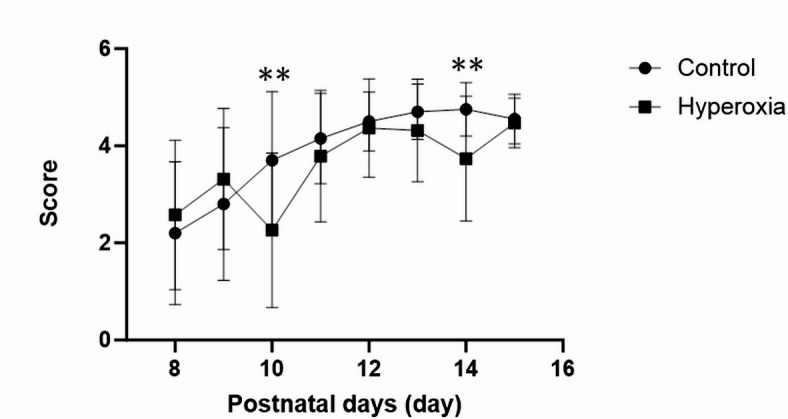 Figure 1
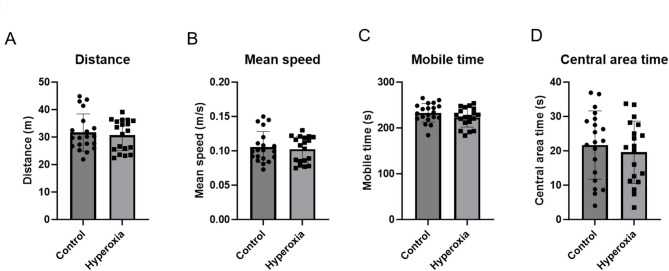 Figure 2
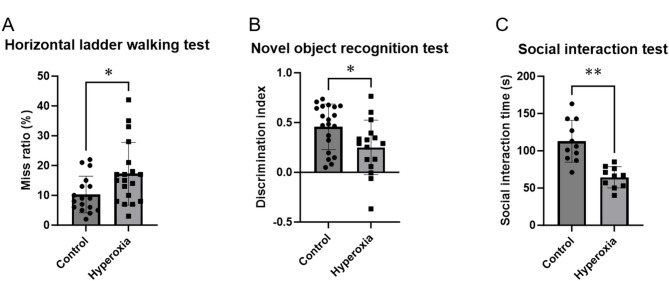 Figure 3
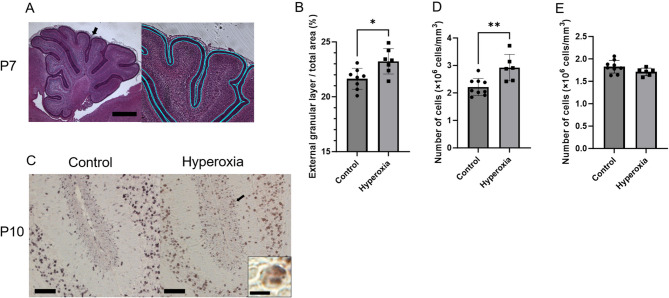 Figure 4
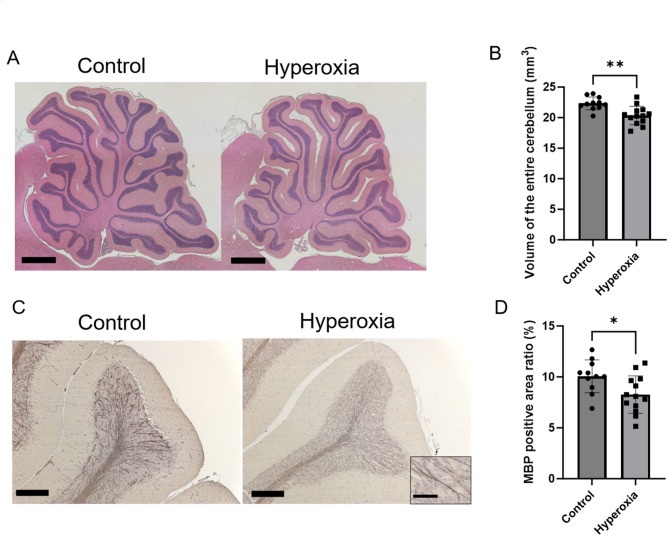 Figure 5
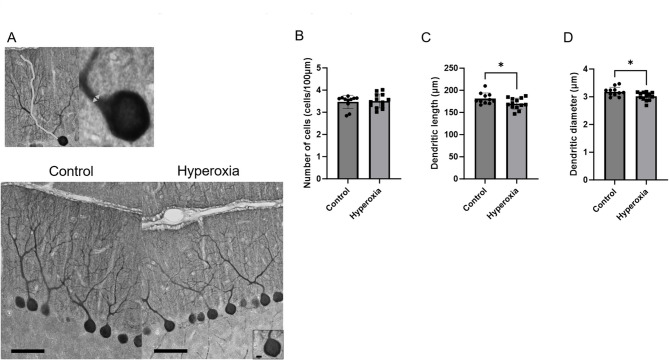 Figure 6
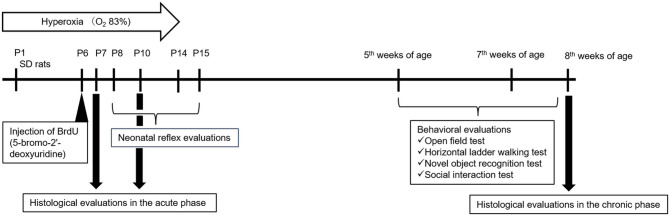 Figure 7
Peer Reviews
No public reviews on file for this paper yet. If you reviewed it on a platform where reviews are public (OpenReview, ICLR, NeurIPS, ICML), you can paste yours below so the community can read it here.
Videos
No videos yet. Explain this paper in a talk, walkthrough, or lecture? Add one.
Taxonomy
TopicsNeonatal and fetal brain pathology · Fetal and Pediatric Neurological Disorders · Anesthesia and Neurotoxicity Research