Molecular timekeepers: the curious alliance of redox, repair, and protective proteins in preserving seed longevity
Arup Das, Manoj Majee

TL;DR
This paper explores how seeds survive long periods by balancing drying, repair, and protection mechanisms to maintain viability.
Contribution
The paper highlights the novel alliance of redox homeostasis, repair, and protective proteins in governing seed longevity.
Findings
Seed longevity depends on active repair mechanisms triggered upon rehydration.
Redox homeostasis and protective proteins work together to counteract oxidative damage.
Understanding these molecular strategies can improve crop resilience and germplasm conservation.
Abstract
Seed longevity—the ability of seeds to remain viable over time—is an evolutionary masterpiece, ensuring plant survival across generations and in the face of environmental variability. Desiccation-tolerant (orthodox) seeds, representative of most crop species, possess the ability to survive programmed drying during maturation, thereby entering a metabolically inactive state. This anhydrobiotic state serves to prolong embryo viability and shield against adverse environmental conditions. While programmed drying is essential for seed preservation, it can result in oxidative and macromolecular damage, which is exacerbated by fluctuations in temperature and humidity during storage. Consequently, this cumulative damage to deoxyribonucleic acid, proteins, and cellular structures can jeopardize seed viability if not adequately repaired. Seed longevity is therefore dependent not merely on passive…
Click any figure to enlarge with its caption.
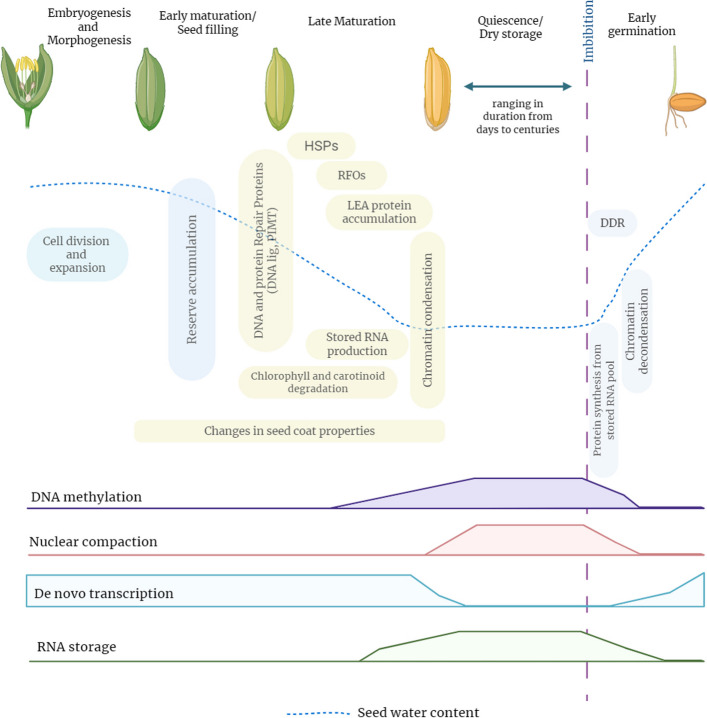 Figure 1
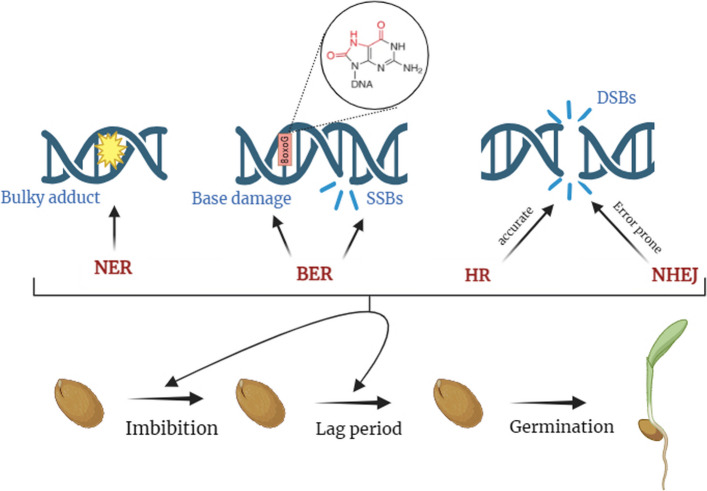 Figure 2
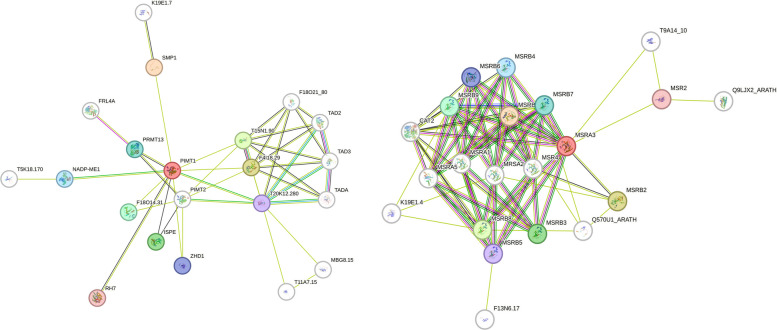 Figure 3
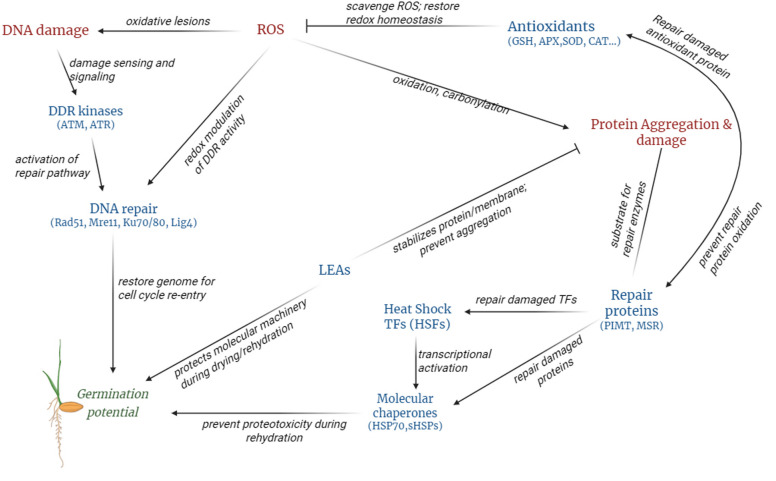 Figure 4
Peer Reviews
No public reviews on file for this paper yet. If you reviewed it on a platform where reviews are public (OpenReview, ICLR, NeurIPS, ICML), you can paste yours below so the community can read it here.
Videos
No videos yet. Explain this paper in a talk, walkthrough, or lecture? Add one.
Taxonomy
TopicsSeed Germination and Physiology · Plant Stress Responses and Tolerance · Plant Molecular Biology Research