The pathway-independent positive allosteric modulator C1 allows for the identification of active Y4 receptor relevant positions
Corinna Schüß, Oanh Vu, Tim Pelczyk, Mario Schubert, Yu Du, Jan Stichel, C. David Weaver, Jens Meiler, Annette G. Beck-Sickinger

TL;DR
A new compound called C1 enhances signaling of the Y4 receptor, helping identify key positions important for its active state.
Contribution
C1 is a novel pathway-independent positive allosteric modulator that enhances Y4 receptor signaling and identifies active receptor positions.
Findings
C1 enhances Y4R G-protein signaling, ligand binding, and arrestin-3 recruitment.
C1 shows high selectivity for Y4R and potentiates signaling even with low-affinity agonists.
Hot-spot residues at Y4R were identified using chimera and computational docking.
Abstract
The neuropeptide Y4 receptor (Y4R) and its endogenous ligand pancreatic polypeptide (PP) are primarily involved in the regulation of satiety and energy balance and present relevant pharmacological targets. We characterized the novel Y4R positive allosteric modulator C1 that enhances Y4R G-protein signaling, ligand binding, and arrestin-3 recruitment to Y4R. Comparison with a close analog revealed the structural importance of an ethyl acetate moiety for Y4R affinity and PAM activity at the G-protein pathway. C1 shows a high selectivity for the Y4R, while signaling of the related subtypes Y1R, Y2R, and Y5R is not affected. Y4R G-protein signaling is even potentiated by the low-affinity agonists neuropeptide Y and peptide YY. Binding affinity of the endogenous ligands to Y4R is enhanced by C1, indicating a stabilization of the ligand-bound Y4R conformation. Using Y4R/Y1R chimera, important…
Genes, proteins, chemicals, diseases, species, mutations and cell lines named across the full text — each resolved to its canonical identifier and authoritative record.
Click any figure to enlarge with its caption.
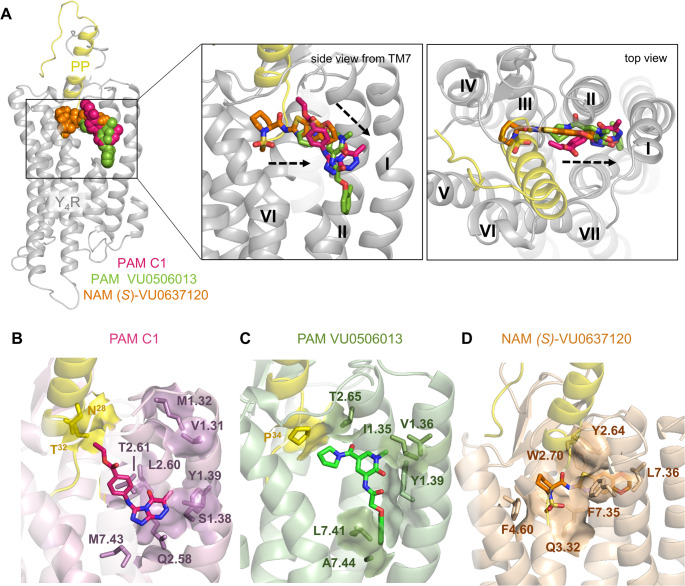 Figure 10
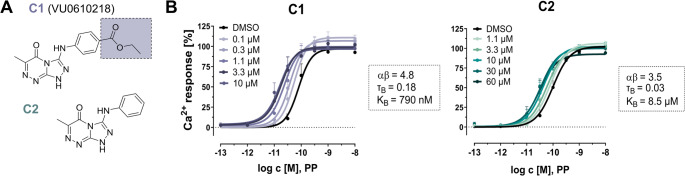 Figure 1
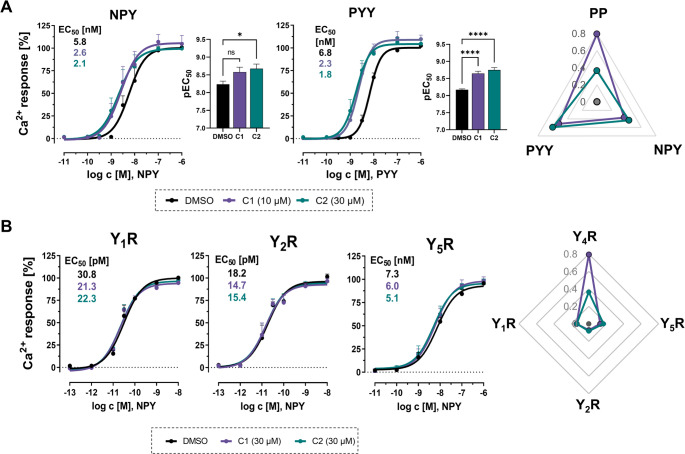 Figure 2
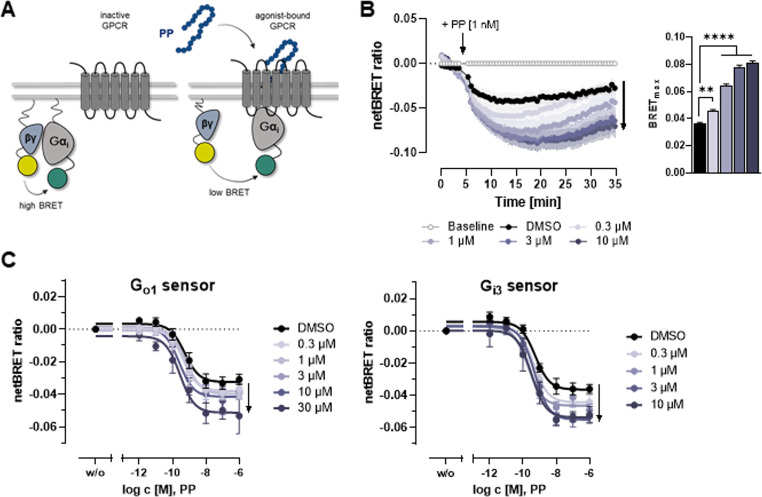 Figure 3
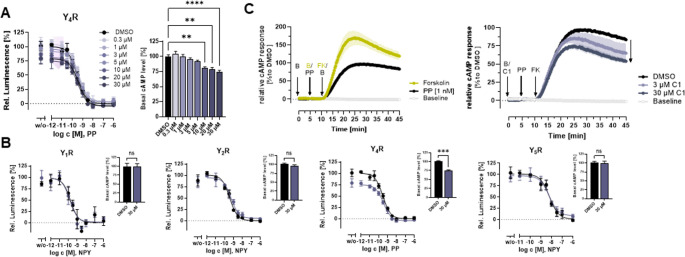 Figure 4
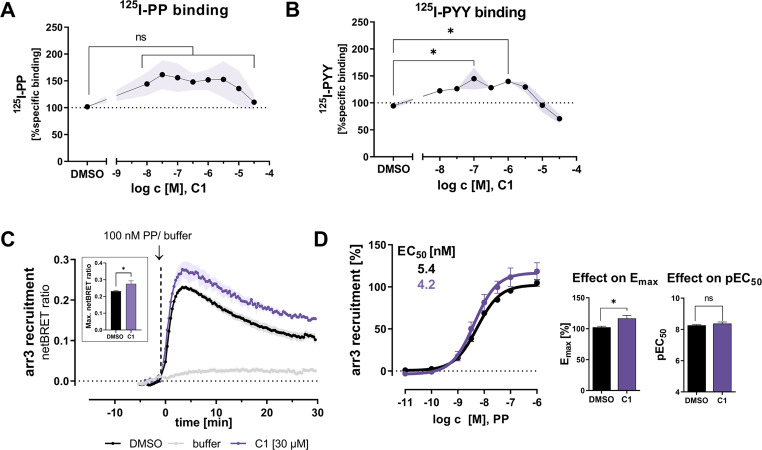 Figure 5
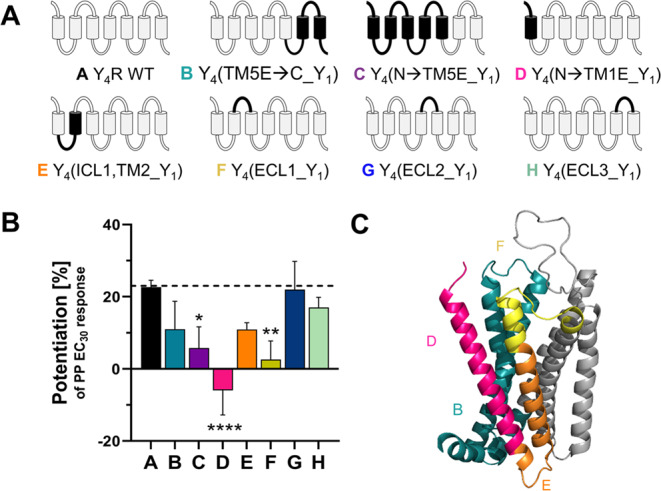 Figure 6
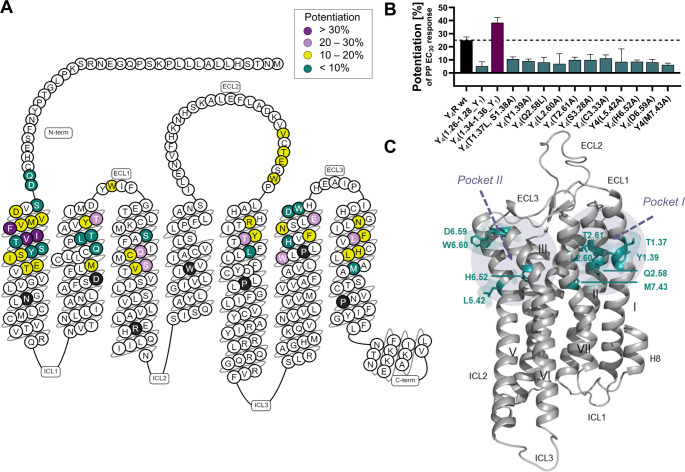 Figure 7
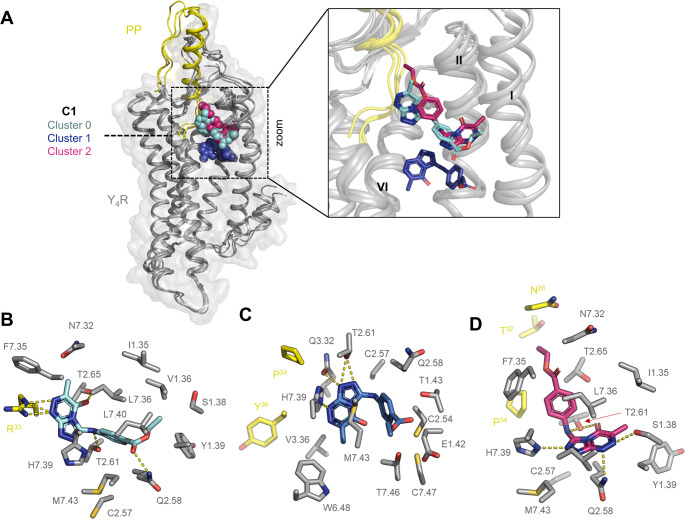 Figure 8
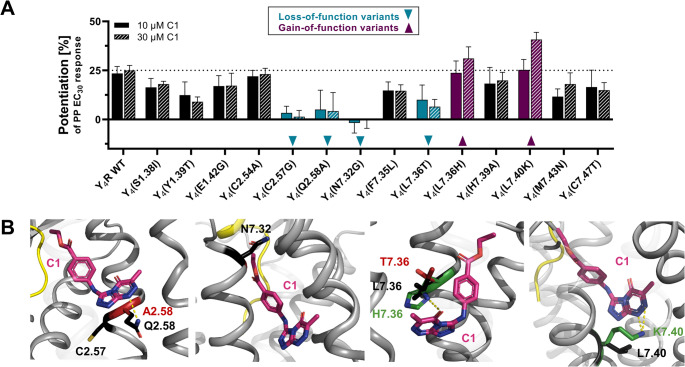 Figure 9
Peer Reviews
No public reviews on file for this paper yet. If you reviewed it on a platform where reviews are public (OpenReview, ICLR, NeurIPS, ICML), you can paste yours below so the community can read it here.
Videos
No videos yet. Explain this paper in a talk, walkthrough, or lecture? Add one.
Taxonomy
TopicsNeuropeptides and Animal Physiology · Receptor Mechanisms and Signaling · Renin-Angiotensin System Studies