Assessing small-lesion detectability and acquisition time optimisation in silicon-detector-Based PET: a phantom study
Nicholas Leybourne, Vineet Prakash, Mohammad Hussein, Andrew Fenwick, Peter Strouhal, Philip Evans, Lucia Florescu

TL;DR
This study compares silicon-based and traditional PET systems for detecting small lesions, finding that silicon-based systems perform better with shorter scan times.
Contribution
The study introduces a model to estimate optimal acquisition times for lesion detection in SiPM-based PET systems.
Findings
SiPM-based systems showed better lesion detectability for smaller and less active regions.
Acquisition times for SiPM-based systems could be reduced by up to 89% while maintaining detectability.
A five-point Likert scale effectively measures lesion detectability in PET imaging.
Abstract
The adoption of silicon photomultiplier (SiPM) detectors over conventional photomultiplier tubes (PMTs) in Positron Emission Tomography (PET) has enhanced overall system performance. In this phantom study, small-lesion detectability was assessed for SiPM-based and PMT-based PET systems for various inhomogeneity sizes, acquisition times and activity contrasts between the inhomogeneity and background. Six spheres of internal diameters ranging between 4.0 mm and 13.0 mm were integrated into a NEMA/IEC PET Body Phantom and filled with fluorodeoxyglucose, with a sphere activity concentration of 29.2 MBq/L and five sphere-to-background activity concentration ratios between 4 and 20. Scans were performed with an SiPM-based system and a PMT-based PET system for each sphere-to-background activity concentration ratio for acquisition times between 1 and 10 min, and image reconstruction was…
Genes, proteins, chemicals, diseases, species, mutations and cell lines named across the full text — each resolved to its canonical identifier and authoritative record.
Click any figure to enlarge with its caption.
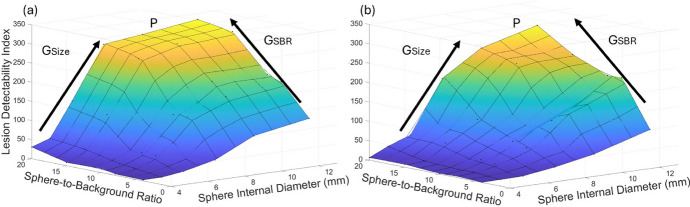 Figure 10
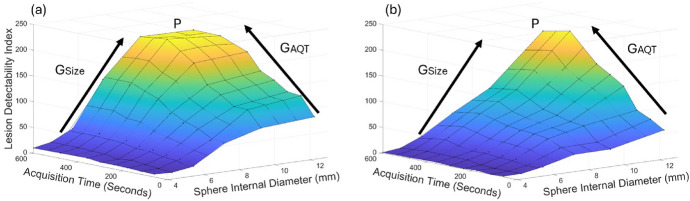 Figure 11
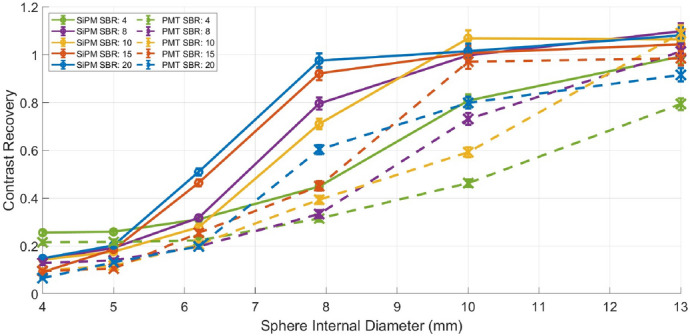 Figure 12
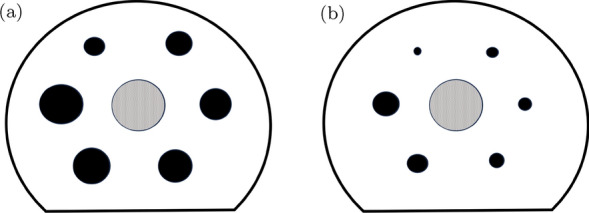 Figure 1
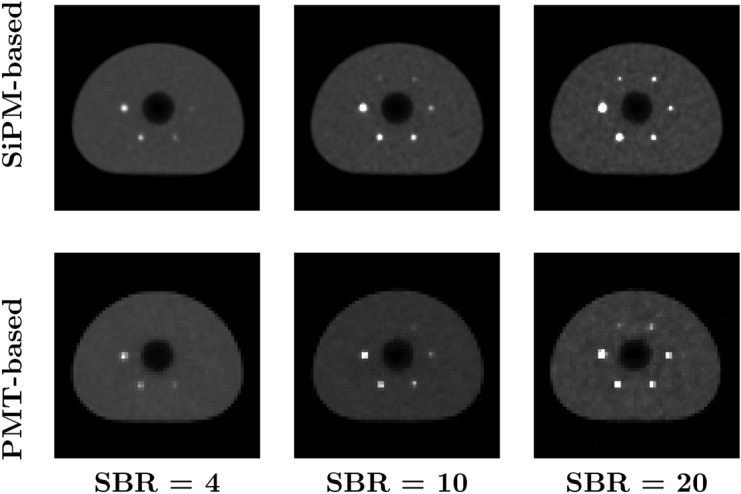 Figure 2
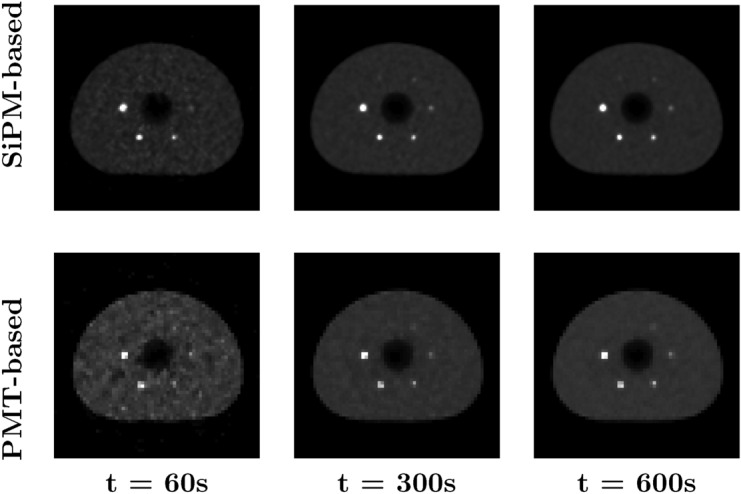 Figure 3
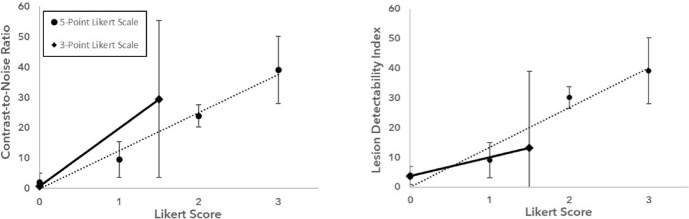 Figure 4
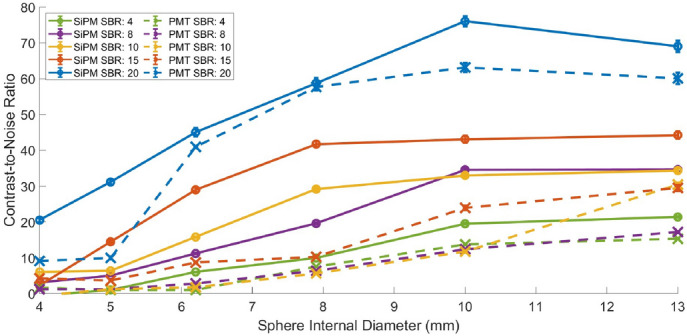 Figure 5
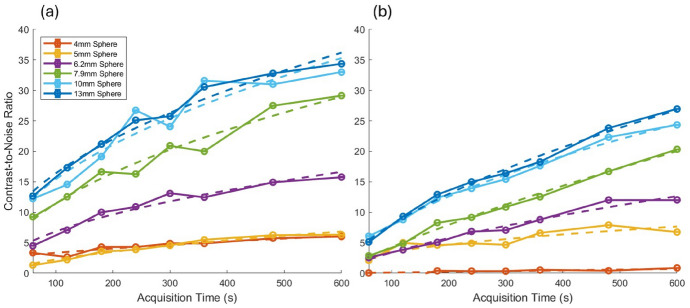 Figure 6
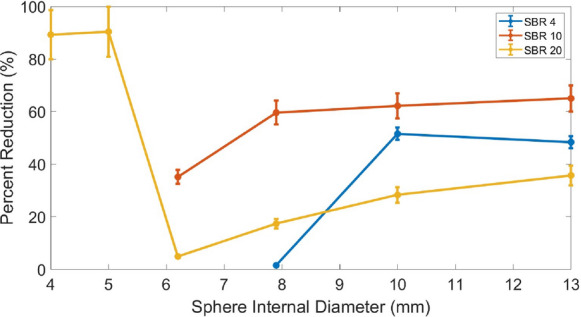 Figure 7
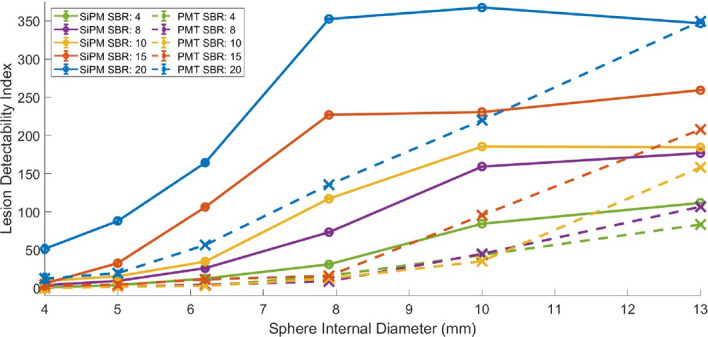 Figure 8
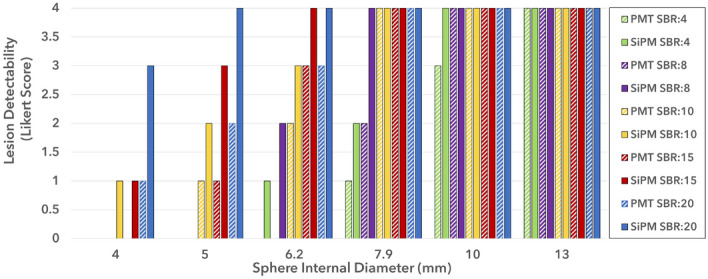 Figure 9
Peer Reviews
No public reviews on file for this paper yet. If you reviewed it on a platform where reviews are public (OpenReview, ICLR, NeurIPS, ICML), you can paste yours below so the community can read it here.
Videos
No videos yet. Explain this paper in a talk, walkthrough, or lecture? Add one.
Taxonomy
TopicsMedical Imaging Techniques and Applications · Radiation Detection and Scintillator Technologies · Advanced Radiotherapy Techniques