The Application of Iron Nanoparticles Green‐Synthesized by Coptis chinensis Leaf Aqueous Extract in Reducing the TNF‐α and IL1‐β Inflammatory Cytokines in the Rat Periodontal Model
Jialing Wu, Xinjie Gao, Ruiqi Li

TL;DR
This study shows that iron nanoparticles made from Coptis chinensis extract can reduce inflammation in a rat model of periodontitis by lowering TNF-α and IL1-β levels.
Contribution
The novel use of green-synthesized iron nanoparticles from Coptis chinensis extract to reduce inflammatory cytokines in periodontitis is demonstrated.
Findings
FeNPs significantly reduced TNF-α and IL1-β levels in rat gum tissue (p ≤ 0.01).
FeNPs showed anti-inflammatory effects comparable to indomethacin in the periodontitis model.
C. chinensis extract directly inhibits pro-inflammatory cytokines in periodontal tissue.
Abstract
The study purpose was to examine how the green‐synthesized iron nanoparticles (FeNPs) made from Coptis chinensis extract affected the TNF‐α and IL1‐β gingival levels in the rat periodontal model. The extract from C. chinensis was utilized as a green reducing agent and a great stabilizer for the Fe NPs that were produced. The as‐synthesized Fe NPs were physicochemically characterized using FT‐IR, UV–Vis, EDX, XRD, and FE‐SEM. Male rats were given 0–3 ligatures around the neck of their right mandibular first tooth to develop inflammatory periodontitis. In the positive control group, indomethacin (5 mg/kg) was administered daily. As a pre/post treatment, Fe NPs (0.1 mg/kg) were directly injected into the gum tissue after being dissolved in dimethyl sulfoxide. ELISA was used to assess the TNF‐α and IL1‐β gingival levels. The Fe‐O bond is identified in the FT‐IR as the vibration band at 568…
Genes, proteins, chemicals, diseases, species, mutations and cell lines named across the full text — each resolved to its canonical identifier and authoritative record.
Click any figure to enlarge with its caption.
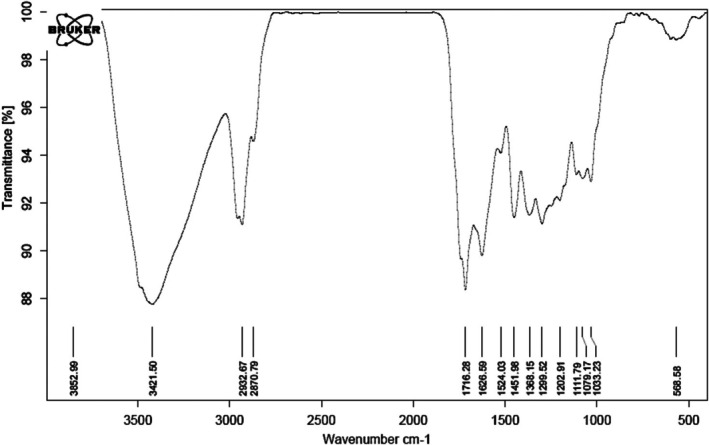 Figure 1
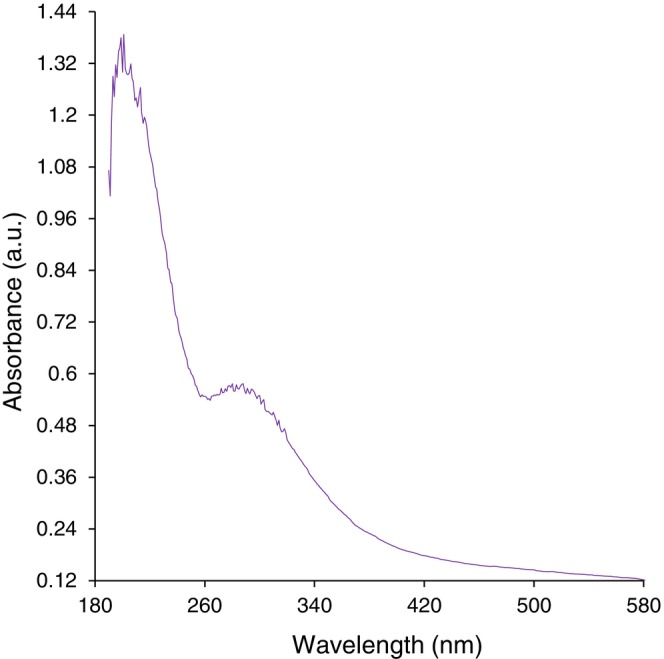 Figure 2
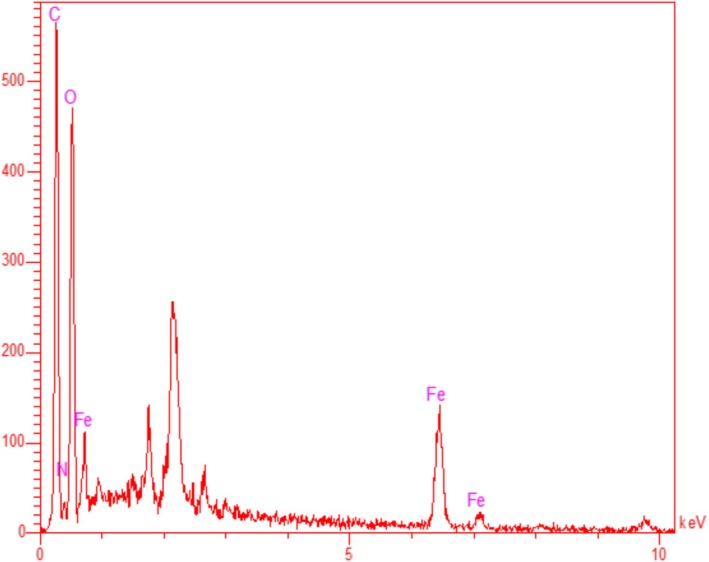 Figure 3
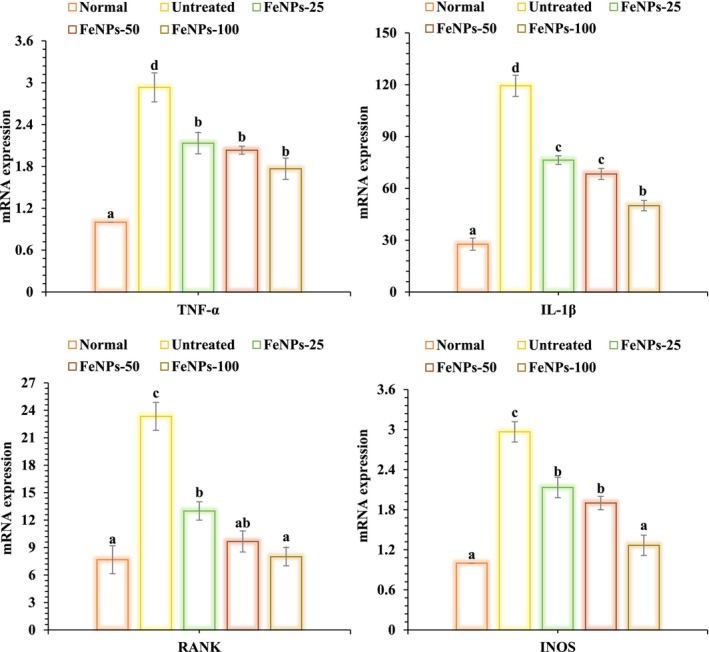 Figure 4
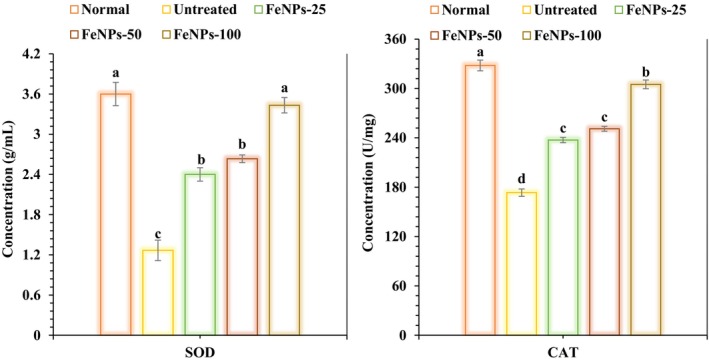 Figure 5
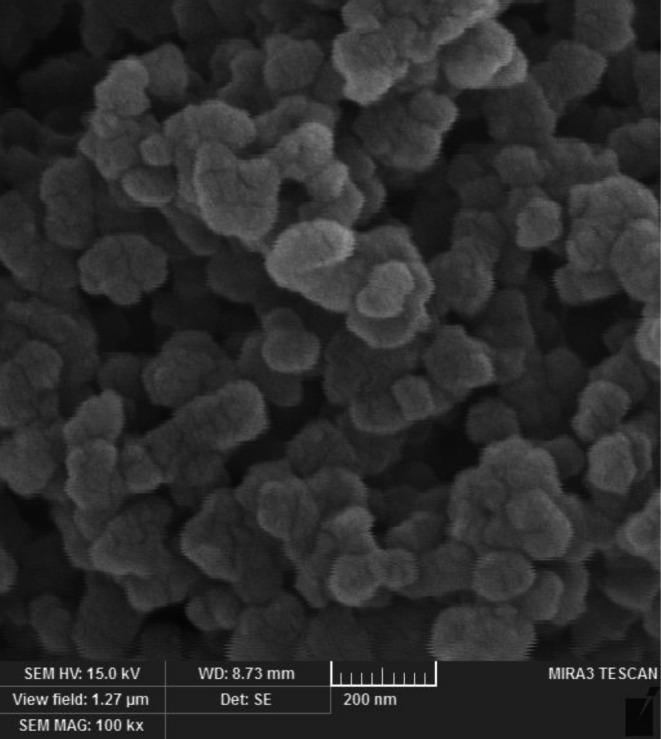 Figure 6
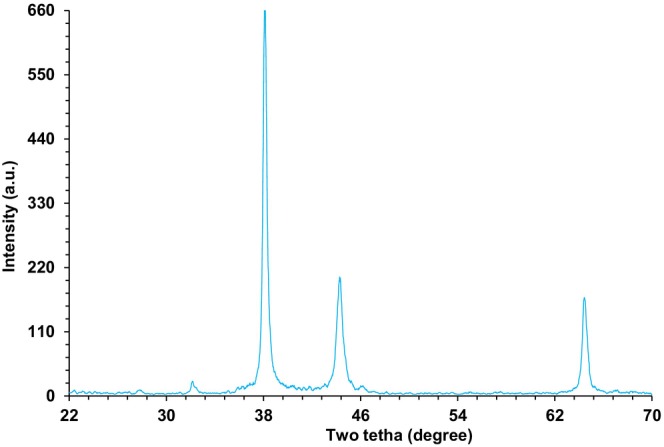 Figure 7
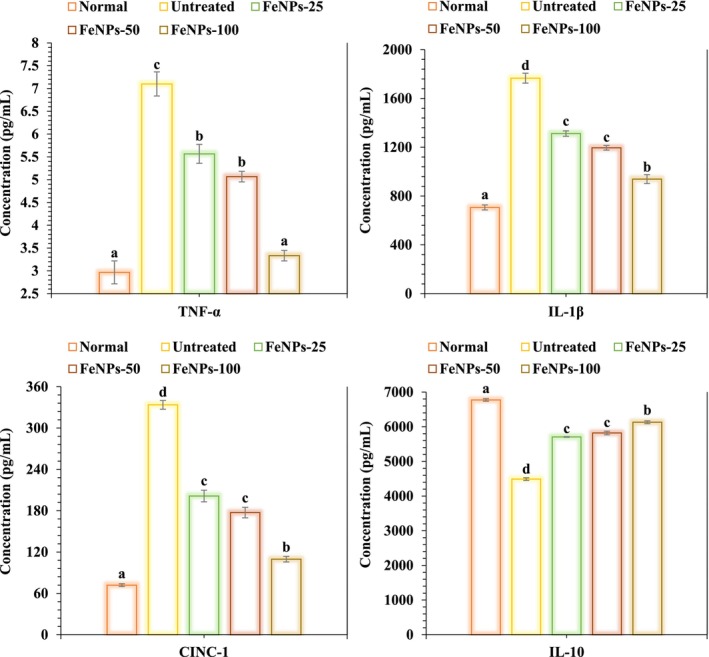 Figure 8
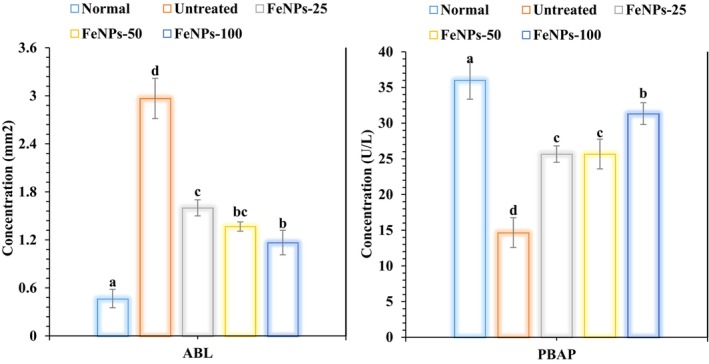 Figure 9
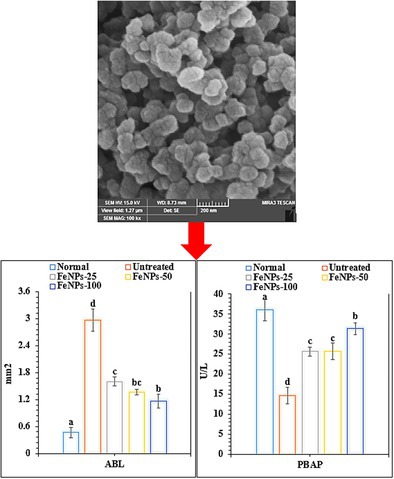 Figure 10
Peer Reviews
No public reviews on file for this paper yet. If you reviewed it on a platform where reviews are public (OpenReview, ICLR, NeurIPS, ICML), you can paste yours below so the community can read it here.
Videos
No videos yet. Explain this paper in a talk, walkthrough, or lecture? Add one.
Taxonomy
TopicsBerberine and alkaloids research · Oral microbiology and periodontitis research · Andrographolide Research and Applications