Operationalizing the Global Leadership Initiative in Sarcopenia: Muscle‐Specific Strength, Optimal Criteria and Clinical Relevance
Liangyu Yin, Yu Cao, Mengda Tang, Hanping Shi, Hua Jiang, Jinghong Zhao

TL;DR
This study operationalizes the Global Leadership Initiative on Sarcopenia (GLIS) using muscle-specific strength metrics and evaluates their effectiveness in diagnosing sarcopenia.
Contribution
The study introduces a new muscle-specific strength assessment (LFR) and evaluates six diagnostic criteria combinations for sarcopenia.
Findings
The H/M diagnostic method showed the strongest correlation with functional outcomes and optimal diagnostic performance.
The HA method had the highest concordance with the Asian Working Group for Sarcopenia 2019 criteria.
All methods independently predicted poor functional outcomes in sarcopenia patients.
Abstract
While the Global Leadership Initiative on Sarcopenia (GLIS) is promising to standardize sarcopenia diagnosis, its operational implementation remains largely undefined. This study aims to operationalize GLIS and evaluate its feasibility, diagnostic concordance and clinical relevance. This three‐stage, multicenter study enrolled 12 116 participants for cut‐off development (mean age 58.7 years, 48.2% men) and 11 241 participants for outcome analysis (mean age 58.4 years, 49.4% men) from a national survey in China. Another 504 patients with chronic kidney disease were included for validation. We proposed the lower limb skeletal muscle mass to five‐time chair stand test ratio (LFR) to assess muscle‐specific strength (MSS). The GLIS conceptual framework was instantiated into six diagnostic criteria combinations using handgrip strength (HGS), appendicular skeletal muscle mass index (ASMI,…
Genes, proteins, chemicals, diseases, species, mutations and cell lines named across the full text — each resolved to its canonical identifier and authoritative record.
Click any figure to enlarge with its caption.
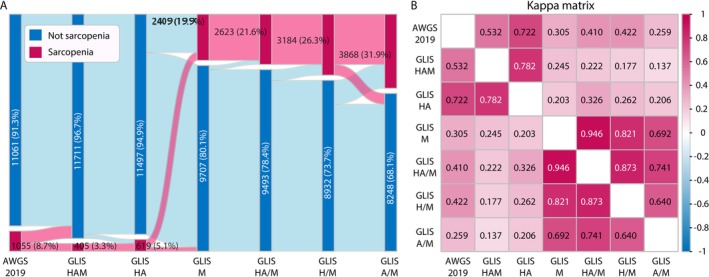 Figure 1
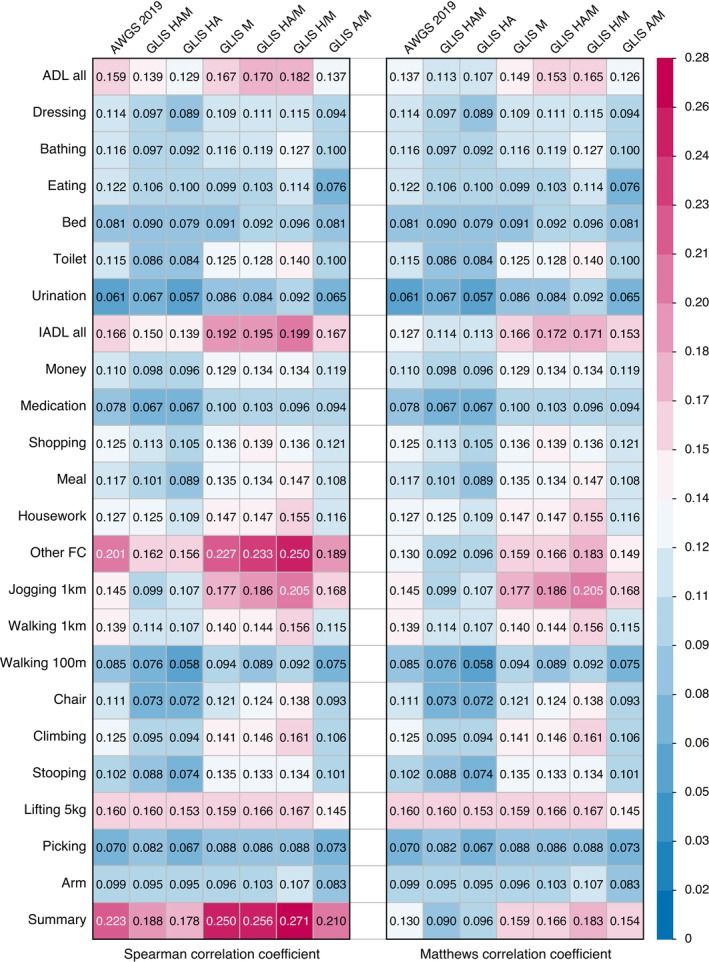 Figure 2
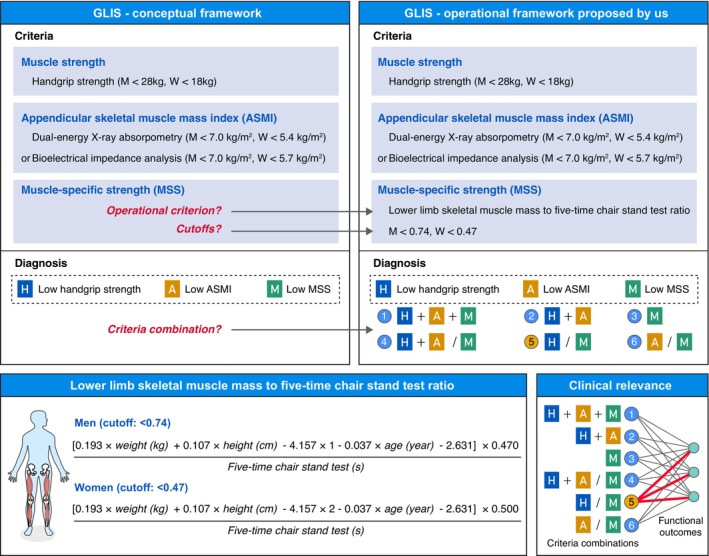 Figure 3
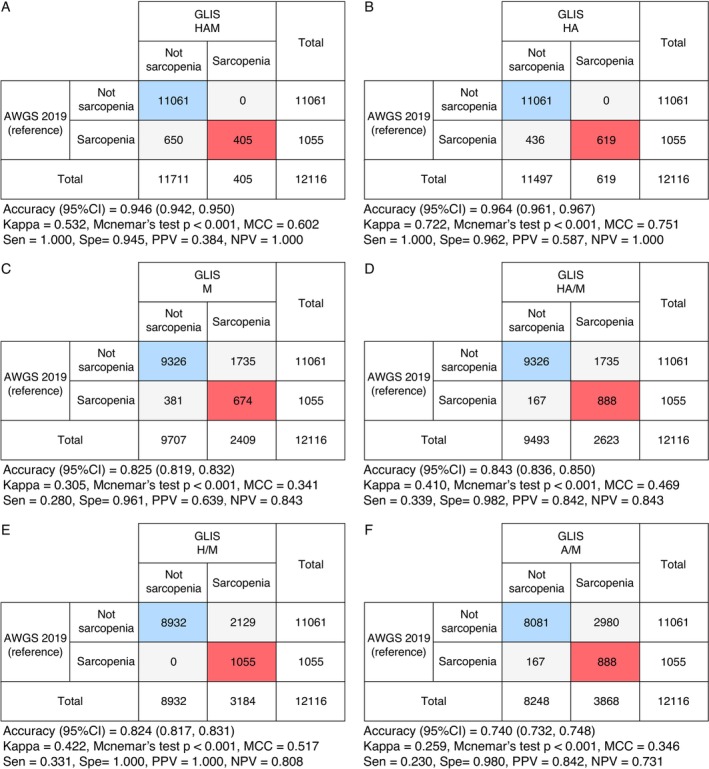 Figure 4
Peer Reviews
No public reviews on file for this paper yet. If you reviewed it on a platform where reviews are public (OpenReview, ICLR, NeurIPS, ICML), you can paste yours below so the community can read it here.
Videos
No videos yet. Explain this paper in a talk, walkthrough, or lecture? Add one.
Taxonomy
TopicsNutrition and Health in Aging · Cerebral Palsy and Movement Disorders · Body Composition Measurement Techniques