Endoscopic-Assisted Hematoma Evacuation Through a Small Craniotomy for Acute Subdural Hematoma Presenting With “Talk and Deteriorate”: A Case Report
Ryo Matsuzaki, Yuki Sakaeyama, Sayaka Terazono, Shuhei Kubota, Nobuo Sugo

TL;DR
This case report describes using an endoscope to remove a brain hematoma through a small craniotomy, offering a less invasive option for elderly patients.
Contribution
The paper presents a novel endoscopic-assisted technique for hematoma evacuation in acute subdural hematoma.
Findings
Endoscopic-assisted hematoma evacuation reduced operative time and invasiveness.
The technique was successfully applied in a patient with acute subdural hematoma.
The approach may be particularly suitable for elderly patients with comorbidities.
Abstract
Craniotomy has traditionally been the standard procedure for acute subdural hematoma (ASDH). As ASDH occurs predominantly in the elderly, its incidence is expected to increase in aging societies. In elderly patients with comorbidities, craniotomy may not always be feasible due to its invasiveness and long operative time. Endoscopic-assisted hematoma evacuation can potentially reduce operative time and surgical invasiveness. Here, we report a case treated with endoscopic-assisted hematoma evacuation and discuss its indications and technical considerations.
Genes, proteins, chemicals, diseases, species, mutations and cell lines named across the full text — each resolved to its canonical identifier and authoritative record.
Click any figure to enlarge with its caption.
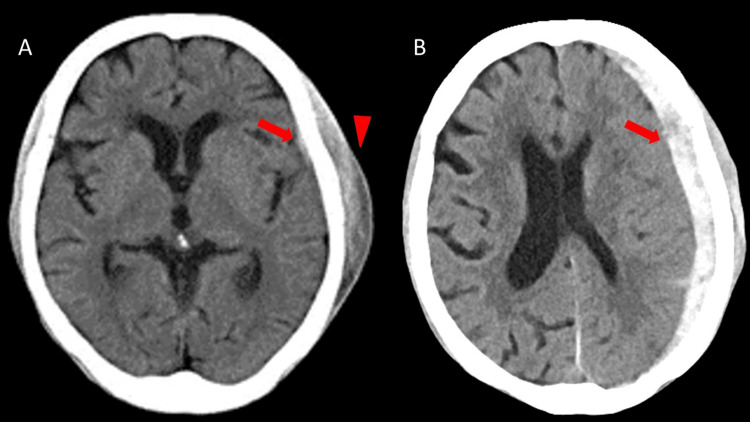 Figure 1
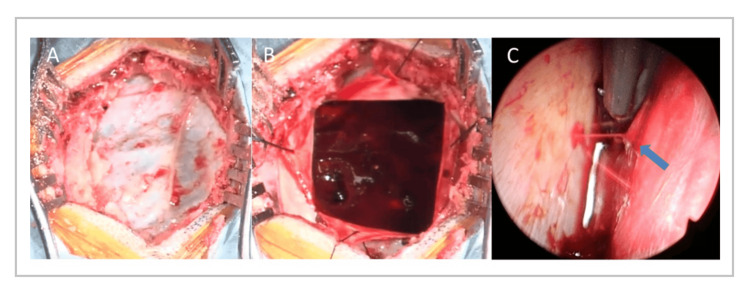 Figure 2
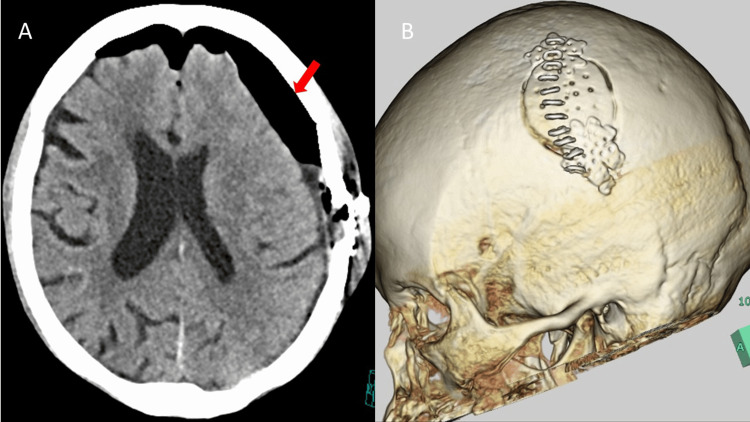 Figure 3
Peer Reviews
No public reviews on file for this paper yet. If you reviewed it on a platform where reviews are public (OpenReview, ICLR, NeurIPS, ICML), you can paste yours below so the community can read it here.
Videos
No videos yet. Explain this paper in a talk, walkthrough, or lecture? Add one.
Taxonomy
TopicsNeurosurgical Procedures and Complications · Traumatic Brain Injury and Neurovascular Disturbances · Cerebrospinal fluid and hydrocephalus