Effectiveness of antiseptics in the bacterial load reduction after septic wound dressing at Bugando Medical Centre, Mwanza, Tanzania
Emmanuel Jagadi, Doris George Makweta, Magwa Jisusi Kiyumbi, Helmut Nyawale, Zengo Kashinje, Vitus Silago, Francis Tegete, Inyasi Lawrence Akaro, Jeremiah Seni

TL;DR
This study shows that using povidone-iodine during wound dressing significantly reduces bacterial load, including drug-resistant strains, in septic wounds at a hospital in Tanzania.
Contribution
The study evaluates the effectiveness of antiseptics in reducing bacterial load in septic wounds, with a focus on multidrug-resistant bacteria.
Findings
Bacterial culture positivity decreased from 71.9% to 39.4% after wound dressing.
Povidone-iodine was independently associated with reduced odds of culture positivity after dressing.
The proportions of ESBL-producing Gram-negative bacteria and MRSA were significantly reduced after dressing.
Abstract
septic wounds due to multidrug-resistant bacteria (MDR) are costly and result in adverse patient outcomes. Despite the fact that various antiseptics are routinely used for wound dressing, their effectiveness on bacterial load reduction remains to be evaluated to ascertain the usefulness of this step prior to antimicrobial therapies. a cross-sectional analytical study was conducted among 203 patients with septic wounds at Bugando Medical Centre (BMC). Wound swab samples before and after dressing were collected, and cultured to quantify the total bacteria, extended-spectrum beta-lactamase-producing (ESBL) Gram-negative bacteria, and Methicillin-resistant Staphylococcus aureus (MRSA) load reduction. half of the wounds were due to road traffic accidents. A total of 146 (71.9%) patients had positive aerobic culture before wound dressing, which decreased to 39.4% (80/203) after dressing…
Genes, proteins, chemicals, diseases, species, mutations and cell lines named across the full text — each resolved to its canonical identifier and authoritative record.
Click any figure to enlarge with its caption.
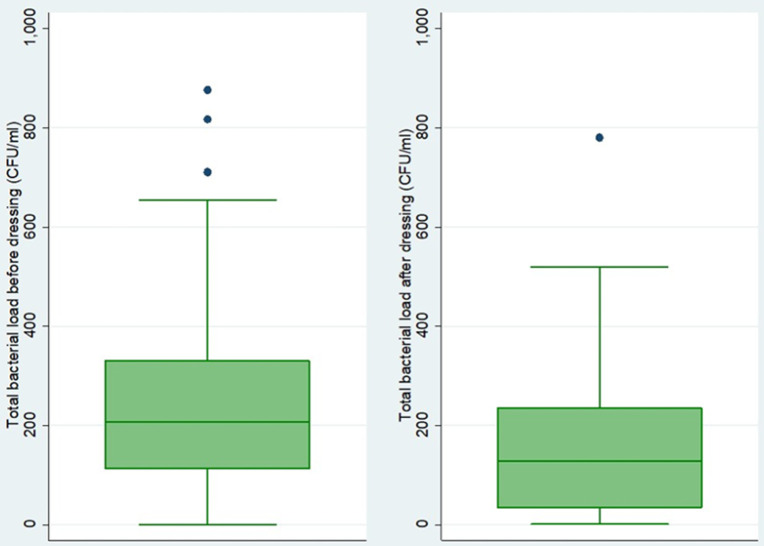 Figure 1
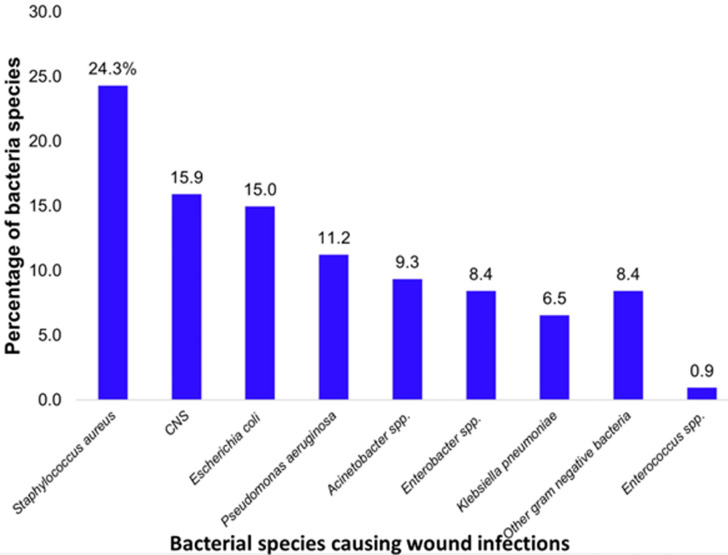 Figure 2
Peer Reviews
No public reviews on file for this paper yet. If you reviewed it on a platform where reviews are public (OpenReview, ICLR, NeurIPS, ICML), you can paste yours below so the community can read it here.
Videos
No videos yet. Explain this paper in a talk, walkthrough, or lecture? Add one.
Taxonomy
TopicsWound Healing and Treatments · Surgical site infection prevention · Diabetic Foot Ulcer Assessment and Management