Use of matrix-assisted laser desorption/ionization mass spectrometry imaging (MALDI-MSI) to visualize and support interpretation of toxic effects of 4-hydroxyphenylpyruvate dioxygenase inhibitors in rat tissues
R. Schneider, M. Giampà, M. C. Schröder, M. Kubicki, J. Boyken, L. Beuret, G. Semino-Beninel, K. Niehaus, F. Schorsch, M. Lamshoeft, H. Bednarz

TL;DR
This study uses MALDI-MSI to visualize how a chemical inhibitor affects tyrosine levels and other metabolites in rat tissues, especially the thyroid and pancreas.
Contribution
The study introduces MALDI-MSI as a novel tool for toxicological assessment of HPPD inhibitors.
Findings
The highest tyrosine accumulation was observed in the pancreas, followed by the eyes and thyroid gland.
Iodide significantly accumulated in the thyroid gland of all treated rats.
Metabolic adaptation was observed in the liver and kidney after 28 days of treatment.
Abstract
4-Hydroxyphenylpyruvate dioxygenase inhibitors (HPPDi) are mainly used as herbicides and for therapeutic use in genetic diseases of tyrosine catabolism. Their primary mechanism of action is the inhibition of the second enzyme of tyrosine catabolism, leading to an accumulation of this amino acid in blood and tissues. In this work, rats were administered diets with 1 ppm, 2 ppm, and 10 ppm of HPPD-inhibitor BCS-CR75391 for up to 28 days, and tyrosine levels were measured in blood and in selected organs using mass spectrometry combined with gas or liquid chromatography and analyzed spatially using mass spectrometry imaging (MSI). The highest tyrosine accumulation was recorded in the pancreas, followed by the eyes and the thyroid gland. Metabolomic profiling showed that other amino acids and metabolites of the citric acid cycle were influenced by the treatment. A metabolic adaptation was…
Genes, proteins, chemicals, diseases, species, mutations and cell lines named across the full text — each resolved to its canonical identifier and authoritative record.
Click any figure to enlarge with its caption.
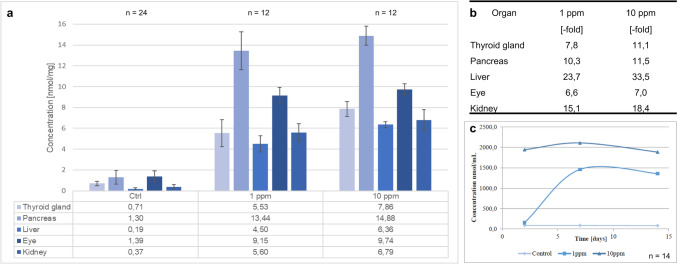 Figure 1
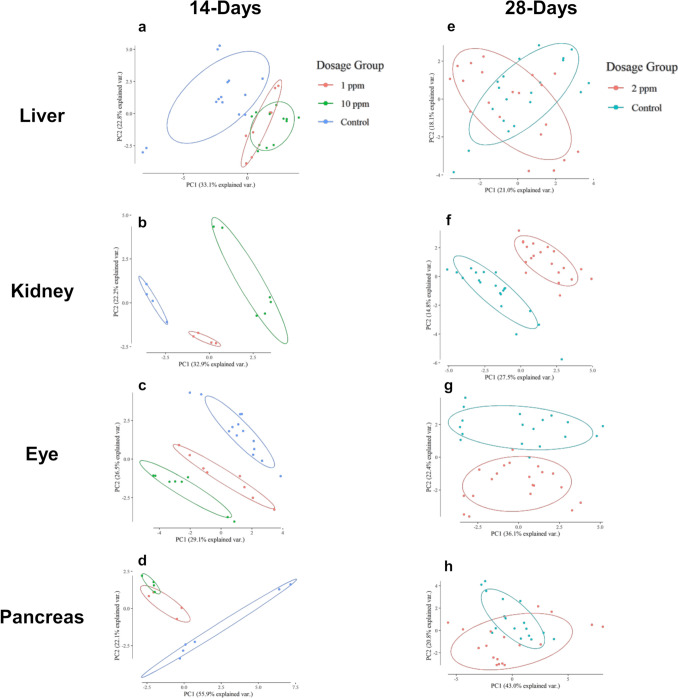 Figure 2
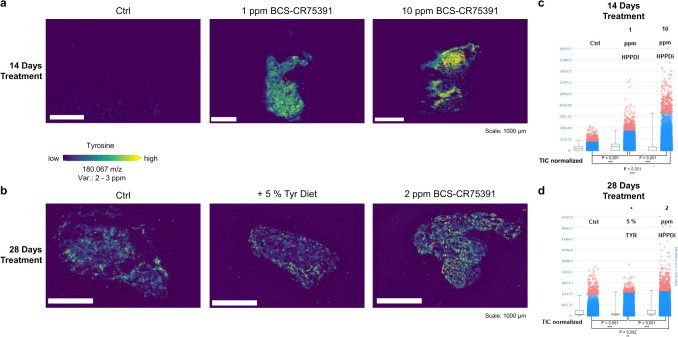 Figure 3
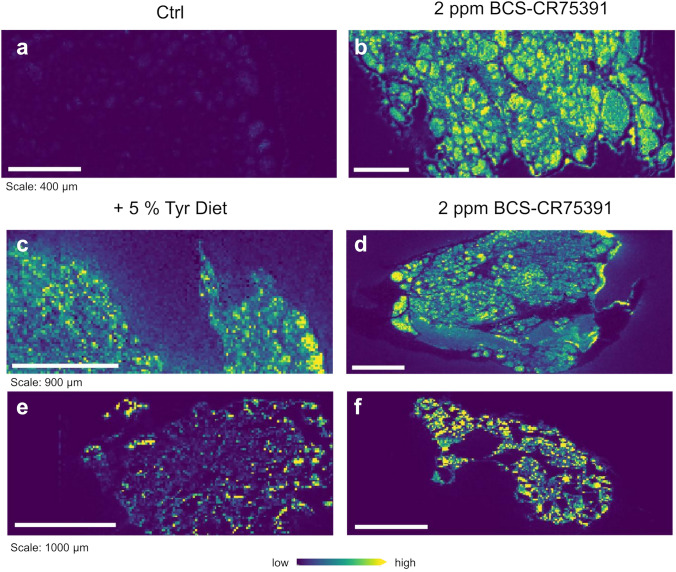 Figure 4
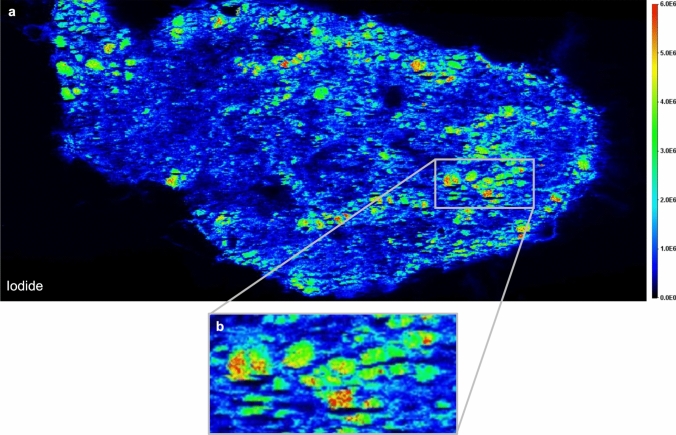 Figure 5
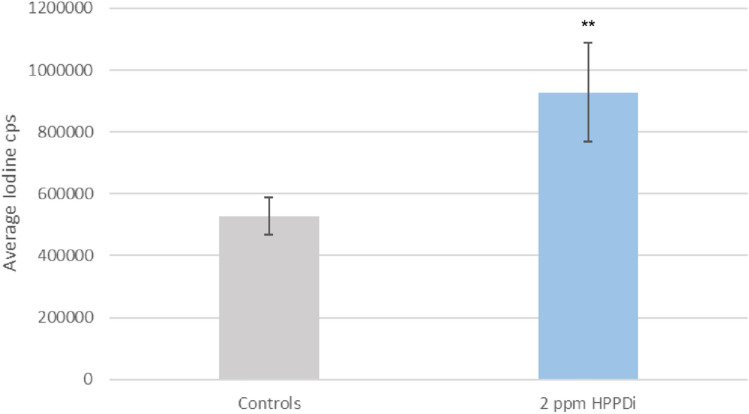 Figure 6
Peer Reviews
No public reviews on file for this paper yet. If you reviewed it on a platform where reviews are public (OpenReview, ICLR, NeurIPS, ICML), you can paste yours below so the community can read it here.
Videos
No videos yet. Explain this paper in a talk, walkthrough, or lecture? Add one.
Taxonomy
TopicsMetabolomics and Mass Spectrometry Studies · Metabolism and Genetic Disorders · Alcohol Consumption and Health Effects