Short-term memory conjunctive binding in subjective cognitive decline: A PET biomarker-based study
M. A. Cecchini, A. Studart-Neto, N. C. Moraes, C. G. Carneiro, A. C. Gomes, C. A. Buchpiguel, S. M. D. Brucki, A. M. Coutinho, R. Nitrini, M. S. Yassuda

TL;DR
This study investigates whether a memory test can detect early signs of Alzheimer's disease in people with subjective cognitive decline.
Contribution
The study evaluates the STMCB test's effectiveness in distinguishing early Alzheimer's from controls using PET biomarkers.
Findings
The STMCB test did not show significant differences between controls and SCD participants.
The test failed to distinguish amyloid-negative controls from SCD participants with amyloid pathology.
Binding deficits may appear later in Alzheimer's progression, possibly linked to tau or neurodegeneration.
Abstract
The Short-Term Memory Conjunctive Binding (STMCB) test assesses the ability to maintain integrated shape-colour associations in memory. It has been applied to detect Alzheimer’s disease (AD) across the continuum, from preclinical stages and subjective cognitive decline (SCD) to dementia. The objective of the present study was to examine whether the STMCB test can differentiate individuals at very early stages of AD from controls. The sample included 67 participants with normal performance on standard neuropsychological tests. Participants were classified as controls or as having SCD based on self-reported memory complaints. Twenty-three controls and 44 individuals with SCD completed the STMCB test. All individuals also underwent a comprehensive neuropsychological evaluation, amyloid ([11C]PIB) and FDG-PET scans. No significant group differences were observed in STMCB test performance…
Genes, proteins, chemicals, diseases, species, mutations and cell lines named across the full text — each resolved to its canonical identifier and authoritative record.
Click any figure to enlarge with its caption.
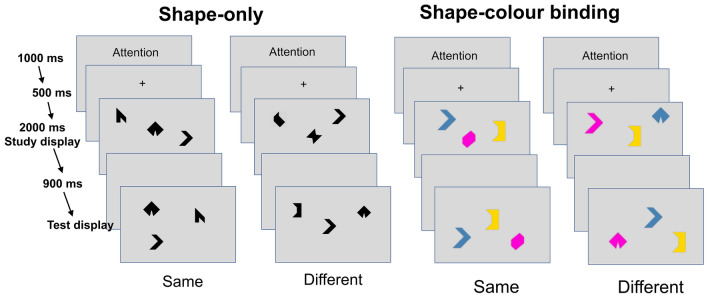 Figure 1
Peer Reviews
No public reviews on file for this paper yet. If you reviewed it on a platform where reviews are public (OpenReview, ICLR, NeurIPS, ICML), you can paste yours below so the community can read it here.
Videos
No videos yet. Explain this paper in a talk, walkthrough, or lecture? Add one.
Taxonomy
TopicsDementia and Cognitive Impairment Research · Alzheimer's disease research and treatments · Neurological Disease Mechanisms and Treatments