SUMOylation machinery protein, PIAS4 role in breast cancer cell proliferation and drug sensitivity
Mohammed A. M. Salih, Mohamed M. A. E. L. Salem, Muhammad Ali Shahid, Hussein A. S. Elrewey, Ritchie Williamson, Sriharsha Kantamneni

TL;DR
This study explores how PIAS4, a SUMOylation protein, affects breast cancer cell growth and resistance to doxorubicin, suggesting it could be a new target for treatment.
Contribution
The study reveals PIAS4's novel role in breast cancer progression and drug resistance through its effects on cell survival and apoptosis pathways.
Findings
PIAS4 overexpression reduces breast cancer cell proliferation and invasiveness.
PIAS4 enhances sensitivity to doxorubicin by downregulating anti-apoptotic Bcl-2 protein.
Naked mole-rats show higher PIAS4 expression compared to MCF-7 breast cancer cells.
Abstract
Breast cancer is a significant global health issue, with resistance to doxorubicin (DOX) posing a major challenge to effective treatment. SUMOylation, a post-translational modification process, is linked to cancer progression and therapy resistance. PIAS4, a SUMO E3 ligase involved in maintaining genome stability and stress response, may play a role in these mechanisms. However, its function in breast cancer progression and DOX resistance remains uncertain. This study investigates the potential role of PIAS4 in mediating DOX resistance in breast cancer. Naked mole-rats (NMRs) are cancer-resistant rodents with improved genome maintenance, yet the role of SUMOylation in this trait remains unclear. SUMOylation machinery gene expression levels are investigated using qPCR in NMR tissue in comparison with carcinogenic breast cancer (MCF-7) cell line. Functional studies are performed in MCF-7…
Genes, proteins, chemicals, diseases, species, mutations and cell lines named across the full text — each resolved to its canonical identifier and authoritative record.
Click any figure to enlarge with its caption.
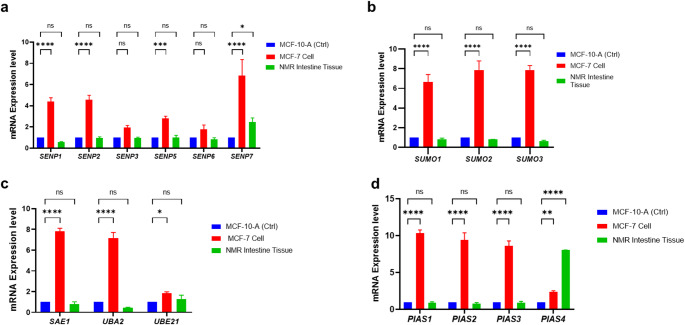 Figure 1
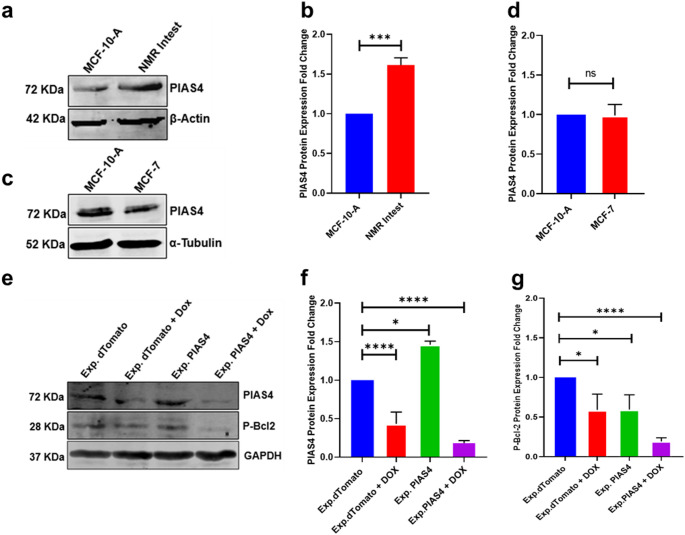 Figure 2
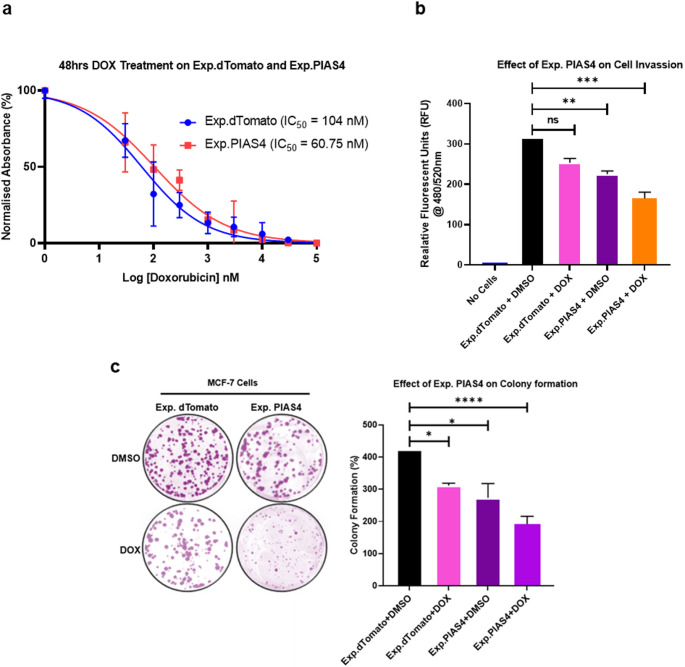 Figure 3
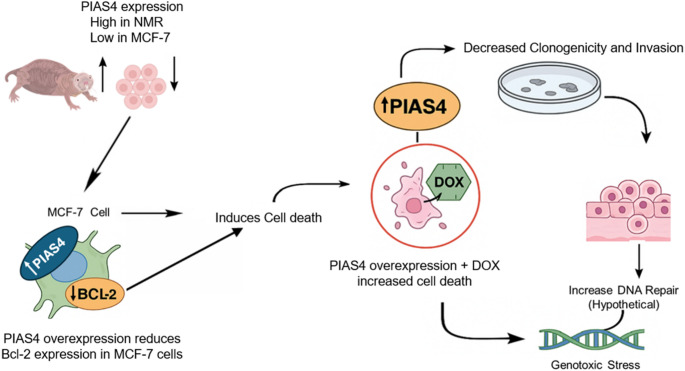 Figure 4
Peer Reviews
No public reviews on file for this paper yet. If you reviewed it on a platform where reviews are public (OpenReview, ICLR, NeurIPS, ICML), you can paste yours below so the community can read it here.
Videos
No videos yet. Explain this paper in a talk, walkthrough, or lecture? Add one.
Taxonomy
TopicsUbiquitin and proteasome pathways · Protein Degradation and Inhibitors · Microtubule and mitosis dynamics