Mesoderm and myogenesis-related lncRNAs as Potential Markers of Myogenic Differentiation of Control and miR145 or miR181 Stimulated Mouse Pluripotent Stem Cells
Karolina Archacka, Anna Ostaszewska, Karolina Romanczuk, Anita Florkowska, Iwona Grabowska, Aleksandra Olszak, Joanna Molska, Maria A. Ciemerych

TL;DR
This study identifies specific long non-coding RNAs (lncRNAs) that may serve as markers for myogenic differentiation in mouse stem cells, especially when influenced by miR145 or miR181.
Contribution
The study is the first to verify which lncRNAs can act as potential indicators of myogenic differentiation in pluripotent stem cells.
Findings
The lncRNAs yylncT, H19, SRA, and linc-YY1 were upregulated during myogenic differentiation in mouse embryonic stem cells.
miR145 and miR181 overexpression decreased H19 expression in both stem cell lines tested.
LncRNA expression changes were observed in a stem cell line-specific manner.
Abstract
Non-coding RNAs play a crucial role in the regulation of gene expression, impacting all processes occurring in a living cell. Among them are microRNAs (miRNAs) and long non-coding RNAs (lncRNAs), which interplay with each other modulating the expression of target genes. In the current study, we focused on lncRNAs described as involved in mesoderm specification or proliferation and differentiation of myogenic precursor cells and verified which of them may indeed be useful as candidate markers of mesodermal/myogenic differentiation of pluripotent stem cells (PSCs). As a model, we used two mouse embryonic stem cell (ESC) lines. We compared cells differentiating in the control medium with those induced to undergo myogenic differentiation by retinoic acid, insulin, transferrin, and selenium treatment. We showed that such induced ESC differentiation upregulated expression of few lncRNAs,…
Genes, proteins, chemicals, diseases, species, mutations and cell lines named across the full text — each resolved to its canonical identifier and authoritative record.
Click any figure to enlarge with its caption.
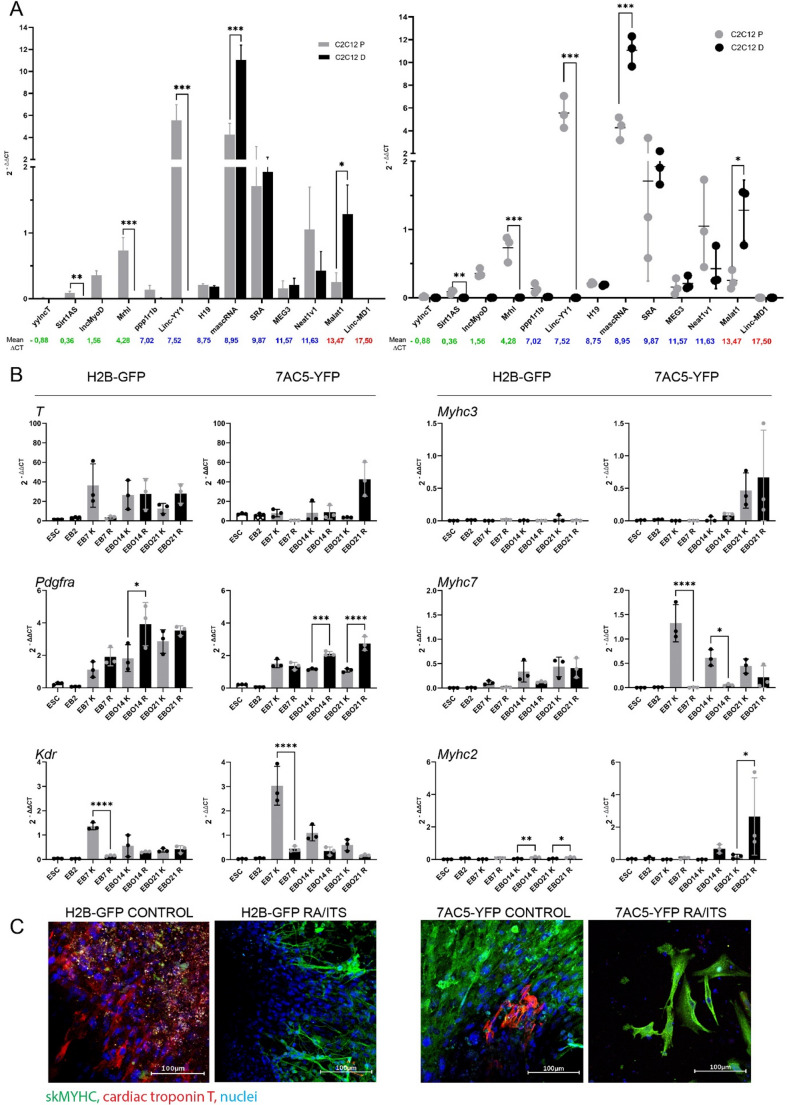 Figure 1
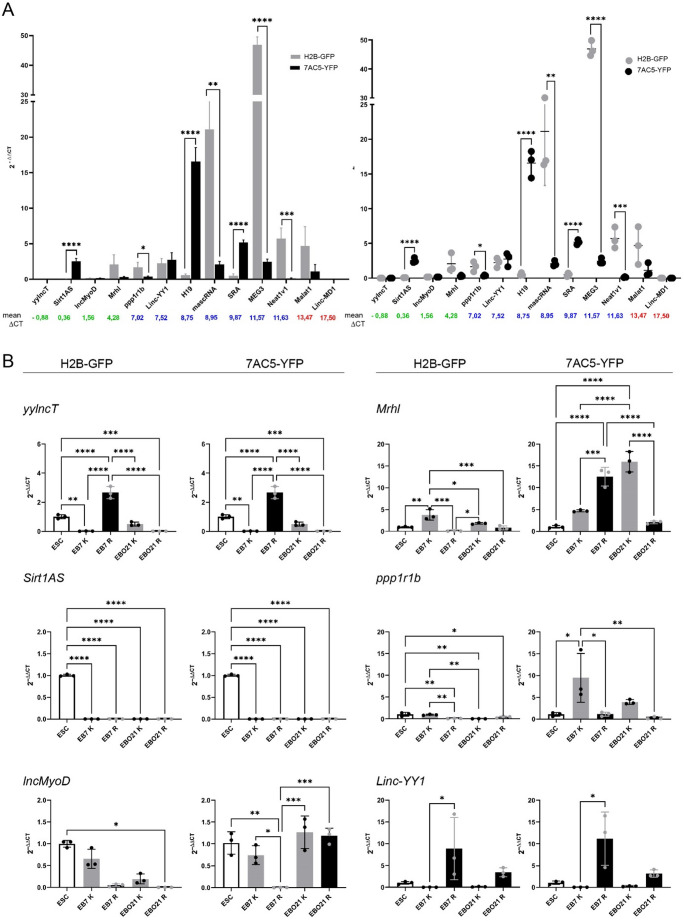 Figure 2
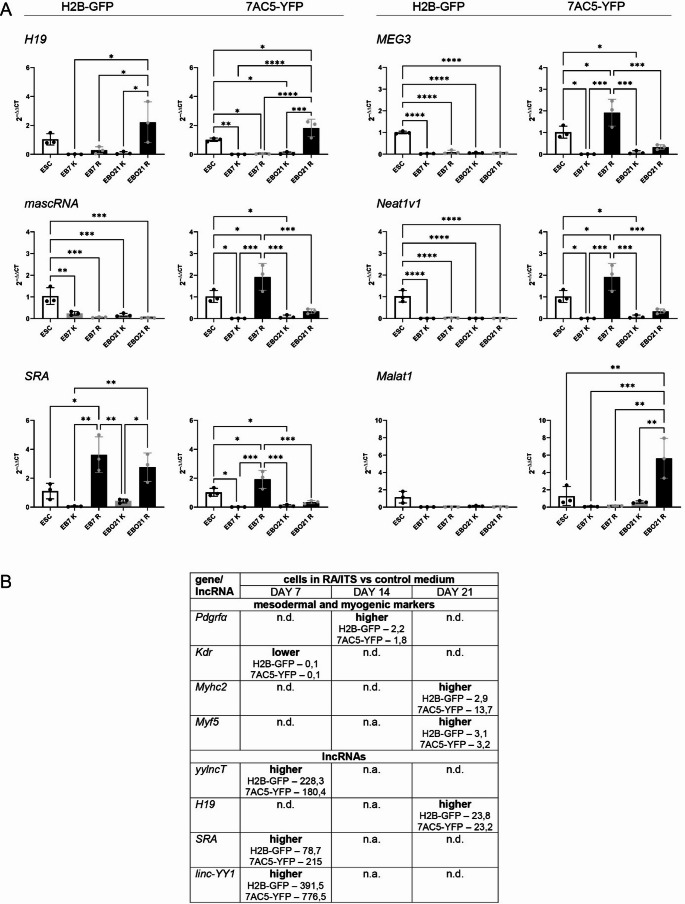 Figure 3
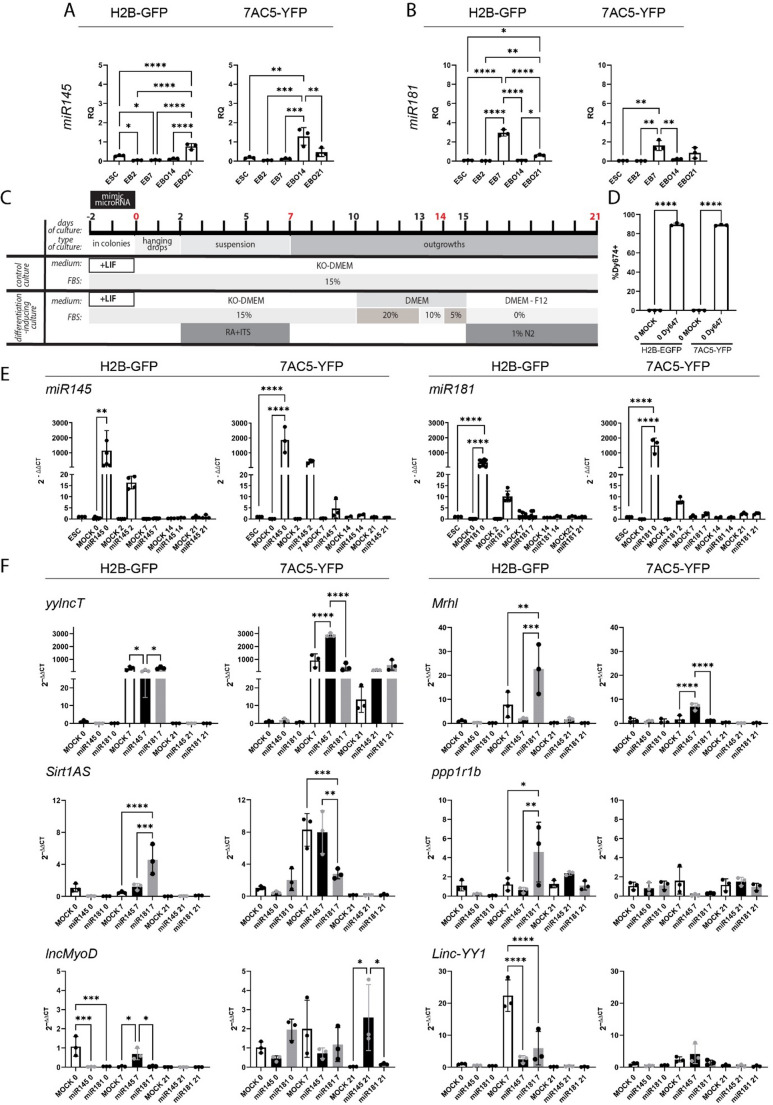 Figure 4
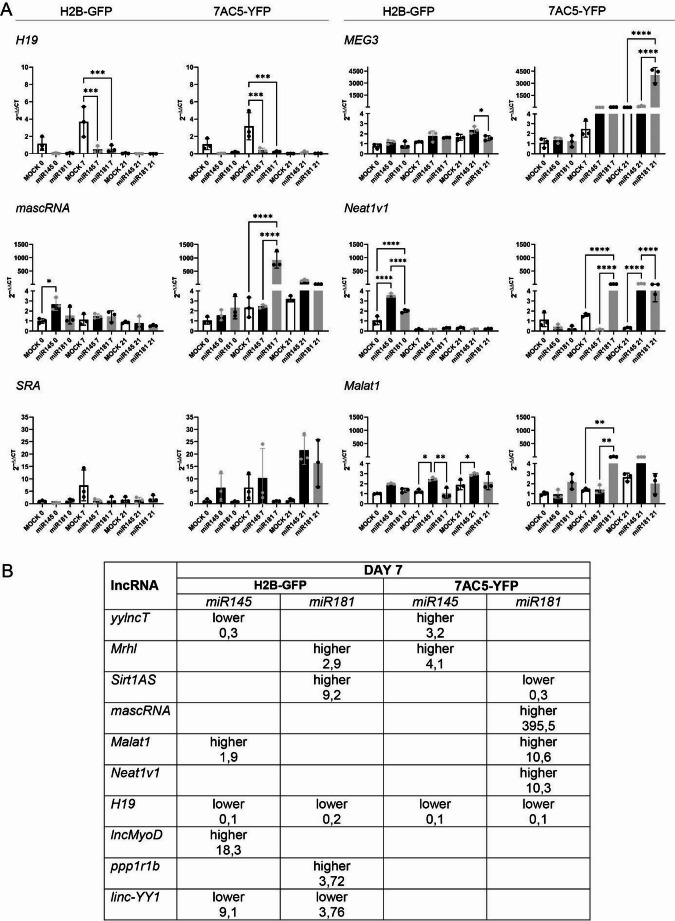 Figure 5
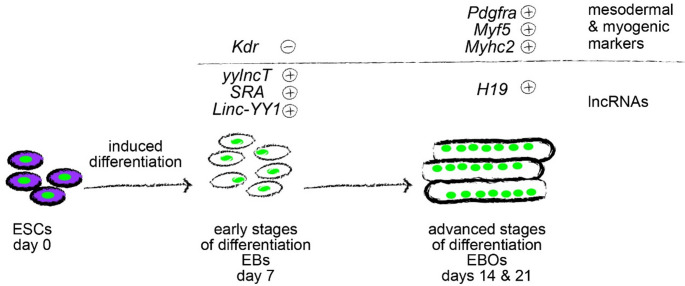 Figure 6
Peer Reviews
No public reviews on file for this paper yet. If you reviewed it on a platform where reviews are public (OpenReview, ICLR, NeurIPS, ICML), you can paste yours below so the community can read it here.
Videos
No videos yet. Explain this paper in a talk, walkthrough, or lecture? Add one.
Taxonomy
TopicsPluripotent Stem Cells Research · Cancer-related molecular mechanisms research · MicroRNA in disease regulation