Neuronal Subtype-Specific Expression of γ-Enolase: Its Role in Neuronal Differentiation
Selena Horvat, Urša Pečar Fonović, Nace Zidar, Bojan Doljak, Janko Kos, Anja Pišlar

TL;DR
This study explores how γ-enolase, a glycolytic enzyme, supports the development of specific types of neurons, particularly cholinergic neurons, and how its activity is regulated by cathepsin X.
Contribution
The study reveals that γ-enolase promotes neuronal differentiation, especially in cholinergic neurons, and is regulated by cathepsin X, offering new insights into neuroregeneration.
Findings
γ-enolase expression is significantly upregulated in differentiated neurons, especially cholinergic-like neurons.
Cathepsin X cleaves γ-enolase, reducing its neurotrophic effects, and inhibiting cathepsin X preserves active γ-enolase and promotes neuronal differentiation.
A γ-enolase-derived peptide enhances neurite outgrowth and β-tubulin expression in cholinergic-like neurons.
Abstract
Neuronal differentiation into specific subtypes is crucial for nervous system development and function, guided by neurotrophic factors. γ-Enolase, a neuron-specific glycolytic enzyme, exhibits neurotrophic-like properties and supports neuronal differentiation; however, its role in specific neuronal subtypes remains unknown. Here, we investigate the role of γ-enolase in differentiation dopaminergic-, cholinergic-, and adrenergic-like neuronal cells. Our results demonstrate that γ-enolase expression is significantly upregulated in differentiated cells, with the highest expression observed in cholinergic-like neurons. Full-length γ-enolase, compared to its truncated form, promoted enhanced neurite outgrowth and increased β-tubulin, a cytoskeletal marker. Conversely, silencing endogenous γ-enolase significantly reduced neurite length, confirming its essential role in driving neuronal…
Genes, proteins, chemicals, diseases, species, mutations and cell lines named across the full text — each resolved to its canonical identifier and authoritative record.
Click any figure to enlarge with its caption.
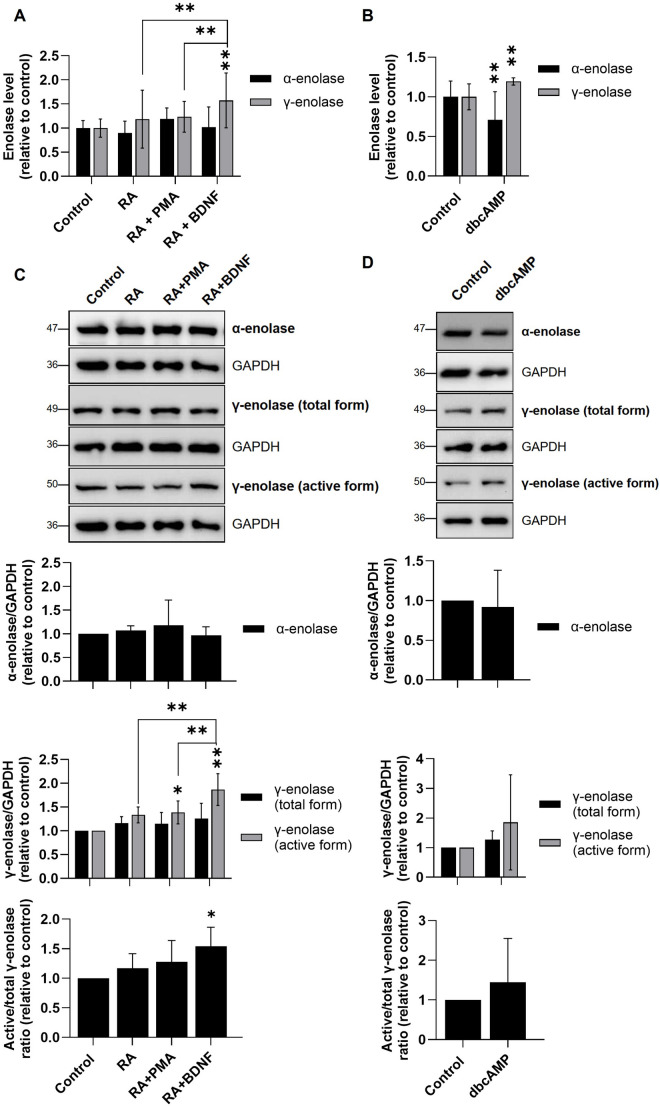 Figure 1
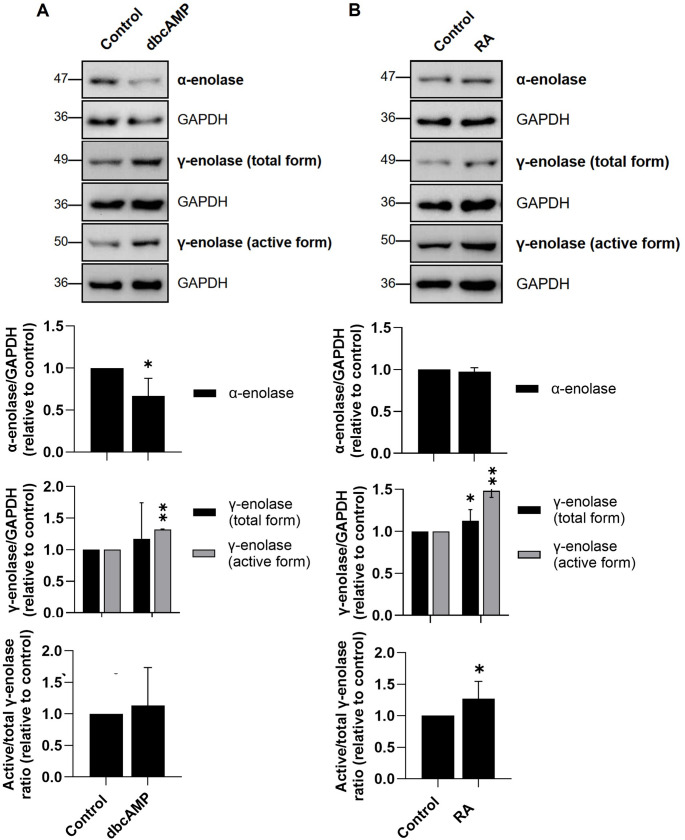 Figure 2
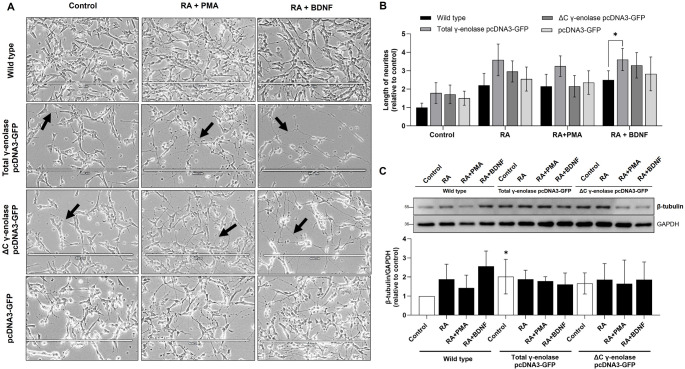 Figure 3
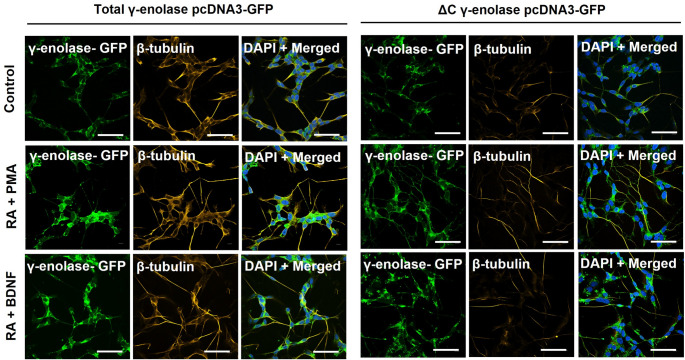 Figure 4
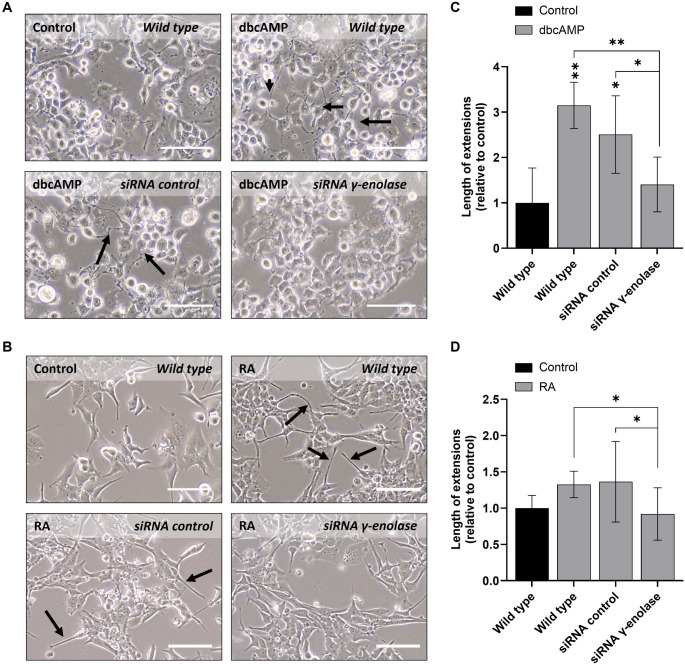 Figure 5
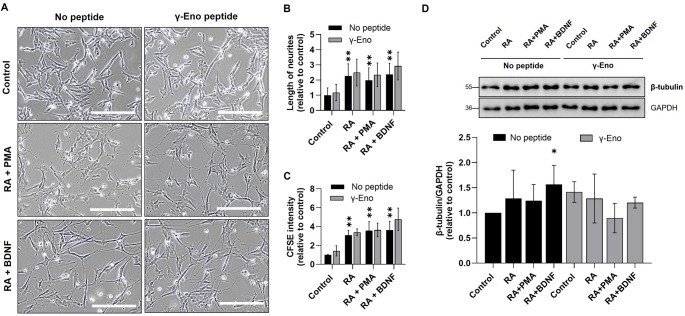 Figure 6
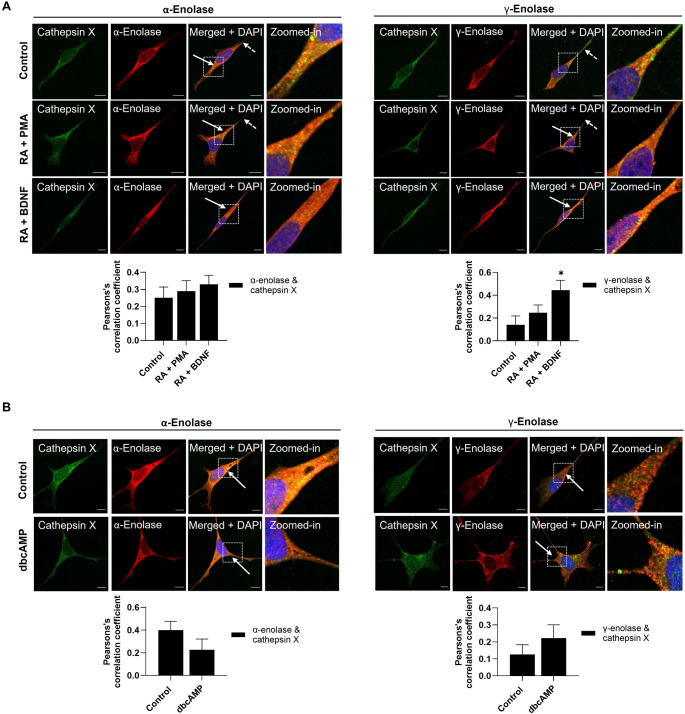 Figure 7
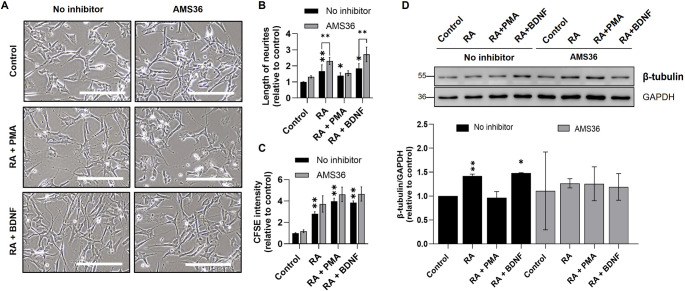 Figure 8
Peer Reviews
No public reviews on file for this paper yet. If you reviewed it on a platform where reviews are public (OpenReview, ICLR, NeurIPS, ICML), you can paste yours below so the community can read it here.
Videos
No videos yet. Explain this paper in a talk, walkthrough, or lecture? Add one.
Taxonomy
TopicsS100 Proteins and Annexins · Connexins and lens biology · Amino Acid Enzymes and Metabolism