Intersectional Inequalities in Neighbourhood Air Pollution Concentration in England: A Quantitative Analysis of Ecological Data Using Eco-Intersectional Multilevel (EIM) Modelling
Natalie C Bennett, Andrew Bell, Paul Norman, Clare Evans, Remy Veness

TL;DR
This study finds that air pollution levels in England vary greatly based on neighborhood characteristics like ethnicity and deprivation, with some areas having five times more pollution than others.
Contribution
The novel Eco-Intersectional Multilevel (EIM) modeling approach enables simultaneous analysis of multiple intersecting neighborhood characteristics.
Findings
Neighborhoods with high deprivation, high minority ethnic populations, and urban settings had five times higher NOx concentrations than others.
Ethnic inequalities in NOx concentration remained significant even after accounting for area deprivation.
Area deprivation alone did not show independent inequalities once ethnicity was considered.
Abstract
Air pollution is detrimentally associated with many health outcomes, yet its impacts are not equally distributed. Research consistently finds inequalities by ethnicity, area deprivation and age. However, such inequalities are typically investigated separately, potentially underestimating the extent of differential exposures. We aim to investigate inequalities in NOx concentrations across multiple intersecting neighbourhood characteristics in England simultaneously. We do this using the novel Eco-Intersectional Multilevel (EIM) modelling approach, we define analytic “strata” of neighbourhoods based on sociodemographic characteristics. This enables us to quantify NOx concentration inequalities across community types, simultaneously considering area deprivation, ethnicity, education, rurality and age of residents. We find that neighbourhoods belonging to the “most deprived, high proportion…
Genes, proteins, chemicals, diseases, species, mutations and cell lines named across the full text — each resolved to its canonical identifier and authoritative record.
Click any figure to enlarge with its caption.
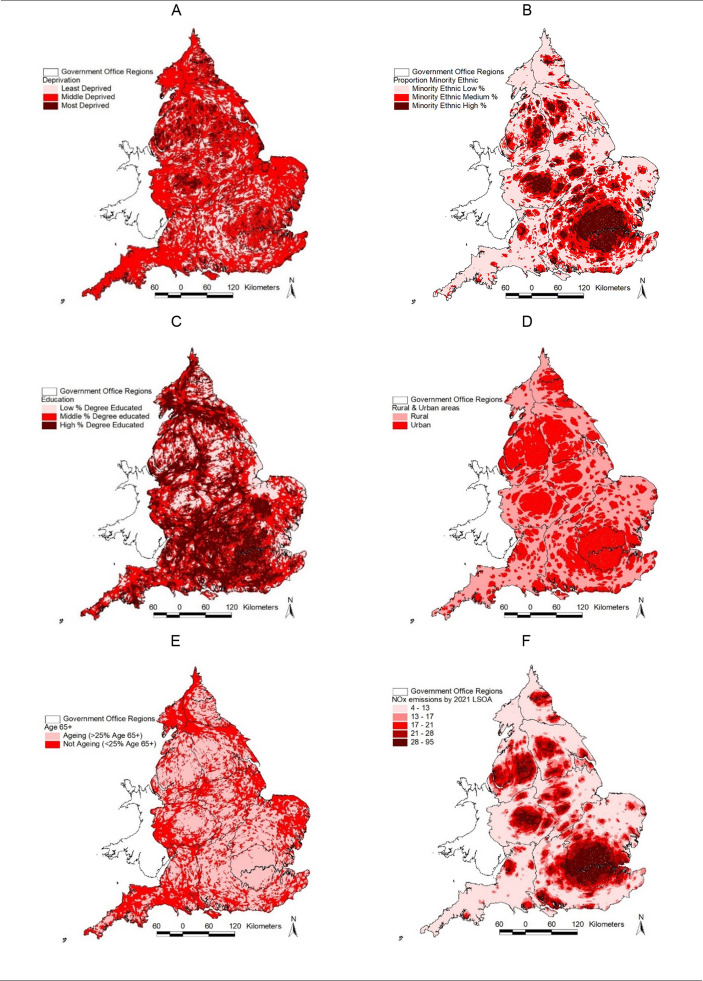 Figure 1
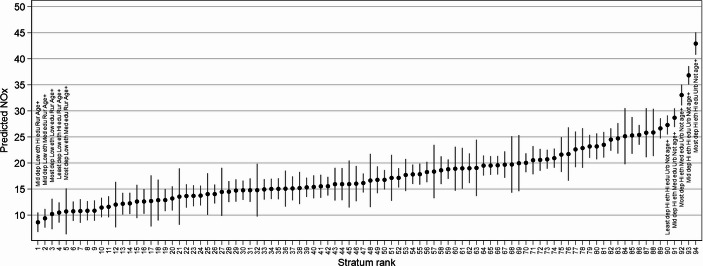 Figure 2
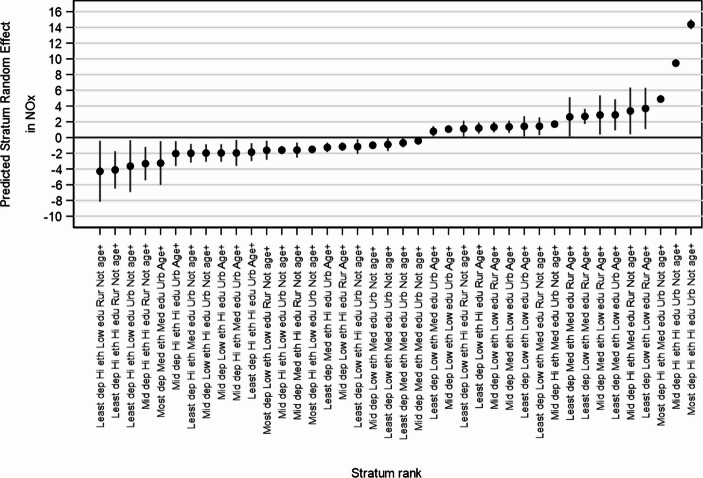 Figure 3
Peer Reviews
No public reviews on file for this paper yet. If you reviewed it on a platform where reviews are public (OpenReview, ICLR, NeurIPS, ICML), you can paste yours below so the community can read it here.
Videos
No videos yet. Explain this paper in a talk, walkthrough, or lecture? Add one.
Taxonomy
Topicsdemographic modeling and climate adaptation · Environmental Justice and Health Disparities · Urban Transport and Accessibility