An integrated cell and medium engineering approach for production of a nanobody fusion in Saccharomyces cerevisiae
Laura R. K. Niemelä, Lotta-Mari Kirjavainen, Hendrikje C. J. Kozlowski, Heidi Salminen, Alexander D. Frey

TL;DR
Researchers improved yeast's ability to produce a nanobody fusion protein by combining genetic modifications and optimized growth conditions.
Contribution
A novel integrated approach combining cell engineering and medium optimization to enhance production of high-molecular-weight proteins in yeast.
Findings
Deleting PEP1, VPS30, MON2, and ALG3 genes reduced protein degradation and improved production.
A small-scale fed-batch system with amino acid-rich medium and chemical chaperones increased secreted protein titers.
The engineered yeast strain and cultivation system enabled production of a nanobody-Fc fusion at 2.5 µg/mL.
Abstract
Saccharomyces cerevisiae is an established production host for therapeutic proteins; many of those are small proteins such as insulin or glucagon-like peptide-1 (GLP-1) analogs. Contrastingly, proteins of higher molecular weight, foremost antibodies, did not reach the market due, among other factors, to limiting productivity. Here we addressed the loss of product to protein degradation through a combination of genetic engineering of the host and medium optimization. We screened target genes that either directly or indirectly can lead to proteolytic degradation. We identified four deletions that are beneficial for expression: PEP1 and VPS30, which both can channel proteins to the vacuole for degradation; MON2, which can lead to the re-uptake of secreted proteins; and ALG3, which can affect the permeability of the cell wall. In parallel, we developed a small-scale fed-batch cultivation…
Genes, proteins, chemicals, diseases, species, mutations and cell lines named across the full text — each resolved to its canonical identifier and authoritative record.
Click any figure to enlarge with its caption.
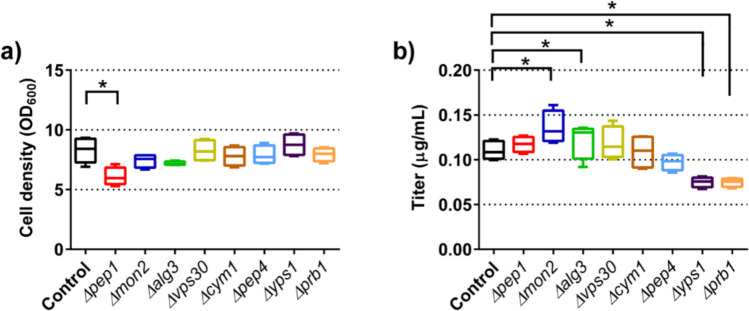 Figure 1
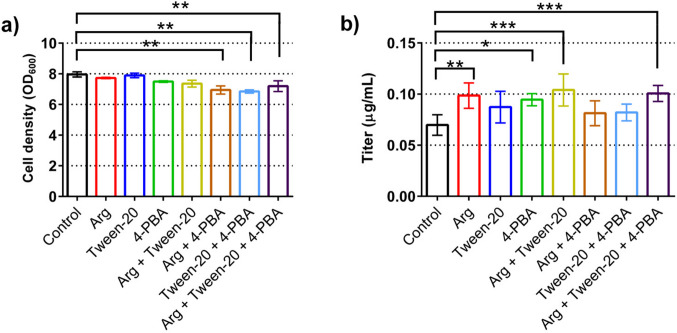 Figure 2
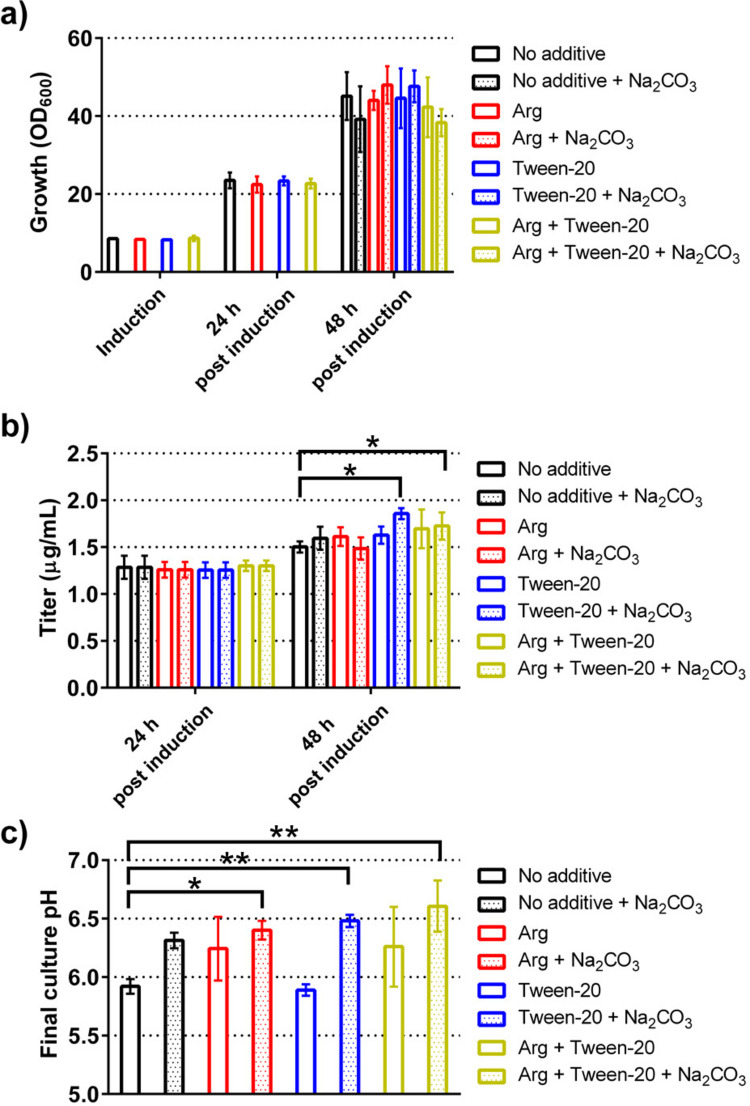 Figure 3
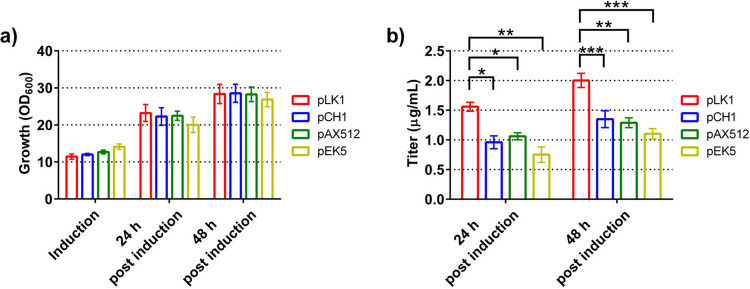 Figure 4
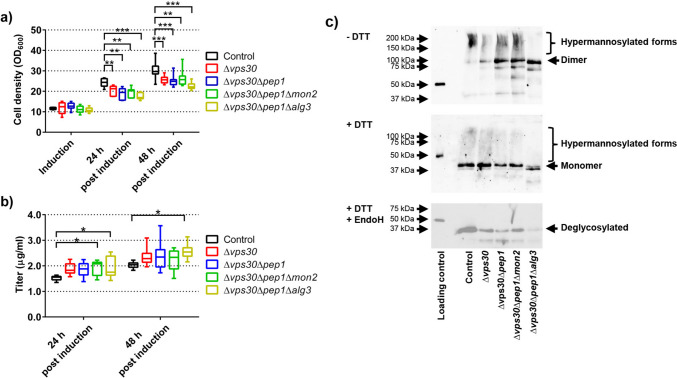 Figure 5
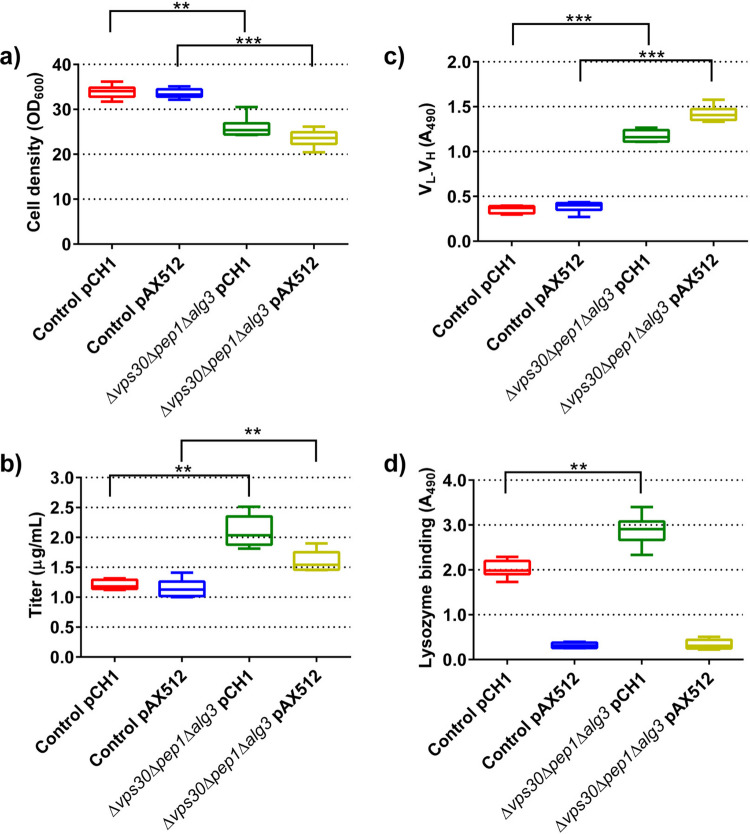 Figure 6
Peer Reviews
No public reviews on file for this paper yet. If you reviewed it on a platform where reviews are public (OpenReview, ICLR, NeurIPS, ICML), you can paste yours below so the community can read it here.
Videos
No videos yet. Explain this paper in a talk, walkthrough, or lecture? Add one.
Taxonomy
TopicsTransgenic Plants and Applications · Fungal and yeast genetics research · Viral Infectious Diseases and Gene Expression in Insects