Use of biologic drugs in juvenile idiopathic arthritis patients followed in an adult rheumatology clinic: real-life data from the HUR-BIO biologic registry
Emine Büşra Ata, Levent Kılıç, Büşra Fırlatan Yazgan, Sevgi Gözde Kart Bayram, Mustafa Ekici, Erdinç Ünaldı, Ali Aytuğ Kuştaş, Buğu Bulat, Ömer Karadağ, Ali Akdoğan, Şule Apraş Bilgen, Sedat Kiraz, İhsan Ertenli, Yelda Bilginer, Seza Özen, Umut Kalyoncu

TL;DR
This study examines biologic drug use and outcomes in adult patients with juvenile idiopathic arthritis, finding that certain subgroups experience higher disease severity and treatment changes.
Contribution
The study provides real-life data on biologic treatment patterns and outcomes in JIA patients transitioning to adult care, highlighting subgroup differences.
Findings
Enthesitis-related arthritis and polyarthritis are the most common JIA subgroups in adult clinics.
Secondary failure is the main reason for changing biologic treatments during follow-up.
Polyarticular JIA is associated with higher disease severity and disability compared to other subgroups.
Abstract
This study aimed to determine whether there are differences in biologic treatment and complications according to subgroups of juvenile idiopathic arthritis (JIA) patients in adulthood. HUR-BIO (Hacettepe University Rheumatology Biologic Registry) has been a single-center biologic disease-modifying anti-rheumatic drug registry since 2005. Patients were selected from HUR-BIO who met the International League of Associations for Rheumatology classification criteria for juvenile idiopathic arthritis. Enthesitis-related arthritis (82, 49.1%), rheumatoid factor (-) polyarthritis (39, 23.4%), and rheumatoid factor ( +) polyarthritis (26, 15.6%) were the most prevalent subgroups in 167 JIA patients. Etanercept (105, 62.9%), adalimumab (28, 16.8%), and infliximab (21, 12.6%) were the most prescribed first-line biologic drugs. Secondary failure was the most common reason for the treatment…
Genes, proteins, chemicals, diseases, species, mutations and cell lines named across the full text — each resolved to its canonical identifier and authoritative record.
Click any figure to enlarge with its caption.
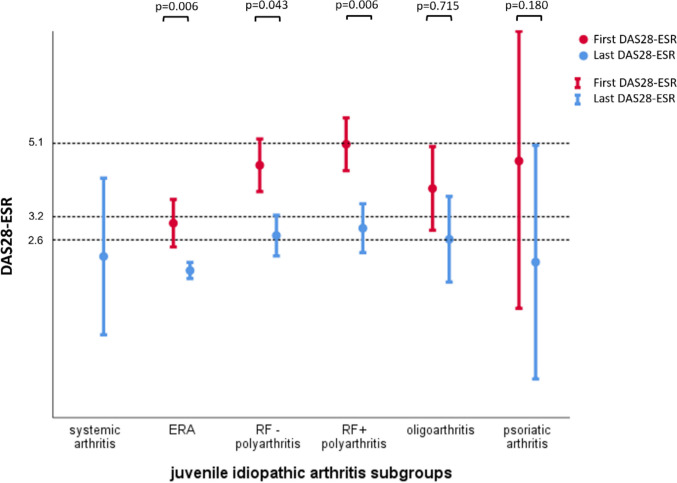 Figure 1
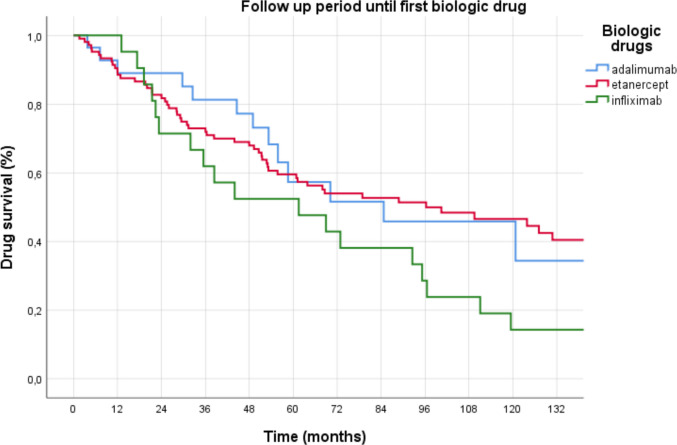 Figure 2
Peer Reviews
No public reviews on file for this paper yet. If you reviewed it on a platform where reviews are public (OpenReview, ICLR, NeurIPS, ICML), you can paste yours below so the community can read it here.
Videos
No videos yet. Explain this paper in a talk, walkthrough, or lecture? Add one.
Taxonomy
TopicsAutoimmune and Inflammatory Disorders Research · Rheumatoid Arthritis Research and Therapies · Adolescent and Pediatric Healthcare