Deep Learning and Noninvasive Sensors for Detecting Physiological Dysregulation: A Scoping Review
Mariana González Garcés, Jerónimo Cárdenas Montoya, María Isabel Peña Martínez, Juanita Valencia García, Erwin Hernando Hernández Rincón

TL;DR
This paper reviews how non-invasive sensors and deep learning can detect early signs of health issues like pain or stress in patients over 13 years old.
Contribution
It provides a scoping review of recent studies combining non-invasive sensors and deep learning for physiological monitoring.
Findings
Deep learning algorithms using sensor data showed high accuracy in predicting clinical events like pain or hypotension.
Most studies came from China, Australia, and South Korea, with applications in ICU and emergency settings.
Retrospective and experimental study designs were most common in the reviewed literature.
Abstract
Early detection of pain, stress, or hemodynamic instability is key to preventing serious clinical events. In recent years, non-invasive sensors and deep learning algorithms have gained relevance as tools for accurate and continuous monitoring. To map and synthesize the scientific evidence on the use of non-invasive multimodal sensors combined with deep learning algorithms for the early detection of physiological dysregulation states, including pain, stress, and hemodynamic deterioration, in patients over 13 years of age in clinical settings. A scoping review was conducted following the JBI and PRISMA-ScR guidelines. We included studies published between 2019 and 2025 in English or Spanish, identified through three databases and a secondary search. Twenty-seven studies were analyzed after duplicate removal and screening. Deep learning algorithms applied to electroencephalograms,…
Genes, proteins, chemicals, diseases, species, mutations and cell lines named across the full text — each resolved to its canonical identifier and authoritative record.
Click any figure to enlarge with its caption.
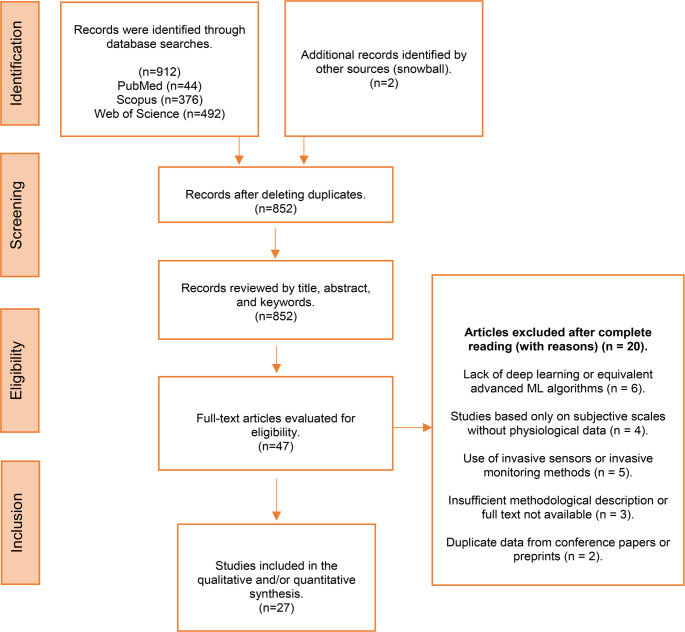 Figure 1
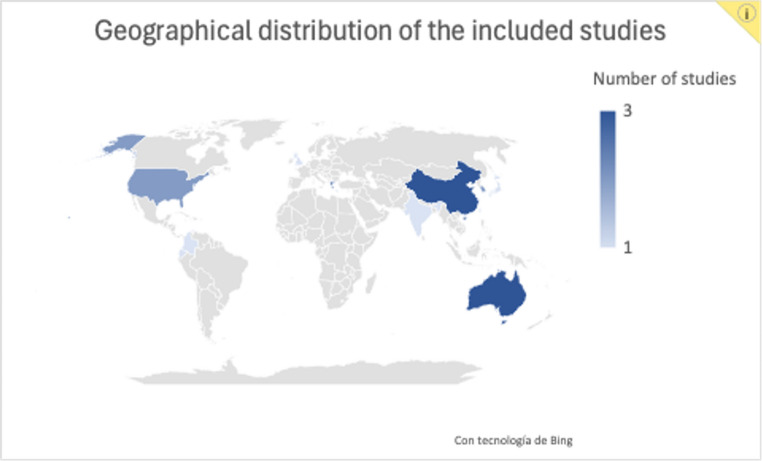 Figure 2
Peer Reviews
No public reviews on file for this paper yet. If you reviewed it on a platform where reviews are public (OpenReview, ICLR, NeurIPS, ICML), you can paste yours below so the community can read it here.
Videos
No videos yet. Explain this paper in a talk, walkthrough, or lecture? Add one.
Taxonomy
TopicsIntensive Care Unit Cognitive Disorders · Healthcare Technology and Patient Monitoring · Pediatric Pain Management Techniques