Enhancing Physiology Learning and Practical Experimentation through Task-Based Modules and Powerlab Integration in Undergraduate Medical Education: Indonesia
AMI FEBRIZA, NURMILA, FATIMAH MAPPANYOMPA, MUH DA’I ALAMNSYAH

TL;DR
This study shows that combining task-based learning with PowerLab technology improves medical students' understanding of physiology in Indonesia.
Contribution
The integration of task-based modules and PowerLab in physiology education is evaluated for the first time in this context.
Findings
74.4% of students showed good to excellent understanding during PowerLab experiments.
Pre-post-test scores improved significantly (p<0.001) after the intervention.
A strong correlation was found between practicum exam results and final course marks.
Abstract
Anatomy, histology, biochemistry, and physiology are essential for clinical practice. Task-based learning (TBL) offers an innovative, active learning strategy that aligns with these foundational subjects. Meanwhile, the use of computer-aided data acquisition (data acquisition; DAQ) systems like PowerLab has significantly transformed physiology education through simulation-based experimentation. This study aimed to evaluate the effectiveness of combining TBL and PowerLab in enhancing undergraduate medical students' understanding of physiology. This quasi-experimental study included 180 undergraduate medical students from the Faculty of Medicine and Health Sciences at Unismuh. Participants were selected using convenience sampling. A survey consisting of 12 validated Likert-scale questions (Cronbach’s alpha=0.84) was conducted to gather students’ insights into how PowerLab can be utilized…
Genes, proteins, chemicals, diseases, species, mutations and cell lines named across the full text — each resolved to its canonical identifier and authoritative record.
Click any figure to enlarge with its caption.
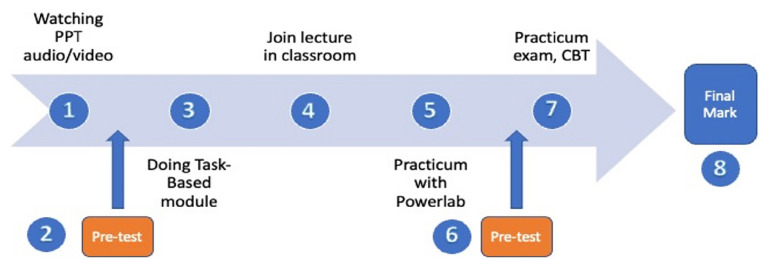 Figure 1
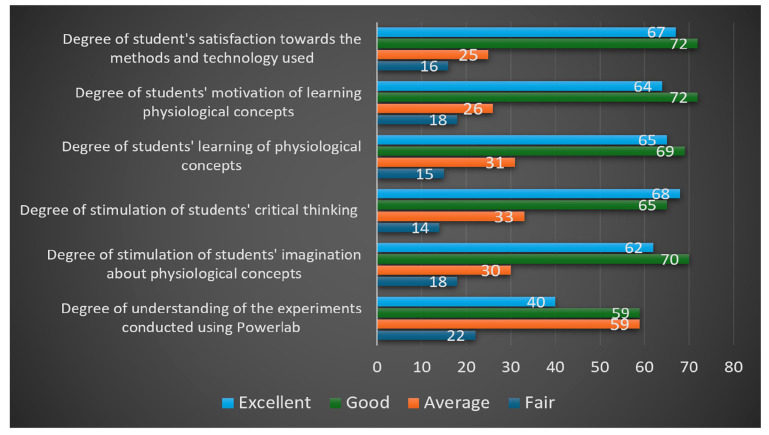 Figure 2
Peer Reviews
No public reviews on file for this paper yet. If you reviewed it on a platform where reviews are public (OpenReview, ICLR, NeurIPS, ICML), you can paste yours below so the community can read it here.
Videos
No videos yet. Explain this paper in a talk, walkthrough, or lecture? Add one.
Taxonomy
TopicsInnovative Teaching Methods · Science Education and Pedagogy · Biomedical and Engineering Education