A novel 6 Fr inside biliary stent system for perihilar biliary drainage
Hiroshi Kawakami, Naomi Uchiyama, Hiroshi Hatada

Abstract
Click any figure to enlarge with its caption.
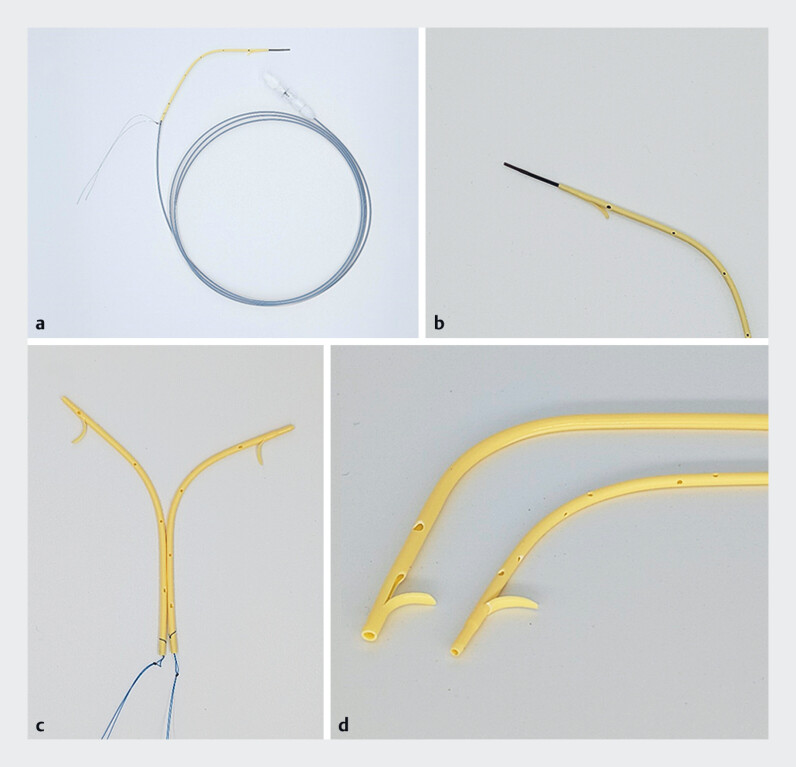 Fig. 1
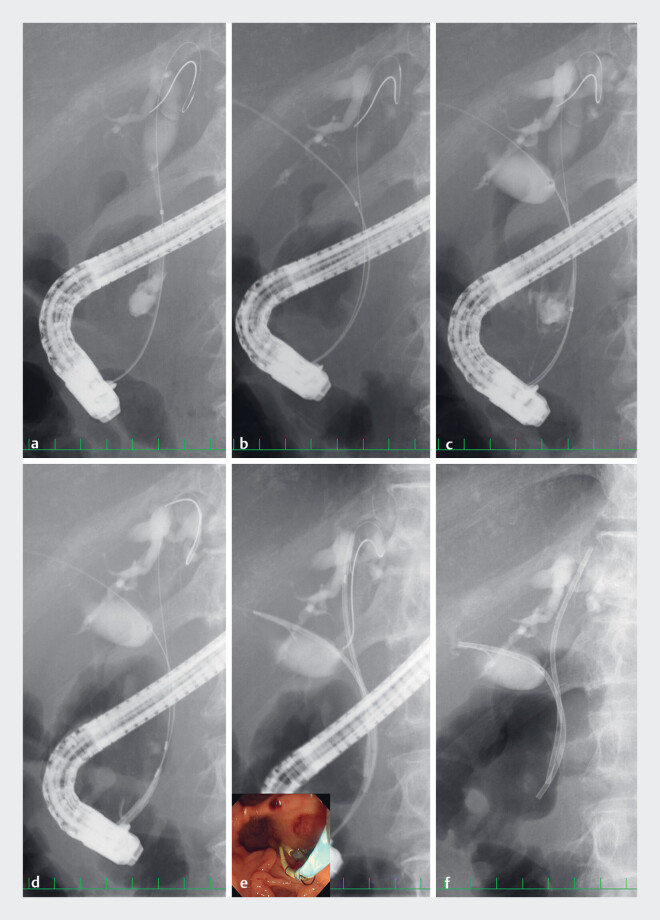 Fig. 2
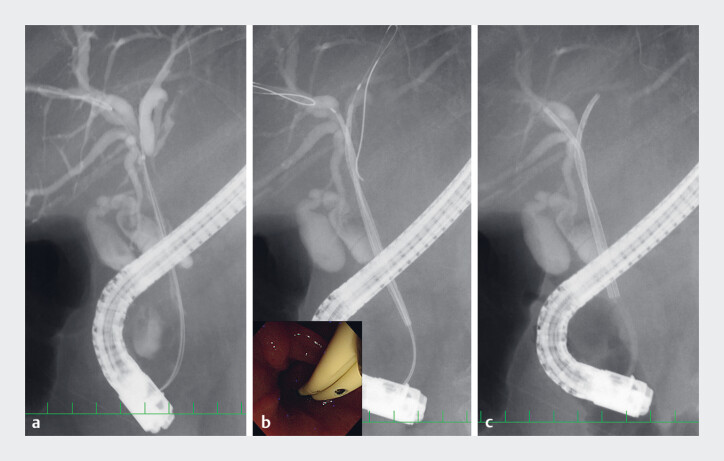 Fig. 3
Peer Reviews
No public reviews on file for this paper yet. If you reviewed it on a platform where reviews are public (OpenReview, ICLR, NeurIPS, ICML), you can paste yours below so the community can read it here.
Videos
No videos yet. Explain this paper in a talk, walkthrough, or lecture? Add one.
Taxonomy
TopicsGallbladder and Bile Duct Disorders · Pediatric Hepatobiliary Diseases and Treatments · Organ Transplantation Techniques and Outcomes
Endoscopic biliary drainage (BD) is commonly performed in patients with perihilar biliary obstruction; however, the most appropriate method remains controversial. The plastic stent technique involves placing the tip of inside stent within the bile duct. Recently, the clinical outcomes of the inside and conventional plastic stents or the metal stent for the management of BD have been reported to be comparable in patients with preoperable/unresectable cholangiocarcinoma 1 2 3 . However, severe biliary strictures may not allow multiple inside stent placements, and another a replacement is occasionally difficult to advance through the biliary stricture, and involves a risk of migration. To overcome this limitation, we developed a 6 Fr inside biliary plastic stent ( Fig. 1 a–d ). Multiple 6 Fr stents can be deployed simultaneously in a side-by-side fashion over the guidewire. Herein, we present patients treated successfully for perihilar BD using this new system.
a A novel 6 Fr inside biliary stent (9- and 12-cm length) and blue snare, and a 6-Fr pushing catheter system (190 cm in length, SILUX Co., Ltd, Saitama, Japan). b The tip of a 3 Fr inner tapered catheter and a 6 Fr inside biliary stent. c Novel 6 Fr inside biliary stent placement in a side-by-side manner. d Comparison of a 7 Fr inside biliary stent (left) and a 6 Fr inside biliary stent (right).
Case 1: An 89-year-old man with malignant perihilar cholangiocarcinoma was admitted with acute cholangitis caused by dysfunction of a previously placed 7 Fr inside biliary stent in the left hepatic duct. After extracting the occluded biliary stent, endoscopic retrograde cholangiography (ERC) confirmed bismuth type IV perihilar biliary obstruction. The 0.025-inch guidewires were placed in the bilateral hepatic ducts. We successfully deployed 6 Fr inside biliary stents in the bile duct along the guidewire without complications ( Fig. 2 a–f , Video 1 ). Case 2: A 78-year-old woman with IgG4-sclerosing cholangitis was admitted to our hospital. ERC confirmed perihilar biliary obstruction. We placed 6-Fr inside biliary stents simultaneously in the bile duct ( Fig. 3 , Video 1 ).
(Case 1) a A radiograph showing the left hepatic duct obstruction. b A radiograph showing a 0.025-inch guidewire placed in the right hepatic duct. ( c ) A radiograph showing the bismuth type IV biliary obstruction. d A radiograph showing the novel 6 Fr inside biliary stent inserted in the bile duct. e A radiograph showing both stents placed simultaneously in the bilateral hepatic ducts (inset: an endoscopic image). f A radiograph showing after extraction inner and pushing catheters.
A novel 6 Fr inside biliary stent system for perihilar biliary drainage. The stents can be deployed simultaneously in a side-by-side fashion over the guidewire.Video 1
(Case 2) a A radiograph showing the bilateral 0.025-inch guidewire placed in the right and left hepatic ducts. b A radiograph showing both stents placed simultaneously in the bilateral hepatic ducts (inset: an endoscopic image). c A radiograph showing the removal of guidewires and inner catheters.
In conclusion, this novel 6 Fr inside biliary stent system is useful for treating perihilar biliary obstruction. We believe that this system is a new drainage option and the least invasive approach available for the management of BD in patients with benign and malignant perihilar biliary obstructions.
Endoscopy_UCTN_Code_TTT_1AR_2AZ
The reference list from the paper itself. Each links out to its DOI / PubMed record.
- 1Ishiwatari H Kawabata T Kawashima H Clinical outcomes of inside stents and conventional plastic stents as bridge-to-surgery options for malignant hilar biliary obstruction Dig Dis Sci 2023681139114710.1007/s 10620-022-07718-y 36242688 · doi ↗ · pubmed ↗
- 2Kanno Y Ito K Nakahara K Suprapapillary placement of plastic versus metal stents for malignant biliary hilar obstructions: a multicenter, randomized trial Gasteointest Endosc 20239821122100010.1016/j.gie.2023.03.00736907528 · doi ↗ · pubmed ↗
- 3Okuno M Iwata K Iwashita T Utility of bilateral intraductal plastic stent for malignant hilar biliary obstruction compared with bilateral self-expandable metal stent: a propensity score-matched cohort analysis Gastrointest Endosc 20239877678637392955 10.1016/j.gie.2023.06.053 · doi ↗ · pubmed ↗