Postbiotic supplementation stabilizes gingivitis and improves zootechnical performance of Brangus heifers in an extensive grazing system
Júlia Rebecca Saraiva, Jonatas Campos de Almeida, Ricardo Pereira Manzano, Sabrina Pereira Bomfim Beda, Marcello Pasquale Riggio, Iveraldo Santos Dutra, Ana Carolina Borsanelli

TL;DR
A postbiotic supplement helped prevent worsening of gum disease and improved weight gain in grazing Brangus heifers.
Contribution
Postbiotic supplementation with S. cerevisiae prevents gingivitis progression and boosts weight performance in grazing cattle.
Findings
Postbiotic-supplemented heifers maintained stable gingivitis frequency, unlike other groups.
Heifers receiving postbiotics had higher average daily weight gain compared to other groups.
Postbiotics did not reduce gingivitis occurrence but prevented its progression.
Abstract
Gingivitis represents an early and reversible stage of periodontal disease in cattle and may influence animal welfare and productivity. Controlling this condition in grazing systems remains challenging, and nutritional strategies could represent a sustainable approach to oral health management. This study evaluated the effect of three dietary supplements on the occurrence of gingivitis in incisor teeth and on weight performance of 150 crossbred Brangus beef heifers maintained on Brachiaria pasture for a period of 4 months. The animals were allocated into three groups (n = 50 per group): (1) protein–energy supplement with S. cerevisiae postbiotic, (2) standard protein–energy supplement, and (3) mineral supplement (control). Gingival health was assessed monthly by oral examination of deciduous incisor teeth, and body weight was recorded to determine average daily gain (ADG). No…
Genes, proteins, chemicals, diseases, species, mutations and cell lines named across the full text — each resolved to its canonical identifier and authoritative record.
Click any figure to enlarge with its caption.
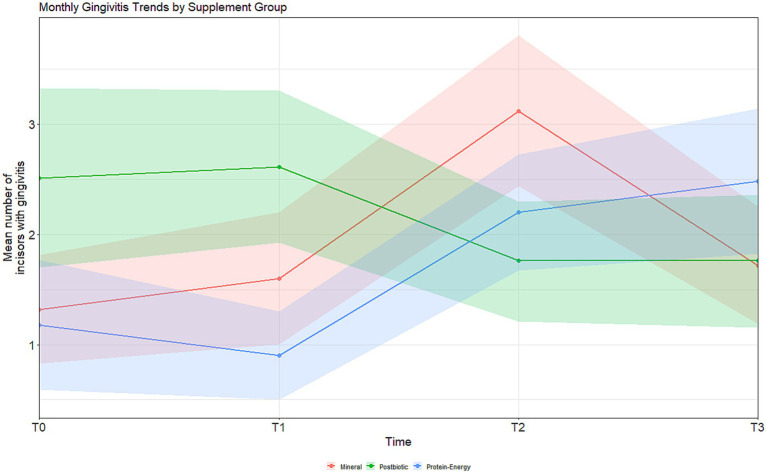 Figure 1
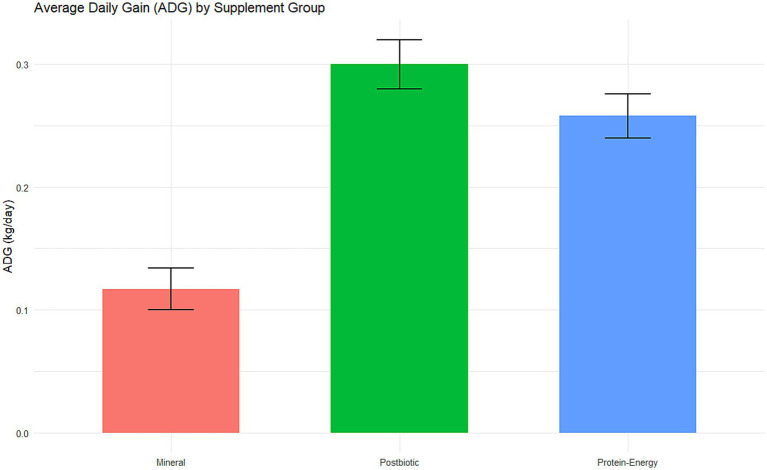 Figure 2
| Group | Moment | Mean weight | 95% CI mean | Std. deviation | 95% CI Std. Dev | Coefficient of variation | ||
|---|---|---|---|---|---|---|---|---|
| Upper | Lower | Upper | Lower | |||||
| Postbiotic protein-energy supplement | T0 | 250.72 | 258.446 | 243.003 | 26.881 | 30.904 | 21.919 | 0.107 |
| T1 | 261.91 | 270.729 | 253.087 | 30.71 | 35.948 | 24.667 | 0.117 | |
| T2 | 264.68 | 273.722 | 255.646 | 31.466 | 37.56 | 24.648 | 0.119 | |
| T3 | 282.19 | 291.934 | 272.454 | 33.908 | 42.349 | 25.419 | 0.12 | |
| Protein-energy supplement | T0 | 250.31 | 257.904 | 242.716 | 26.721 | 30.821 | 21.833 | 0.107 |
| T1 | 261.12 | 268.837 | 253.403 | 27.155 | 31.018 | 22.516 | 0.104 | |
| T2 | 273.76 | 281.969 | 265.551 | 28.884 | 32.712 | 24.17 | 0.106 | |
| T3 | 277.38 | 286.277 | 268.483 | 31.304 | 36.134 | 25.637 | 0.113 | |
| Mineral supplement | T0 | 251.28 | 260.17 | 242.39 | 31.28 | 37.029 | 25.156 | 0.124 |
| T1 | 257.58 | 266.138 | 249.022 | 30.113 | 35.594 | 23.725 | 0.117 | |
| T2 | 259.08 | 267.501 | 250.659 | 29.632 | 35.037 | 23.018 | 0.114 | |
| T3 | 263.54 | 271.621 | 255.459 | 28.434 | 34.38 | 21.824 | 0.108 | |
| Group | Moment | Mean | 95% CI Mean | Std. deviation | 95% CI Std. Dev. | Coefficient of variation | ||
|---|---|---|---|---|---|---|---|---|
| Upper | Lower | Upper | Lower | |||||
| Postbiotic protein-energy supplement | T0 | 2.51 | 3.323 | 1.698 | 2.829 | 3.213 | 2.226 | 1.127 |
| T1 | 2.612 | 3.301 | 1.924 | 2.396 | 2.699 | 1.967 | 0.917 | |
| T2 | 1.755 | 2.297 | 1.213 | 1.888 | 2.202 | 1.491 | 1.076 | |
| T3 | 1.755 | 2.357 | 1.153 | 2.097 | 2.477 | 1.648 | 1.195 | |
| Protein-energy supplement | T0 | 1.18 | 1.77 | 0.59 | 2.077 | 2.581 | 1.319 | 1.76 |
| T1 | 0.9 | 1.299 | 0.501 | 1.403 | 1.928 | 0.908 | 1.559 | |
| T2 | 2.2 | 2.726 | 1.674 | 1.852 | 2.17 | 1.463 | 0.842 | |
| T3 | 2.48 | 3.138 | 1.822 | 2.314 | 2.655 | 1.834 | 0.933 | |
| Mineral supplement | T0 | 1.32 | 1.812 | 0.828 | 1.731 | 2.04 | 1.289 | 1.312 |
| T1 | 1.6 | 2.199 | 1.001 | 2.109 | 2.443 | 1.636 | 1.318 | |
| T2 | 3.12 | 3.801 | 2.439 | 2.396 | 2.709 | 1.99 | 0.768 | |
| T3 | 1.72 | 2.249 | 1.191 | 1.863 | 2.195 | 1.472 | 1.083 | |
| Comparison 1 | Comparison 2 | df |
| ||||||
|---|---|---|---|---|---|---|---|---|---|
| T0 | T1 | 0.396 | 147 | 103.000 | 99.000 | 0.135 | 0.693 | 1.000 | 1.000 |
| T2 | 4.258 | 147 | 103.000 | 146.000 | −0.480 | <0.001 | <0.001 | <0.001 | |
| T3 | 4.852 | 147 | 103.000 | 152.000 | −0.614 | <0.001 | <0.001 | <0.001 | |
| T1 | T2 | 4.654 | 147 | 99.000 | 146.000 | −0.755 | <0.001 | <0.001 | <0.001 |
| T3 | 5.248 | 147 | 99.000 | 152.000 | −0.750 | <0.001 | <0.001 | <0.001 | |
| T2 | T3 | 0.594 | 147 | 146.000 | 152.000 | −0.082 | 0.553 | 1.000 | 1.000 |
| Comparison 1 | Comparison 2 | Mean difference | 95% CI Mean | SE |
| Cohen’s | 95% for Cohen’s | |||
|---|---|---|---|---|---|---|---|---|---|---|
| Lower | Upper | Lower | Upper | |||||||
| T0 | T1 | −0.280 | −1.399 | 0.839 | 0.407 | −0.688 | −0.137 | −0.687 | 0.413 | 1.000 |
| T2 | −1.800 | −3.015 | −0.585 | 0.442 | −4.075 | −0.882 | −1.526 | −0.238 | 0.001** | |
| T3 | −0.400 | −1.316 | 0.516 | 0.333 | −1.200 | −0.196 | −0.648 | 0.256 | 1.000 | |
| T1 | T2 | −1.520 | −2.755 | −0.285 | 0.449 | −3.383 | −0.745 | −1.385 | −0.105 | 0.008** |
| T3 | −0.120 | −1.282 | 1.042 | 0.422 | −0.284 | −0.059 | −0.628 | 0.511 | 1.000 | |
| T2 | T3 | 1.400 | 0.121 | 2.679 | 0.465 | 3,010 | 0.686 | 0.031 | 1.341 | 0.025* |
| Comparison |
|
| |||||
|---|---|---|---|---|---|---|---|
| Postbiotic protein-energy supplement | −1.806 | 69.265 | 84.51 | 0.2 | 0.071 | 0.213 | 0.213 |
| Postbiotic protein-energy supplement | −0.219 | 69.265 | 71.11 | 0.029 | 0.827 | 1 | 0.827 |
| Protein-energy supplement | 1.596 | 84.51 | 71.11 | 0.184 | 0.111 | 0.332 | 0.221 |
- —Conselho Nacional de Desenvolvimento Científico e Tecnológico10.13039/501100003593
Peer Reviews
No public reviews on file for this paper yet. If you reviewed it on a platform where reviews are public (OpenReview, ICLR, NeurIPS, ICML), you can paste yours below so the community can read it here.
Videos
No videos yet. Explain this paper in a talk, walkthrough, or lecture? Add one.
Taxonomy
TopicsRuminant Nutrition and Digestive Physiology · Milk Quality and Mastitis in Dairy Cows · Oral microbiology and periodontitis research
Introduction
1
Periodontal diseases, including gingivitis and periodontitis, are multifactorial conditions with variable prevalence and manifestations in cattle herds (1–4). Their occurrence in ruminants is associated with factors such as diet (5, 6), soil management (7), and age (8). Gingivitis represents the earliest and reversible stage of these disorders and is therefore a key target for preventive interventions (9). Despite its relevance, gingival inflammation in grazing cattle remains largely overlooked in veterinary research, and effective control strategies are limited.
Controlling oral diseases in ruminants remains a challenge in animal production. Traditional oral hygiene practices are unfeasible in livestock, highlighting the need for alternative approaches capable of modulating local inflammatory responses through systemic or nutritional routes (9). In ruminant nutritional management, the strategic use of feed additives enhances animal productivity by modulating the ruminal microbiome and fermentation processes (10) and also represents a sustainable alternative to conventional antibiotics (11). Among the main categories of additives used for this purpose are probiotics, prebiotics, and postbiotics, which not only improve zootechnical performance but also support the growth of the livestock feed sector.
Postbiotics are bioactive molecules prepared from a combination of microbial cells or inactivated cellular components and metabolic by-products. They act directly by modulating immune responses and gene expression, exhibiting antimicrobial, antioxidant, and immunomodulatory properties (12). Probiotics, in turn, are live microorganisms that confer benefits when administered in functional doses (13), whereas prebiotics are components that selectively stimulate the growth of beneficial microorganisms in the gastrointestinal tract (14).
In the oral cavity, probiotics can act by preventing the formation of biofilms, reducing salivary pH, and producing antioxidants. Among the most important components of postbiotics, organic acids are recognized for their different antimicrobial mechanisms. In addition to their biological benefits, postbiotics are clinically safe and can be easily incorporated into different food formulations (15). In livestock production systems, postbiotics promote additional physiological and metabolic benefits to animal health, particularly through the modulation of immune responses, inflammatory processes, and the balance of the gastrointestinal tract (16, 17).
In this context, nutritional yeasts deserve special attention due to their rich composition in proteins, essential amino acids, energy compounds, and micronutrients (16). In cattle, the use of yeast-based probiotics and postbiotics derived from Saccharomyces cerevisiae has shown benefits for immunity, productive performance, and ruminal microbiome modulation (18–20). In high-producing dairy cows, supplementation with S. cerevisiae has led to increased milk yield and fat content, higher ruminal acetate production, and reduced inflammatory cytokine levels (20). In feedlot cattle, S. cerevisiae culture supplementation has been associated with increased average daily gain, improved feed conversion, higher digestibility, and consequently, better carcass gains (21). However, their potential effects on oral health in ruminants have not been previously investigated.
Given the increasing emphasis on sustainable nutrition and antibiotic alternatives in animal production, understanding whether postbiotic supplementation can influence oral health represents a novel and relevant research avenue. Therefore, this study aimed to evaluate the effects of S. cerevisiae-derived postbiotics on gingival health and zootechnical performance in grazing Brangus heifers. We hypothesized that postbiotic supplementation could stabilize gingivitis occurrence and enhance weight gain under extensive pasture conditions.
Materials and methods
2
Ethics statement
2.1
The experiment was approved by the Animal Use Ethics Committee (CEUA) of the Federal University of Goiás (UFG) (Protocol number 096/24).
Experimental design and study population
2.2
The experiment was conducted on a farm located in the municipality of Paulistânea, in the State of São Paulo, Brazil (Latitude: 22°32′21.9” S, Longitude: 49°11′38.2” W). A total of 150 Brangus beef heifers and crossbreeds, aged between 12 and 14 months at the beginning of the study, were monitored. The animals were randomly assigned into three groups with homogeneous initial weights, according to the supplementation used in the experimental design: (1) protein-energy supplement with a yeast-derived postbiotic (S. cerevisiae) (n = 50); (2) standard protein-energy supplement (n = 50); and (3) mineral supplement (n = 50). The experiment lasted 4 months, including a 20-day adaptation period. The heifers were weighed monthly and subjected to clinical oral examinations based on the criteria described by Borsanelli et al. (1). All animals received the recommended clinical and sanitary care throughout the entire experimental period, including regular parasite control. No intercurrent events were recorded during the conduct of the study.
Diet composition
2.3
The experiment was conducted under continuous grazing on Brachiaria decumbens pasture, in an area ranging from 10 to 20 hectares, without any agricultural management such as pasture renewal or soil treatment in the past 30 years. Forage availability was visually monitored and adjusted throughout the experimental period. The study was conducted during the dry season, and no significant climatic variations were observed. The chemical and bromatological composition and estimated total nutrients of the protein-energy supplement were as follows: 7.51% crude fiber, 2.12% calcium, 0.58% phosphorus, 18.87% ash, 19.60% crude protein, 1.95% non-protein nitrogen, 9.79% acid detergent fiber (ADF), 21.63% neutral detergent fiber (NDF), 2.87% ether extract (acid hydrolysis), and 10.04% moisture (volatile at 105 °C).
The same protein-energy supplement served as the base formulation for the experimental group, which received an additional 1.5% postbiotic derived from Saccharomyces cerevisiae, corresponding to 15 g of postbiotic per kg of supplement. This formulation resulted in an average daily intake of 10.5 g of postbiotic per animal. The Saccharomyces cerevisiae yeast culture used as a postbiotic consisted of a standardized mixture of inactivated microbial biomass and metabolites generated during a controlled fermentation process. Its composition included cellular fractions and a set of bioactive compounds released into the fermentation medium, including peptides, alcohols, esters, oligosaccharides, organic acids, B-complex vitamins, and nucleotides (16, 22). The detailed product specification, including manufacturing and standardization parameters, were provided by the manufacturer (Aleris – Comércio e Exportação de Produtos para Nutrição Ltda.).
The mineral supplement was formulated with the following guaranteed levels: calcium 160–200 g/kg (min/max), phosphorus 40 g/kg (min), cobalt 60 mg/kg (min), copper 750 mg/kg (min), sulfur 10 g/kg (min), fluoride 400 mg/kg (max), iodine 60 mg/kg (min), magnesium 5,000 mg/kg (min), manganese 825 mg/kg (min), selenium 15 mg/kg (min), sodium 150 g/kg (min), and zinc 2,700 mg/kg (min). The experimental groups were managed in separate paddocks, and only animals from the same group had ad libitum access to the same feed bunk. Thus, although paddock rotation was carried out during management, no cross-contamination between diets occurred.
Oral clinical examination
2.4
The oral clinical status of the 150 heifers was established through intraoral examinations and periodontal assessments of all eight incisor teeth, conducted monthly. A total of four evaluations were performed throughout the experiment, resulting in the assessment of 4.800 deciduous teeth. The indicators used to characterize the lesions were based on the visual appearance of the teeth, combined with gingival margin probing using a millimeter-marked Williams periodontal probe. The probe was gently inserted into the gingival sulcus and positioned parallel to the gingival margin on the labial surface, moving uniformly along the margin of each incisor (1). All clinical examinations were performed by a single evaluator who had been previously trained to standardize the diagnostic criteria for periodontal disease. The information obtained was recorded on a specific form (odontogram), ensuring uniformity in data collection.
Gingivitis was defined by the presence of inflammatory changes in the gingival borders, such as edema, color alteration, and spontaneous or probe-induced bleeding. Periodontal sites were considered healthy if they exhibited no signs of inflammation in the gingival margins and no other clinical indications of periodontal alterations.
Statistical analysis
2.5
A Repeated Measures ANOVA (RM-ANOVA) was employed to examine statistically significant differences (p < 0.05) within-group (protein-energetic plus postbiotic supplement group, protein-energetic supplement group, and mineral supplement group) in the variables “weight gain” and “cases of gingivitis.” To verify the assumptions of the analysis, tests for residual normality (Shapiro–Wilk), sphericity (Mauchly’s test), and homogeneity of variances (Levene’s test) were conducted. When assumptions were violated, the Friedman ANOVA, a non-parametric alternative, was applied. For significant results, effect sizes were calculated using Cohen’s d for RM-ANOVA and Wilcoxon’s r for Friedman ANOVA. Post hoc analyses were conducted using the Bonferroni test (RM-ANOVA) and the Wilcoxon Signed-Rank test (Friedman ANOVA) to identify specific within-group differences.
A one-way ANOVA was performed to evaluate statistically significant differences (p < 0.05) between groups for the variables “weight gain” and “cases of gingivitis.” The normality of distributions was assessed using the Shapiro–Wilk test, and homogeneity of variances was tested using Levene’s test. In cases where assumptions were not met, the Kruskal–Wallis test was used as a non-parametric alternative. For significant outcomes, effect sizes were measured using Cohen’s d (for one-way ANOVA) and the r coefficient (for Kruskal–Wallis). For multiple comparisons, the Bonferroni test was applied following one-way ANOVA, and the Dunn test was used after the Kruskal–Wallis test to identify specific between-group differences. All graphical outputs were performed using R software (version 4.4.2), with scripts developed specifically for this study (23). The figures were generated directly in R Studio using appropriate packages for data visualization and graphical analysis.
Results
3
The results of the descriptive statistical analysis of the evaluated groups are presented in Tables 1, 2. Considering the intra-group analyses for the variable gingivitis, no statistically significant differences were found in the group that received the protein-energy supplement with S. cerevisiae postbiotic (p < 0.195). In the protein-energy supplement group, a significant increase in the number of gingivitis cases was observed over time [χ^2^(3) = 35.573, p < 0.001; Kendall’s W = 0.237], with post-hoc test results and effect sizes summarized in Table 3. Similarly, in the mineral supplement group, a significant intra-group increase in gingivitis cases was also detected [F(3) = 7.265, p < 0.001; partial η^2^ = 0.129], with detailed results provided in Table 4. The between-group analysis for the variable gingivitis, both at baseline (T0) and at the end of the experiment (T3), revealed no statistically significant differences (Table 5). These temporal patterns are illustrated in Figure 1.
Monthly trends in the mean number of incisors with gingivitis in Brangus heifers receiving mineral supplement, protein–energy supplement, or postbiotic protein–energy supplement over a 4-month period. Shaded areas represent the 95% confidence interval.
Regarding the weight variable, the average daily gain (ADG) at the end of the experiment was 0.300 kg/day in the group that received the protein-energy supplement with postbiotic, 0.258 kg/day in the protein-energy supplement group, and 0.117 kg/day in the mineral supplement group. Between-group analyses for weight showed that animals in the postbiotic group had significantly higher weight gain compared to those in the standard protein-energy group (df = 2; F = 4.76; p = 0.011; Cohen’s d = 0.596). These differences in ADG among dietary treatments are illustrated in Figure 2.
Average daily gain (ADG) of heifers receiving mineral supplement, protein–energy supplement, or postbiotic protein–energy supplement over a 4-month period. Bars represent mean values, and error bars indicate the 95% confidence interval.
Discussion
4
The use of a protein-energy supplement containing Saccharomyces cerevisiae postbiotic did not reduce the frequency of gingivitis episodes in the deciduous dentition of the heifers. On the other hand, intra-group analysis also did not show a significant increase in the number of teeth affected by gingivitis in these animals. In contrast, the present study revealed that the group receiving the standard protein-energy supplement exhibited an increase in the number of teeth with gingivitis over time, as indicated by the intra-group analyses and Figure 1. These results are consistent with the findings of Saraiva et al. (6), who reported a similar trend in young cattle fed with protein supplements.
Unlike classical infectious diseases, periodontal diseases may be associated with environmental and genetic factors that influence susceptibility to their development and the progression of their various clinical manifestations (24). Moreover, the individual variability observed in cattle maintained under the same feeding regime (6) may help explain the intra-group differences identified over time, both in the group that received the protein-energy supplement and in the group that received the mineral supplement.
Early loss of incisor teeth, whether deciduous or permanent, can impair feeding efficiency and negatively affect the productive performance of animals (9). In the present study, the heifers evaluated are future breeding stock within the production system, so partial assessment of the incisor teeth represents a relevant indicator of the severity of these disorders within the herd. Thus, the group that received the postbiotic showed an improvement in average daily weight gain and stability in the occurrence of gingivitis episodes in the deciduous incisor teeth (Figure 2). Although the direct economic impacts were not assessed, preventing more severe forms of periodontal diseases, represents an important preventive strategy for cattle maintained in pasture-based systems.
In humans, studies have shown that the diversity of dietary nutrients can influence periodontal health through modulation of the oral microbiome (25–27). Although recent research has advanced in characterizing the oral microbiota of cattle with periodontal diseases (28–30), information remains scarce regarding the effects of dietary supplements and additives on the composition of the bovine oral microbiota.
The microbiological characterization of the oral cavity provides valuable insights into microbial dynamics. In the present study, this analysis was not included due to methodological limitations; however, it is planned for future stages of the research. It is known that a reduction in the frequency and duration of gingivitis episodes can be used as an indirect criterion to measure biological events related to the progression to periodontitis, the most severe and irreversible form of periodontal disease in cattle (9). In this context, the present study contributes by providing a general characterization of the epidemiological aspects associated with the occurrence of gingivitis in female heifers during the rearing phase, as well as suggesting possible intervention strategies for the control of these diseases.
In cattle, the use of virginiamycin has shown preventive and control effects, reducing the occurrence of gingivitis and necrotizing gingivitis (31, 32). Similar results have been observed in beef cattle with aggressive periodontitis, where virginiamycin use led to a reduction in the prevalence of oral diseases and improvements in clinical conditions and overall animal health (3, 33). However, given the current restrictions on antibiotic use in animal production, there is growing interest in safe and sustainable alternatives, such as probiotics, prebiotics, and postbiotics (11, 12).
In this context, the use of probiotics and postbiotics derived from S. cerevisiae has gained prominence, offering various benefits to cattle health and performance, including improved feed efficiency and ruminal fermentation, modulation of the immune response, reduced feed intake, and prevention of gastrointestinal disorders such as acidosis (34–37). However, the multifactorial nature of periodontal diseases poses methodological challenges to their investigation, making it difficult to identify in isolation all the factors involved in the etiopathogenesis of these conditions, such as metabolic and genetic aspects and pasture variability, which underscores the complexity of studying oral health in cattle and other ruminants.
Although the animals in the group receiving the protein-energy supplement with postbiotic showed greater weight gain at the end of the experimental period, no clear therapeutic effects on the oral health of heifers in the rearing phase were observed. Nevertheless, it is plausible not to dismiss a possible modulatory role of the postbiotic on the animals’ oral microbiota, especially since, among the tested groups, only this group did not show an increase in the number of gingivitis cases in the intra-group analysis.
The animals that received the mineral supplement showed an increase in the occurrence of intra-group gingivitis episodes over time; however, this increase was not sufficient to progress to cases of periodontitis, nor did it result in statistically significant differences compared to the other tested groups. It is likely that the animals’ natural immune response and possible external factors contributed to containing the progression of lesions in these animals.
The findings of this study indicate that postbiotic supplementation did not significantly alter the overall occurrence of gingivitis but contributed to maintaining stable gingival conditions and improving growth performance in grazing heifers. These results suggest that nutritional modulation may influence early inflammatory processes in the oral cavity, even in the absence of detectable clinical differences among groups. Although zootechnical benefits have been observed in animals supplemented with S. cerevisiae-derived postbiotics, further research in broader production systems is needed to investigate the mechanisms influencing oral health in ruminants.
Integrating microbiome, metabolomic, and immunological analyses will clarify whether postbiotics modulate local inflammatory responses or microbiota composition within the oral cavity. Understanding these mechanisms could lead to the development of targeted nutritional strategies for the prevention of periodontal diseases and other inflammatory conditions in ruminants. Moreover, it is possible that exploring the oral–ruminal axis may reveal new insights into how nutritional additives contribute to both oral homeostasis and overall productivity in sustainable grazing systems. This becomes relevant considering that dysbiotic communities and an inflammatory environment in the dental biofilm and rumen of cattle with periodontitis have already been previously described (29).
Conclusion
5
The results of the present study suggest that S. cerevisiae postbiotic, when combined with protein supplementation, may contribute to the maintenance of gingival health and improved zootechnical performance in heifers, even without a direct therapeutic effect on gingivitis. This represents a promising nutritional strategy, whose mechanism of action still needs to be elucidated.
The reference list from the paper itself. Each links out to its DOI / PubMed record.
- 1Borsanelli AC Viora L Lappin DF Bennett D King G Dutra IS . Periodontal lesions in slaughtered cattle in the west of Scotland. Vet Rec. (2016) 179:652. doi: 10.1136/vr.103931, 27780900 · doi ↗ · pubmed ↗
- 2Caetano GDDC Martins ADS Cardoso MVS Paula WVF Saraiva JR Borges NC . Epidemiological survey on the oral health of cattle slaughtered in Goiás, Brazil. Vet Rec. (2025) 196:e 5220. doi: 10.1002/vetr.5220, 40040539 · doi ↗ · pubmed ↗
- 3Döbereiner J Dutra IS Rosa IV. The etiology of "cara inchada", a bovine epizootic periodontitis in Brazil. Pesq Vet Bras. (2004) 24:50–6. doi: 10.1590/S 0100-736X 2004000100011 · doi ↗
- 4Grzeczka A Lech M Wozniak G Graczyk S Kordowitzki P Olejnik M . Periodontitis disease in farmed ruminants-current state of research. Int J Mol Sci. (2023) 24:9763. doi: 10.3390/ijms 24119763, 37298712 PMC 10253686 · doi ↗ · pubmed ↗
- 5Campello P Borsanelli AC Agostinho S Schweitzer CM Gaetti-Jardim JE Döbereiner J . Occurrence of periodontitis and dental wear in dairy goats. Small Rumin Res. (2019) 175:133–41. doi: 10.1016/j.smallrumres.2019.05.004 · doi ↗
- 6Saraiva JR Dionizio A Borsanelli AC Ventura TMS Thomassian LTG Athayde FRF . Gingivitis in cattle and supplemental protein diet: insights from proteomic analysis. J Proteome. (2023) 282:104913. doi: 10.1016/j.jprot.2023.104913, 37116581 · doi ↗ · pubmed ↗
- 7Dutra IS Matsumoto T Döbereiner J. Outbreaks of periodontitis in calves (“cara inchada”) associated with soil management. Pesq Vet Bras. (1993) 13:1–4.
- 8Borsanelli AC Athayde FRF Agostinho SD Riggio MP Dutra IS. Dental biofilm and its ecological interrelationships in ovine periodontitis. J Med Microbiol. (2021) 70:001396. doi: 10.1099/jmm.0.001396, 34313584 · doi ↗ · pubmed ↗