Associations Between Area Deprivation Index and the Time to Presentation of Scaphoid Fractures
Aidan M. Lynch, Muhammad H. Hamdan, Jordan Bauer, Rohan V. Rajan, Rajendra Singh, Joel V. Ferreira, Anthony Parrino, Craig M. Rodner

TL;DR
This study finds that people from more deprived areas tend to seek treatment for scaphoid fractures later, increasing the risk of complications.
Contribution
The study demonstrates a novel association between area deprivation and delayed presentation of scaphoid fractures, linking socioeconomic factors to medical outcomes.
Findings
Patients from the most deprived areas presented with scaphoid fractures significantly later than those from the least deprived areas.
Higher area deprivation index scores were independently associated with a 23.8% increased odds of nonunion at presentation.
Delayed presentation in deprived areas was linked to a higher prevalence of nonunion at initial evaluation.
Abstract
Scaphoid fractures are the most common carpal fractures and are prone to nonunion because of their retrograde blood supply. Delayed diagnosis or treatment increases the risk of nonunion and progression to scaphoid nonunion advanced collapse. Social determinants of health, measured by the area deprivation index (ADI), may contribute to such delays. This study examines the association between ADI, time to presentation, and the presence of nonunion at initial evaluation. A retrospective chart review identified 168 patients with suspected scaphoid fractures between January 1, 2018 and June 30, 2025. State-level ADI scores were grouped into the following terciles: least-deprived (LDT), intermediately deprived (IDT), and most deprived (MDT). Patients presenting more than 5 years after injury or without confirmed fractures were excluded, leaving a total of 107 patients. Independent t tests…
Genes, proteins, chemicals, diseases, species, mutations and cell lines named across the full text — each resolved to its canonical identifier and authoritative record.
Click any figure to enlarge with its caption.
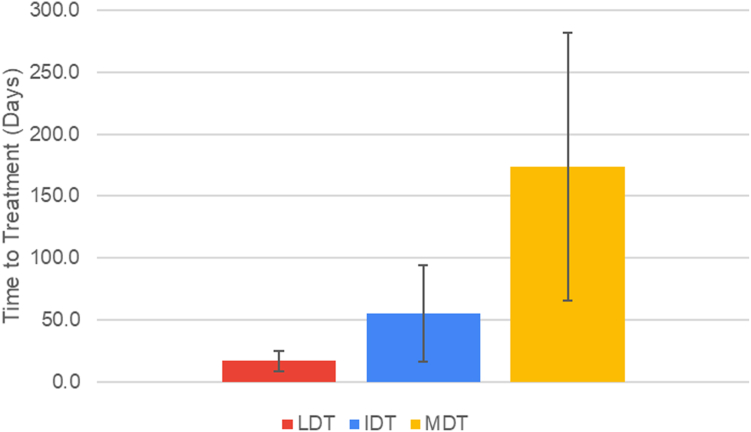 Figure 1
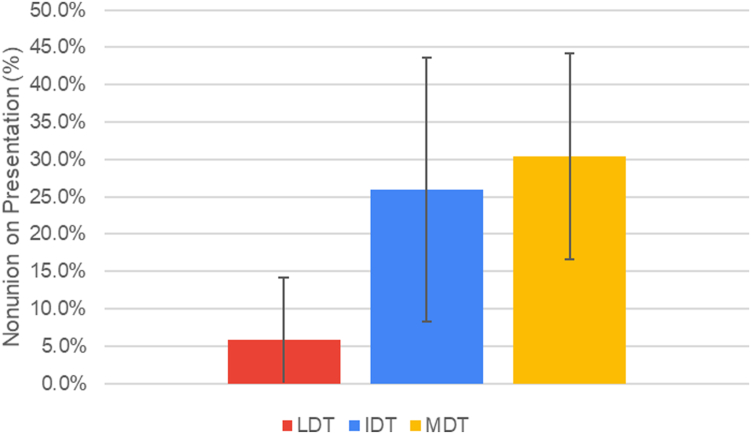 Figure 2
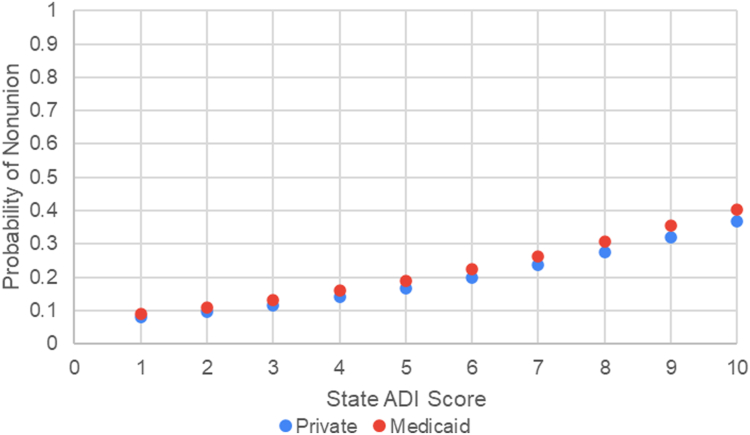 Figure 3
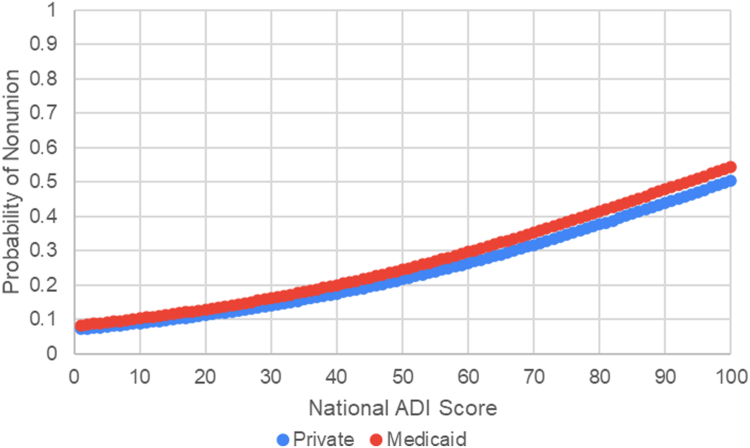 Figure 4
Peer Reviews
No public reviews on file for this paper yet. If you reviewed it on a platform where reviews are public (OpenReview, ICLR, NeurIPS, ICML), you can paste yours below so the community can read it here.
Videos
No videos yet. Explain this paper in a talk, walkthrough, or lecture? Add one.
Taxonomy
TopicsOrthopedic Surgery and Rehabilitation · Congenital limb and hand anomalies · Facial Trauma and Fracture Management