Decoding Causal Associations Between Neuropsychiatric Disorders and Rotator Cuff Tendinopathy: A Two‐Sample Mendelian Randomization Study
Weizhe Zhang, Ming Chen, Haozhang Huang, Puyi Sheng

TL;DR
This study finds that ADHD and PTSD are genetically linked to increased risk of rotator cuff tendinopathy, suggesting a need for targeted prevention and treatment strategies.
Contribution
The study identifies ADHD and PTSD as independent genetic risk factors for RCT after adjusting for multiple confounders.
Findings
ADHD and PTSD are genetically associated with increased RCT risk.
Adjusting for confounders confirmed ADHD and PTSD as robust causal factors for RCT.
Abstract
Rotator cuff tendinopathy (RCT) is a major contributor to over 30 million surgeries which are conducted to treat shoulder overuse injuries worldwide annually. Accumulating evidence indicates that neuropsychiatric disorders (ND) share pathogenic pathways with tendinopathy. However, unclarified causal relationships between these two disease spectra undermine the individualized design of treatment strategies benefiting patients with ND while minimizing the RCT risk. We aimed to unveil whether ND were genetically associated with increased RCT occurrence by conducting a two‐sample Mendelian randomization (MR) algorithm. Genome‐wide association studies (GWAS) data of attention deficit/hyperactivity disorder (ADHD), autism spectrum disorder (ASD), bipolar disorder (BD), epilepsy, major depressive disorder (MDD), obsessive compulsive disorder (OCD), post‐traumatic stress disorder (PTSD),…
Genes, proteins, chemicals, diseases, species, mutations and cell lines named across the full text — each resolved to its canonical identifier and authoritative record.
Click any figure to enlarge with its caption.
 Figure 1
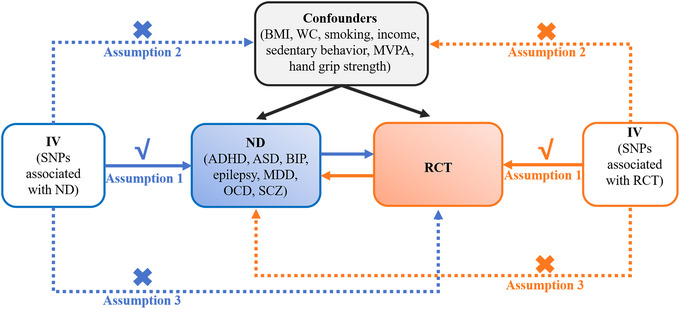 Figure 2
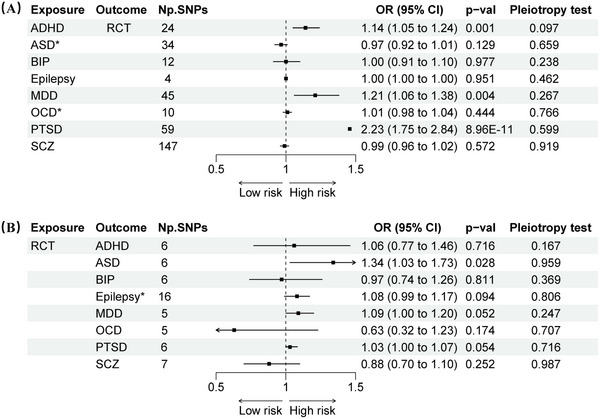 Figure 3
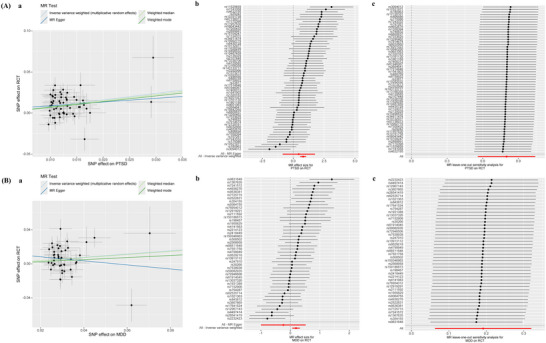 Figure 4
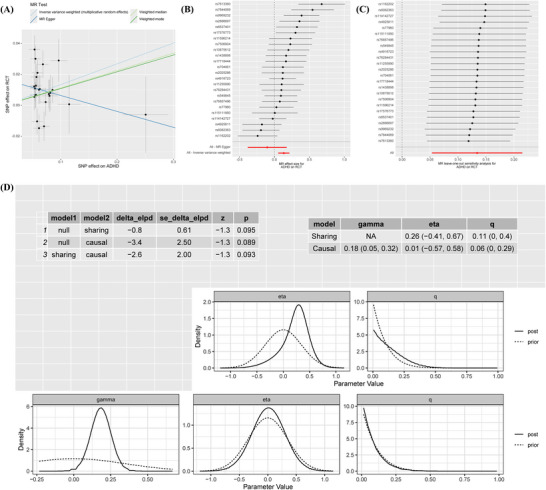 Figure 5
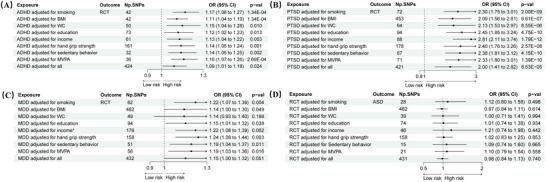 Figure 6
Peer Reviews
No public reviews on file for this paper yet. If you reviewed it on a platform where reviews are public (OpenReview, ICLR, NeurIPS, ICML), you can paste yours below so the community can read it here.
Videos
No videos yet. Explain this paper in a talk, walkthrough, or lecture? Add one.
Taxonomy
TopicsShoulder Injury and Treatment · Traumatic Brain Injury Research · Tendon Structure and Treatment