Unmasking Wiskott–Aldrich Syndrome in Adulthood in a Case of Long-Standing Bleeding, Infections, and Steroid-Induced Morbidity
Anupam Dutta

TL;DR
A 28-year-old man was diagnosed with Wiskott-Aldrich syndrome after years of misdiagnosis and steroid treatment for symptoms resembling immune thrombocytopenia.
Contribution
This case highlights the atypical adult presentation of Wiskott-Aldrich syndrome and the importance of genetic testing for accurate diagnosis.
Findings
The patient had a hemizygous pathogenic nonsense variant in the WAS gene, confirming the diagnosis.
Prolonged steroid use led to iatrogenic Cushing’s syndrome despite treatment for presumed immune thrombocytopenia.
Family history of consanguinity and recurrent infections supported an inherited immunodeficiency diagnosis.
Abstract
Wiskott-Aldrich syndrome (WAS) is a rare X-linked primary immunodeficiency characterized by the classic triad of microthrombocytopenia, recurrent infections, and eczema, with most cases diagnosed during infancy or early childhood. Adult presentation is uncommon and often leads to diagnostic delay or misdiagnosis. We report the case of a 28-year-old male who presented with multiple episodes of bleeding, petechiae, recurrent skin and respiratory infections, and chronic eczematous lesions. Over several years, he underwent repeated hospitalizations and was treated for immune thrombocytopenia (ITP) with prolonged courses of oral corticosteroids, resulting in features of iatrogenic Cushing’s syndrome, including moon facies and skin thinning. Despite steroid therapy, his symptoms worsened, and he continued to have intermittent respiratory tract infections, urinary tract infections, and…
Genes, proteins, chemicals, diseases, species, mutations and cell lines named across the full text — each resolved to its canonical identifier and authoritative record.
Click any figure to enlarge with its caption.
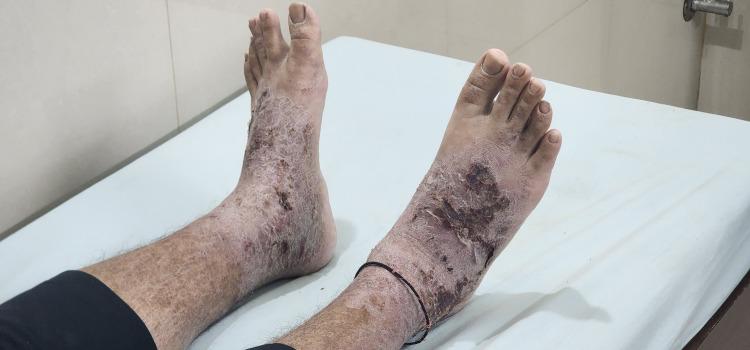 Figure 1
Peer Reviews
No public reviews on file for this paper yet. If you reviewed it on a platform where reviews are public (OpenReview, ICLR, NeurIPS, ICML), you can paste yours below so the community can read it here.
Videos
No videos yet. Explain this paper in a talk, walkthrough, or lecture? Add one.
Taxonomy
TopicsCellular Mechanics and Interactions · Cell Adhesion Molecules Research · Microfluidic and Bio-sensing Technologies