Unique bifunctional α-sialidase/β-N-acetylgalactosaminidase from Bifidobacterium bifidum acting on the Sda antigen
Toshihiko Katoh, Rina Suzuki, Shogo Kataoka, Junya Kawasaki, Keijiro Kamio, Masahiro Komeno, Saya Yoshioka, Annemette Tengstedt Rasmussen, Ikuo Kimura, Takane Katayama, Hisashi Ashida

TL;DR
Scientists discovered a unique enzyme from Bifidobacterium bifidum that can break down a specific sugar structure found in human gut mucins.
Contribution
The study identifies a novel bifunctional enzyme with both α-sialidase and β-N-acetylgalactosaminidase activities in a single polypeptide.
Findings
SiaBb3 efficiently degrades GM2 ganglioside and Sda antigens by releasing Neu5Ac and GalNAc.
The enzyme's hydrolysis order is reversed compared to mammalian lysosomal enzymes.
The GH33 domain is essential for initial Neu5Ac hydrolysis to enable GalNAc removal.
Abstract
Sda antigens [GalNAcβ1–4(Neu5Acα2-3)Galβ1-O-R] are present at the nonreducing termini of O-glycans of colonic mucins of humans. Previously, we reported characterization of two glycoside hydrolase (GH) family 33 α-sialidases, SiaBb1 and SiaBb2, from a symbiotic Bifidobacterium bifidum dwelling in the human intestines. In this study, we identified a third α-sialidase, SiaBb3 from B. bifidum, that is distinguished from the aforementioned two sialidases by its possession of an additional GH123 β-N-acetylgalactosaminidase domain within the same polypeptide. The purified recombinant SiaBb3 efficiently converted GM2 ganglioside [GalNAcβ1–4(Neu5Acα2-3)Galβ1–4Glcβ1-ceramide], sharing the same terminal trisaccharide structure with the Sda antigen, to lactosylceramide by releasing Neu5Ac and GalNAc in the presence of 0.1% sodium cholate. Hydrolysis of the GM2 oligosaccharide proceeds with the…
Genes, proteins, chemicals, diseases, species, mutations and cell lines named across the full text — each resolved to its canonical identifier and authoritative record.
Click any figure to enlarge with its caption.
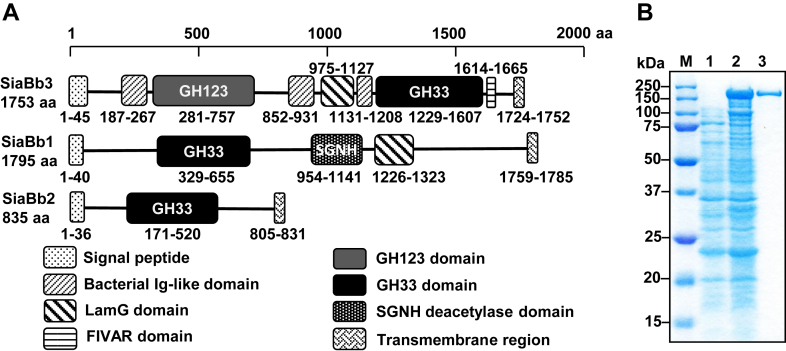 Figure 1
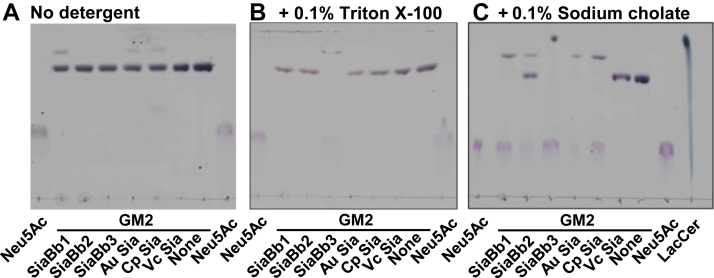 Figure 2
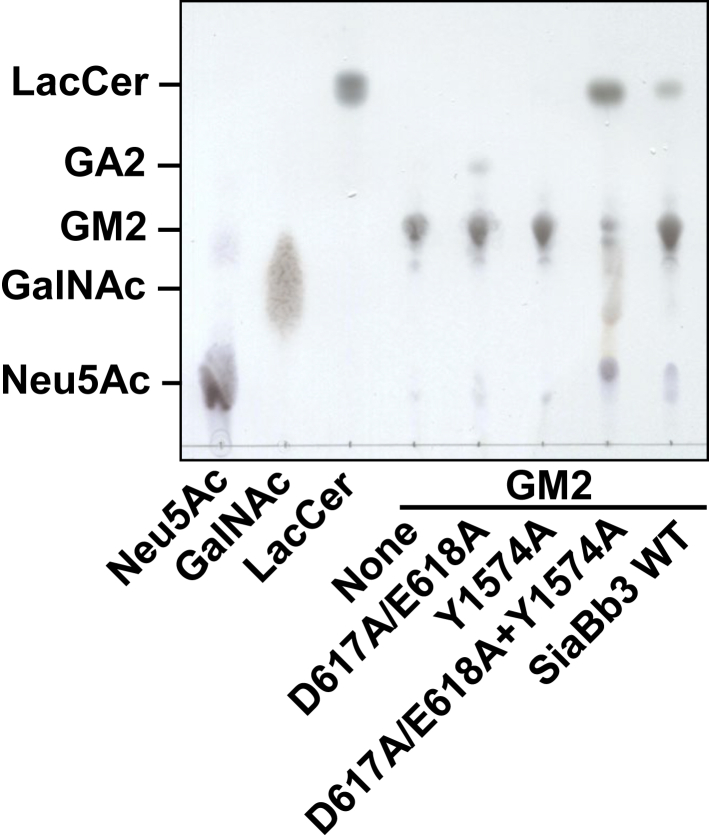 Figure 3
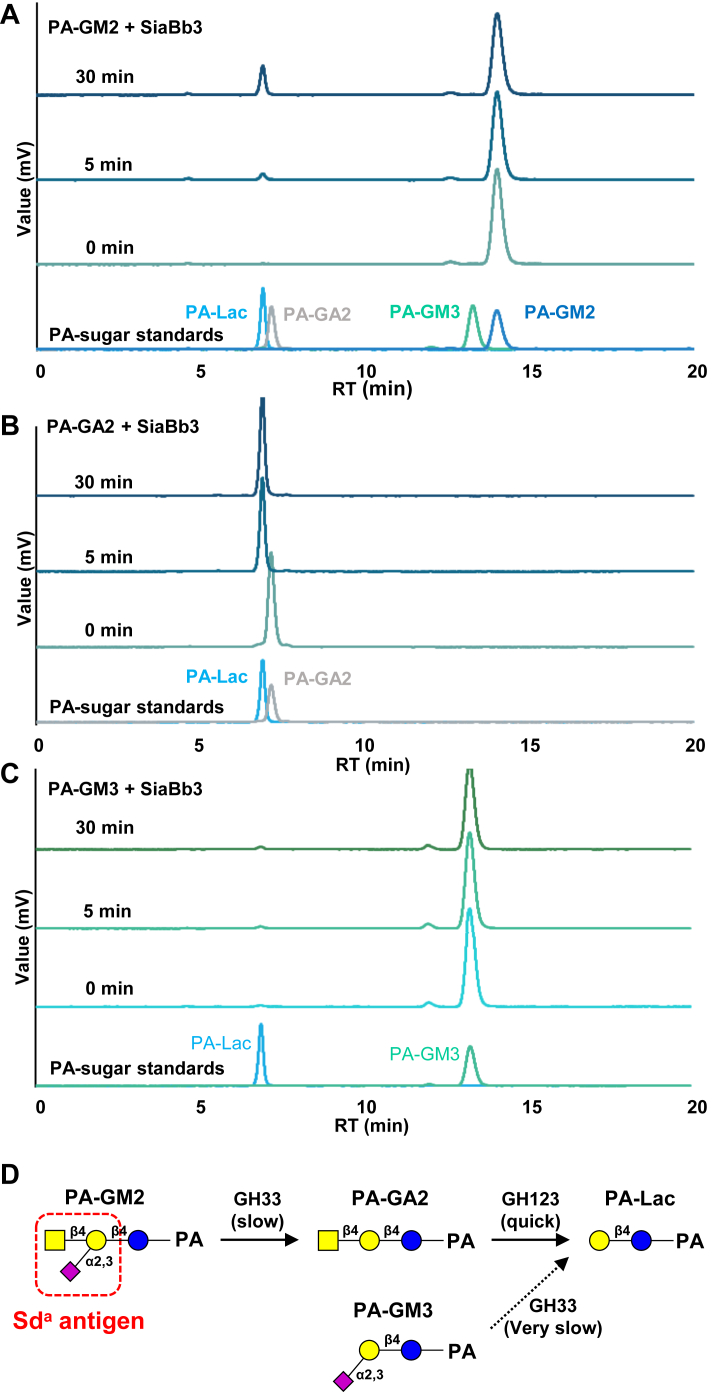 Figure 4
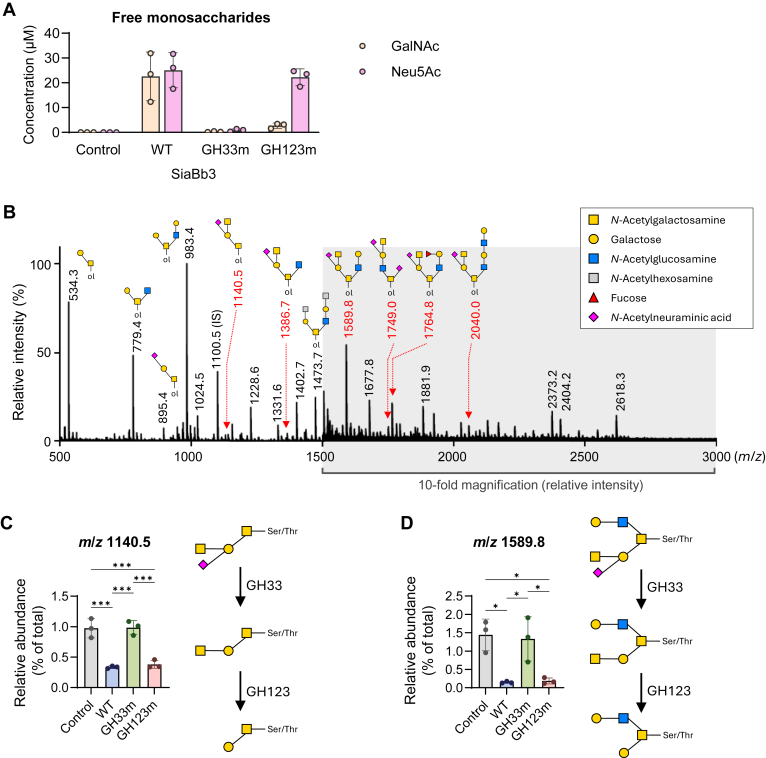 Figure 5
Peer Reviews
No public reviews on file for this paper yet. If you reviewed it on a platform where reviews are public (OpenReview, ICLR, NeurIPS, ICML), you can paste yours below so the community can read it here.
Videos
No videos yet. Explain this paper in a talk, walkthrough, or lecture? Add one.
Taxonomy
TopicsGlycosylation and Glycoproteins Research · Carbohydrate Chemistry and Synthesis · Infant Nutrition and Health