Aberrant CDK4/6-driven cell-cycle reentry drives neuronal loss and defines a therapeutic target in C9orf72 ALS/FTD
Ling Lian, Hayley Robinson, Noah Daniels, G. Aleph Prieto, Gunnar H.D. Poplawski, Rodrigo Lopez-Gonzalez

TL;DR
This study identifies CDK4/6-driven cell-cycle reentry as a key mechanism in C9orf72-related ALS/FTD and suggests CDK4/6 inhibitors like palbociclib as a potential treatment.
Contribution
The study reveals that arginine-rich dipeptide repeat proteins drive CDK4/6-mediated cell-cycle dysregulation in C9orf72 ALS/FTD neurons.
Findings
C9orf72 neurons exhibit age-dependent cell-cycle reentry and increased S-phase entry.
CDK4/6 inhibition with palbociclib reduces neuronal death and restores synaptic proteins.
Single-nucleus RNA sequencing confirms cell-cycle activation in excitatory neurons from C9orf72 patients.
Abstract
The C9orf72 hexanucleotide repeat expansion (G4C2) is the most common genetic cause of amyotrophic lateral sclerosis (ALS) and frontotemporal dementia (FTD), yet targeted therapies remain unavailable. Here, we show that induced pluripotent stem cell (iPSC)-derived post-mitotic neurons from C9orf72 carriers exhibit age-dependent cell-cycle reentry, increased S-phase entry, and elevated cyclin and CDK expression. Mechanistically, arginine-containing dipeptide repeat proteins (poly-GR and poly-PR) translated from G4C2 repeats drive this aberrant activation through stimulation of the CDK4/6 pathway, whereas poly-GP and C9orf72 loss-of-function show no effect. Importantly, the FDA-approved CDK4/6 inhibitor palbociclib normalizes cell-cycle progression, reduces S-phase entry, decreases motor neuron death, and restores synaptic proteins PSD95 and synapsin-1. Single-nucleus RNA sequencing from…
Genes, proteins, chemicals, diseases, species, mutations and cell lines named across the full text — each resolved to its canonical identifier and authoritative record.
Click any figure to enlarge with its caption.
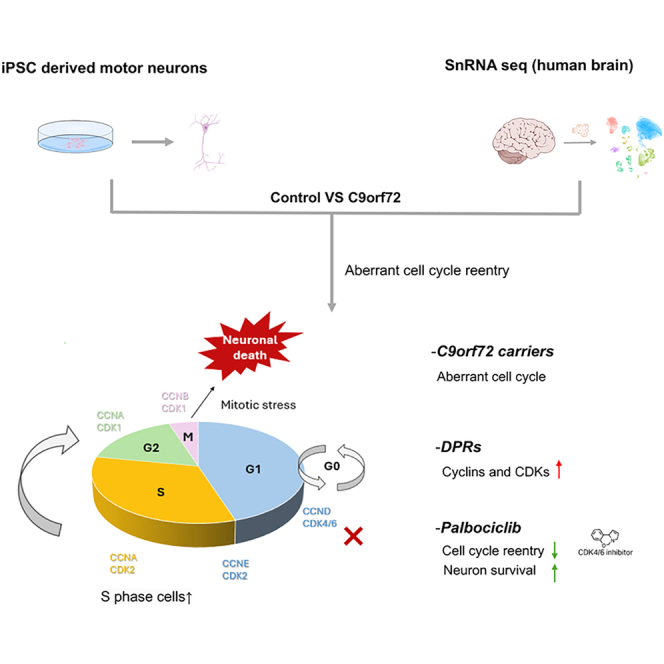 Figure 1
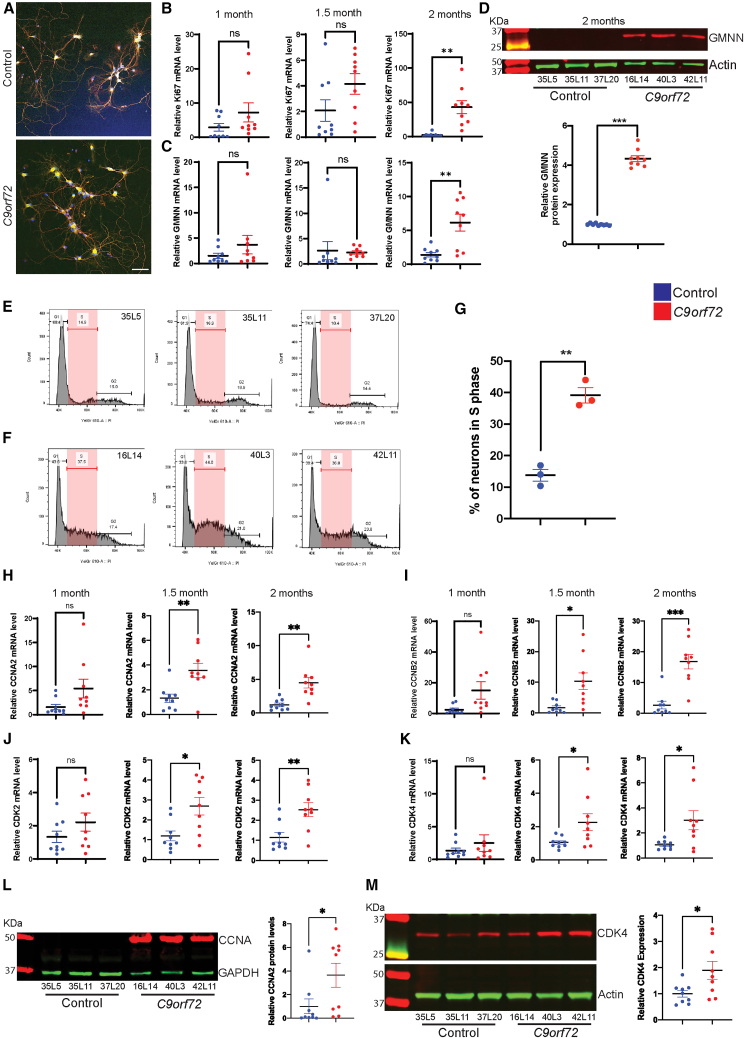 Figure 2
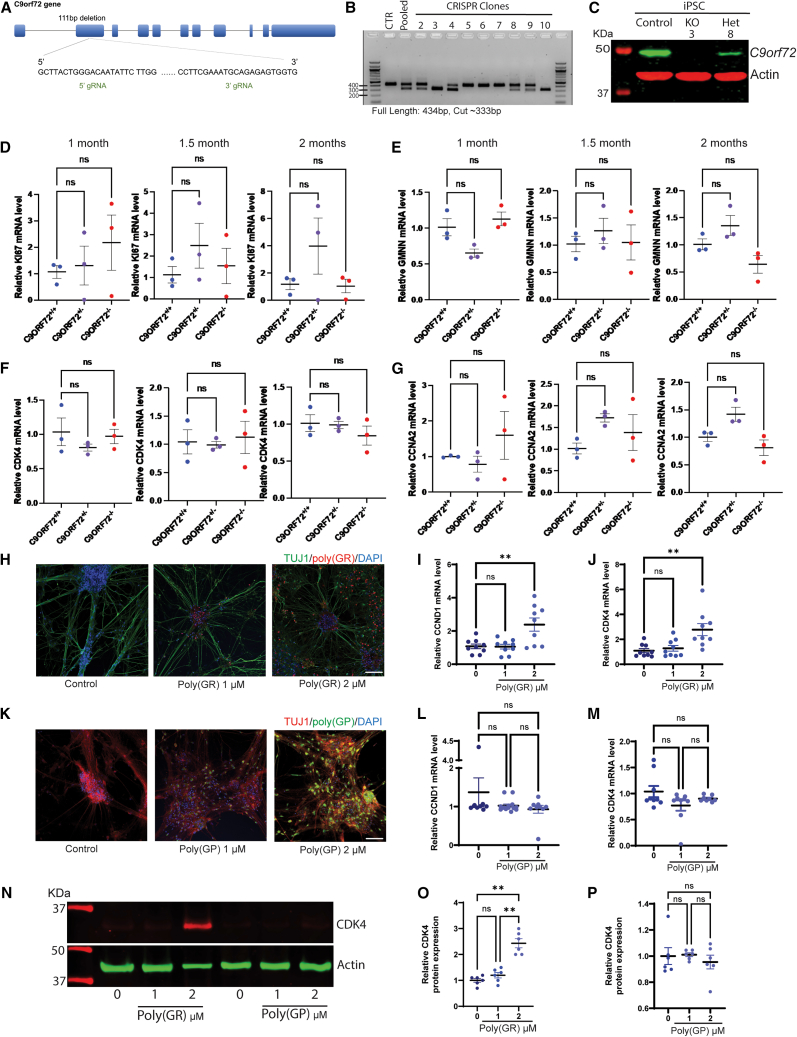 Figure 3
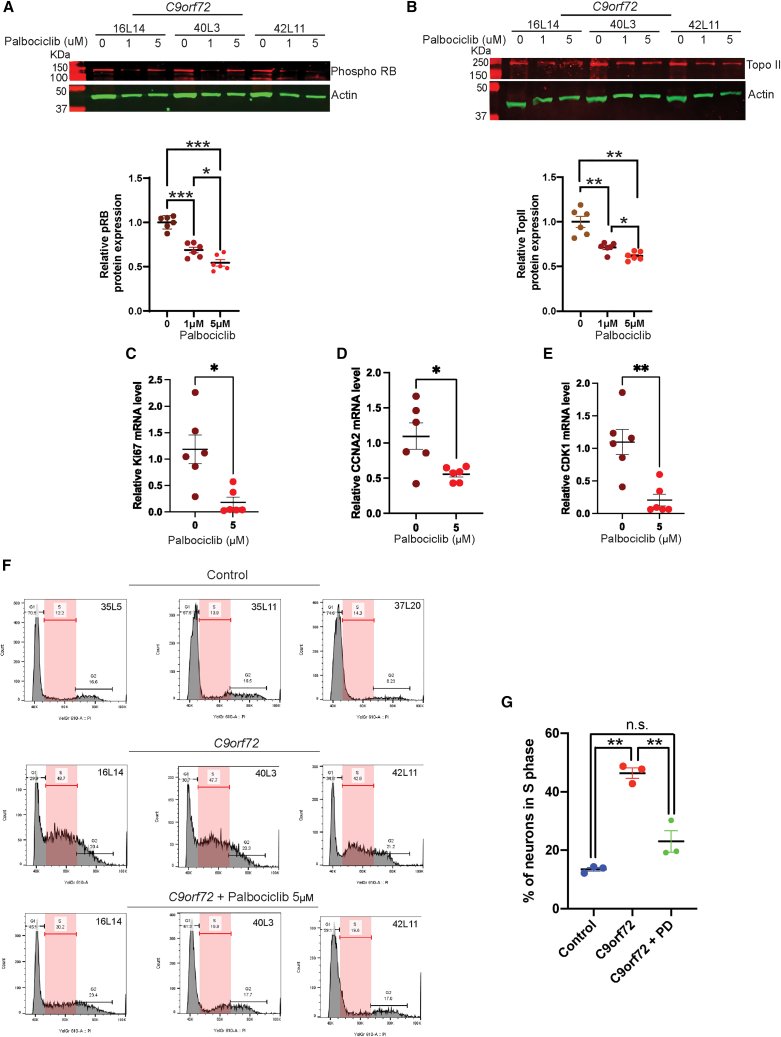 Figure 4
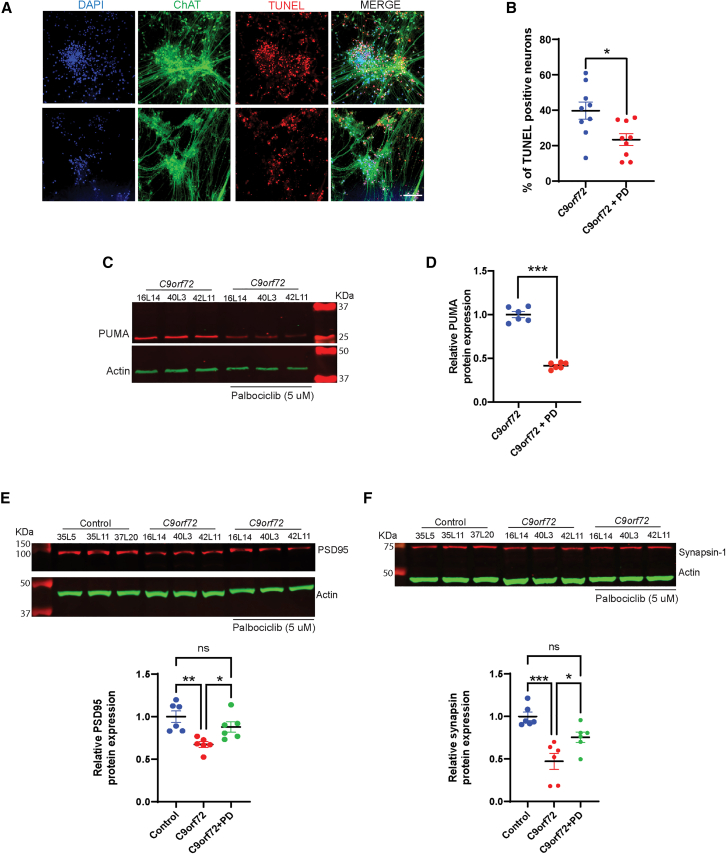 Figure 5
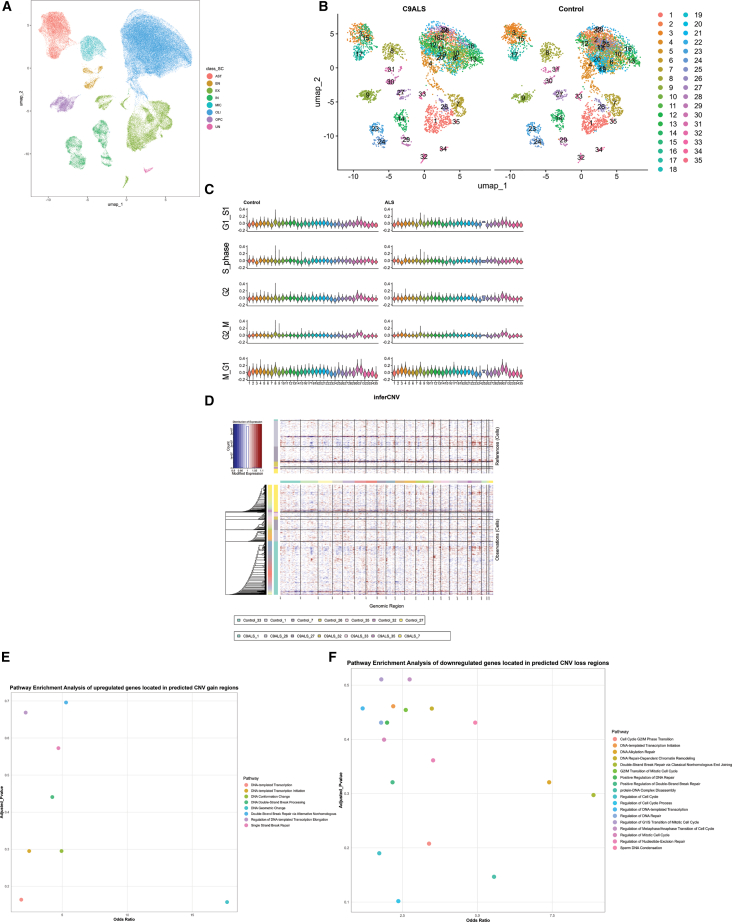 Figure 6
Peer Reviews
No public reviews on file for this paper yet. If you reviewed it on a platform where reviews are public (OpenReview, ICLR, NeurIPS, ICML), you can paste yours below so the community can read it here.
Videos
No videos yet. Explain this paper in a talk, walkthrough, or lecture? Add one.
Taxonomy
TopicsAmyotrophic Lateral Sclerosis Research · Nerve injury and regeneration · Cancer-related Molecular Pathways