Outcomes in Patients With Atrial Fibrillation Stratified by Body Mass Index and Heart Failure Status
Jean Jacques Noubiap, Lisa A. Kaltenbach, Karen Chiswell, Ulrich Flore Nyaga, Mina K. Chung, Jeroen M. Hendriks, Larry R. Jackson, Andrea M. Russo, Annabelle Santos Volgman, Meghan Reading Turchioe, Ohad Ziv, Jonathan P. Piccini, Prashanthan Sanders

TL;DR
This study found that higher BMI is linked to better survival in non-obese patients with atrial fibrillation, but not in those who are already obese.
Contribution
The study reveals a nuanced obesity paradox in atrial fibrillation patients, stratified by heart failure status and BMI categories.
Findings
Higher BMI was associated with lower mortality in non-obese patients with AF, regardless of HF status.
Obese patients with AF did not experience reduced mortality with increasing BMI.
Cardiovascular rehospitalization, thromboembolism, and myocardial infarction risks were not significantly different across BMI categories.
Abstract
An obesity-survival benefit, called the “obesity paradox,” has been variably reported in patients with heart failure (HF) and those with atrial fibrillation (AF), but inconsistencies have been observed. The purpose of this study was to assess how the interaction between body mass index (BMI) and HF status impacts AF-related outcomes. Patients hospitalized for AF in the Get With The Guidelines-Atrial Fibrillation registry from 2013 to 2021 and linked to Medicare claims were included. Adjusted Cox proportional hazards models were used to assess the association between BMI and outcomes, stratified by HF status (no HF, HF with preserved ejection fraction, HF with mid-range ejection fraction, and HF with reduced ejection fraction). The outcomes were mortality, cardiovascular rehospitalization, thromboembolism, and myocardial infarction within 1 year. In total, 21,850 patients (mean age 77…
Genes, proteins, chemicals, diseases, species, mutations and cell lines named across the full text — each resolved to its canonical identifier and authoritative record.
Click any figure to enlarge with its caption.
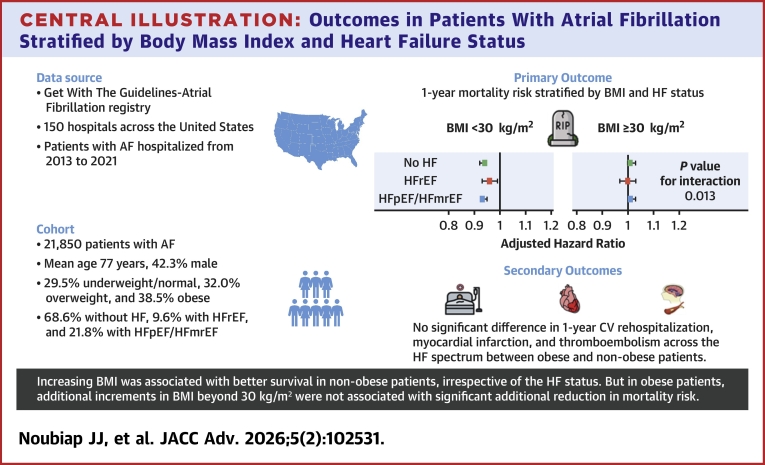 Figure 1
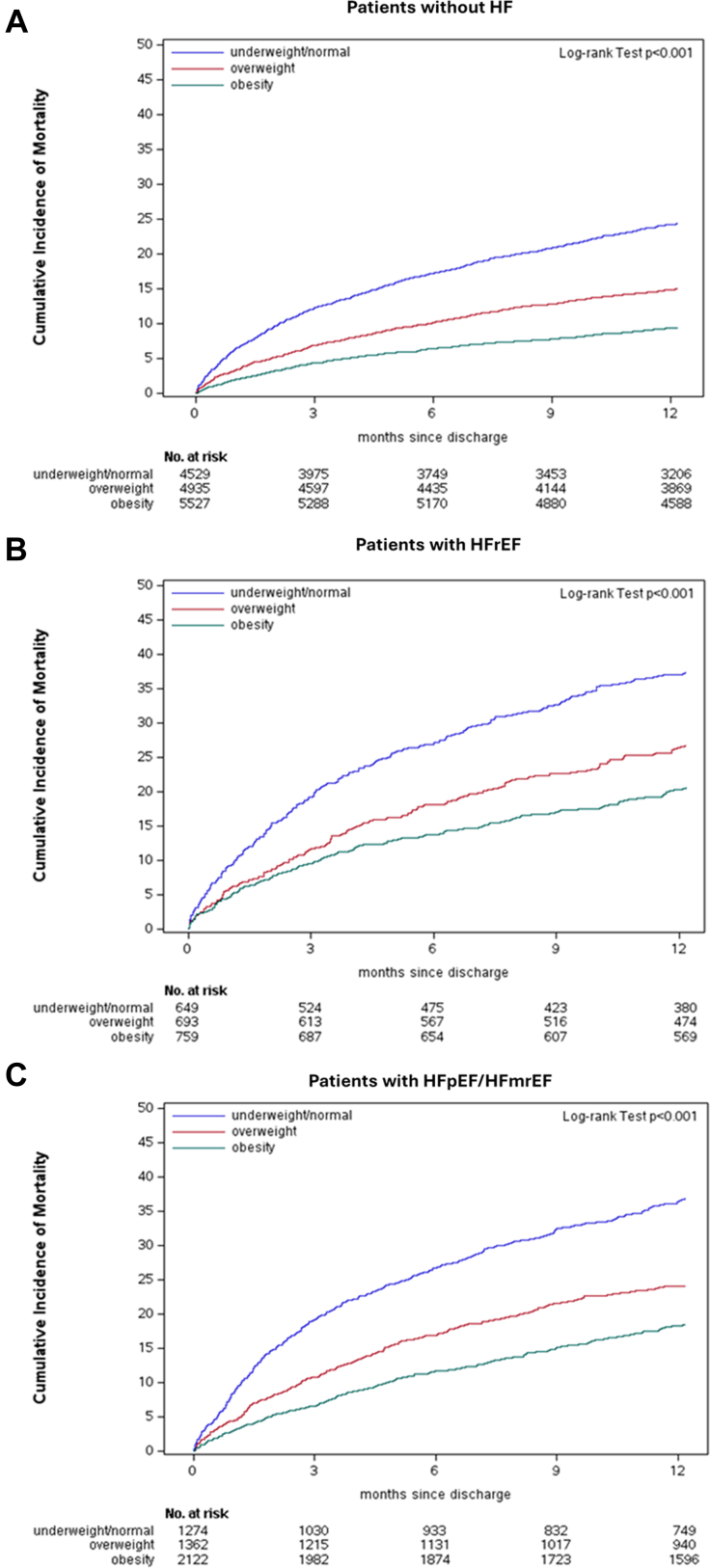 Figure 2
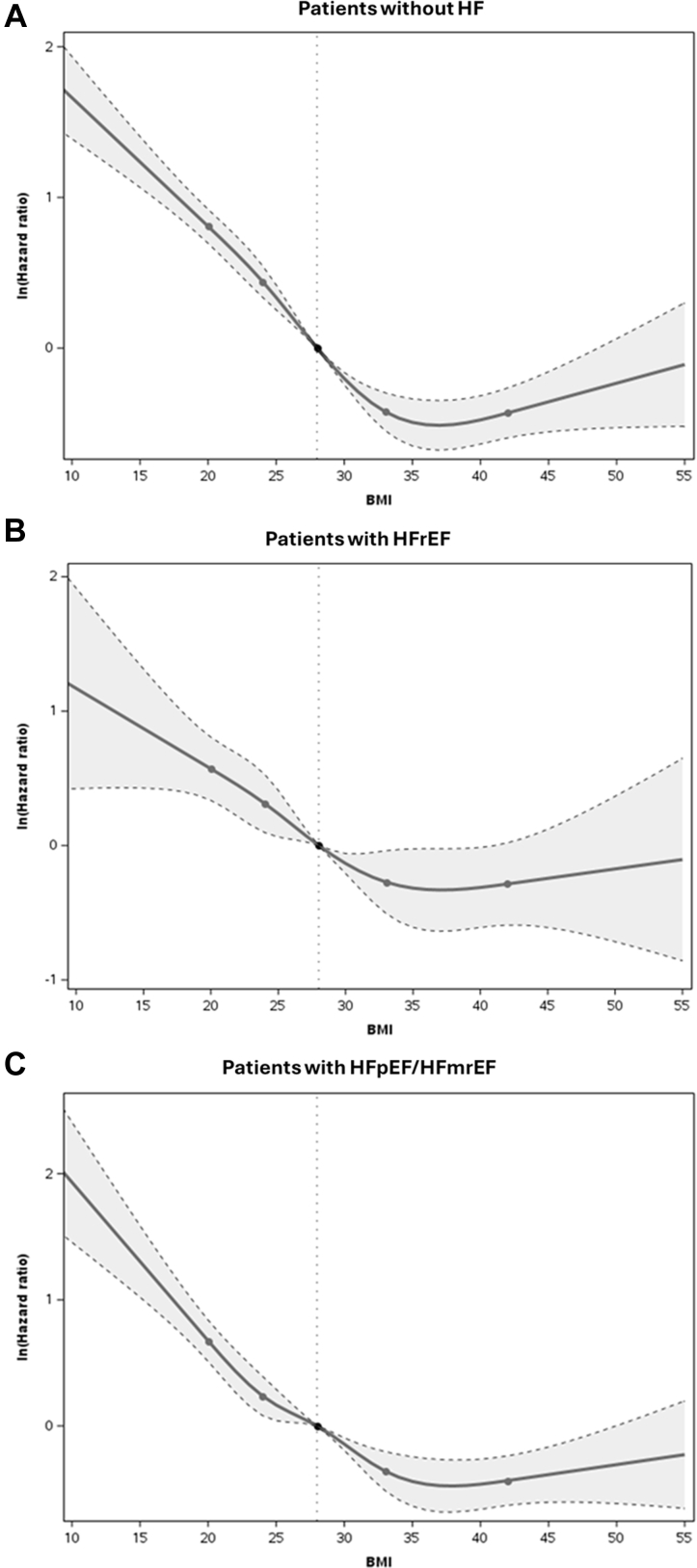 Figure 3
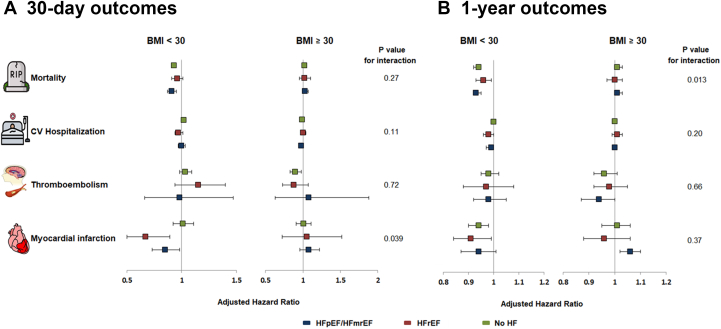 Figure 4
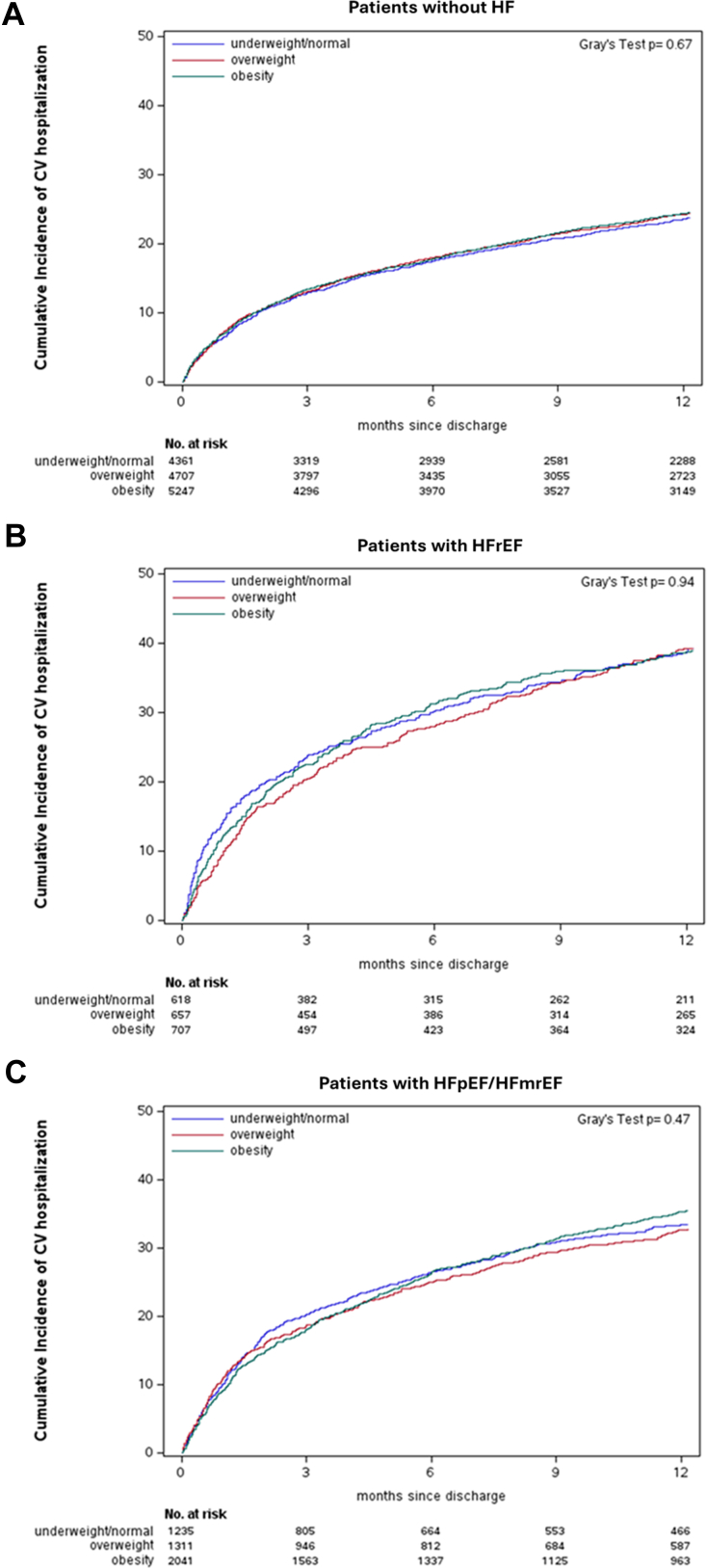 Figure 5
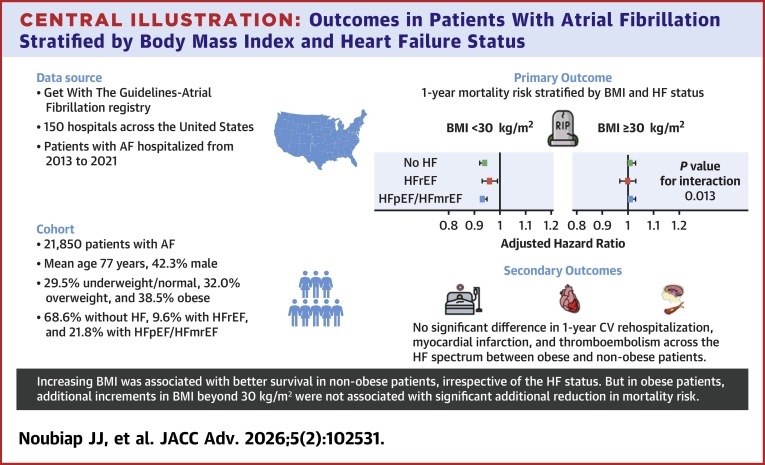 Figure 6
Peer Reviews
No public reviews on file for this paper yet. If you reviewed it on a platform where reviews are public (OpenReview, ICLR, NeurIPS, ICML), you can paste yours below so the community can read it here.
Videos
No videos yet. Explain this paper in a talk, walkthrough, or lecture? Add one.
Taxonomy
TopicsCardiovascular Function and Risk Factors · Atrial Fibrillation Management and Outcomes · Cardiovascular Disease and Adiposity