A reversible feedback mechanism regulating mitochondrial heme synthesis
Iva Chitrakar, Alexis B. Roberson, Pedro H. Ayres-Galhardo, Breann L. Brown

TL;DR
The paper explains how heme, a crucial molecule, inhibits its own production by binding to an enzyme in mitochondria, providing new insights into heme regulation.
Contribution
The study identifies a reversible feedback mechanism where heme inhibits its own synthesis by binding to ALAS2 in mitochondria.
Findings
Heme binds mature human ALAS2 with high affinity, acting as a reversible mixed inhibitor.
Structural modeling suggests heme binding locks ALAS2 in an inactive conformation.
This mechanism reveals spatial regulation of ALAS2 and heme cofactor maturation.
Abstract
Proper heme biosynthesis is essential for numerous cellular functions across nearly all life forms. In humans, dysregulated heme metabolism is linked to multiple blood diseases, neurodegeneration, cardiovascular disease, and metabolic disorders. Erythroid heme production begins with the rate-limiting enzyme aminolevulinic acid synthase 2 (ALAS2) in the mitochondrion. Although prior studies discuss the regulation of ALAS2 in the cytoplasm, its modulation as a mature mitochondrial matrix enzyme remains poorly understood. We report that heme binds mature human ALAS2 with high affinity, acting as a reversible mixed inhibitor that reduces enzymatic activity. Structural modeling supports the hypothesis that two flexible regions of ALAS2 interact with heme, locking the enzyme in an inactive conformation and occluding the active site. Our work reveals a negative feedback mechanism for heme…
Genes, proteins, chemicals, diseases, species, mutations and cell lines named across the full text — each resolved to its canonical identifier and authoritative record.
Click any figure to enlarge with its caption.
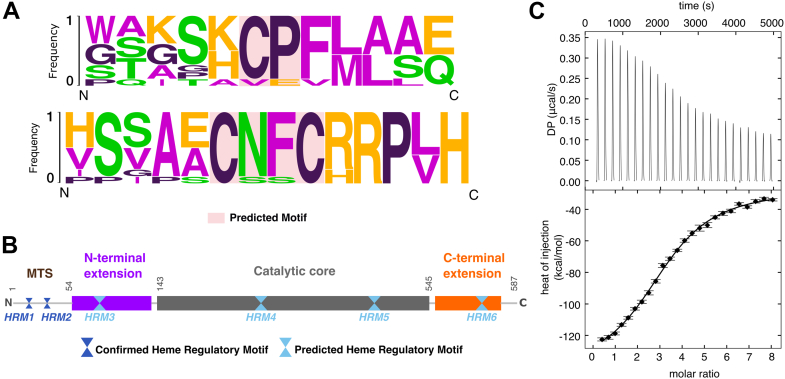 Figure 1
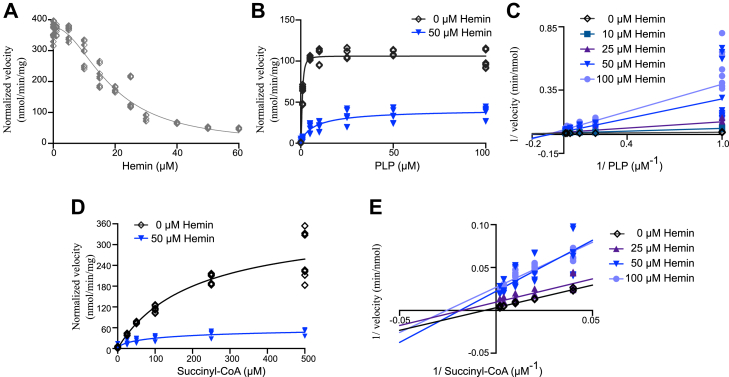 Figure 2
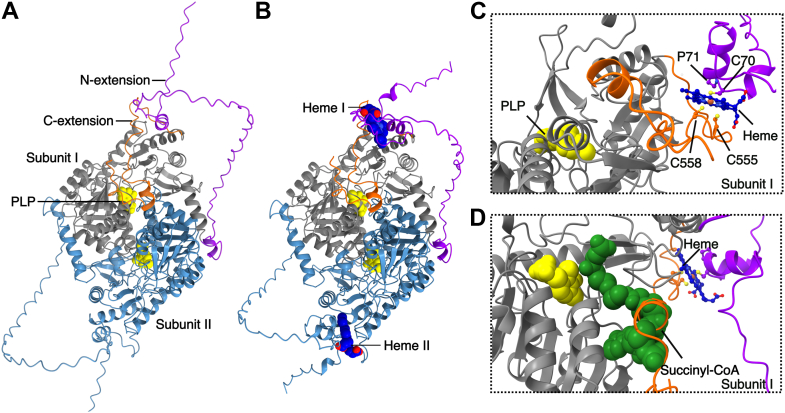 Figure 3
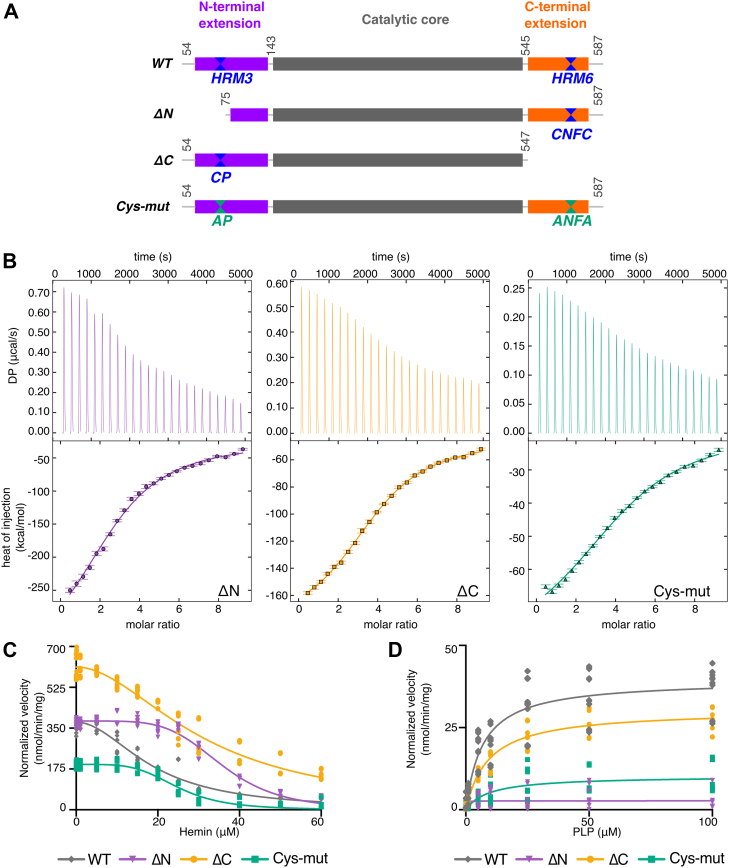 Figure 4
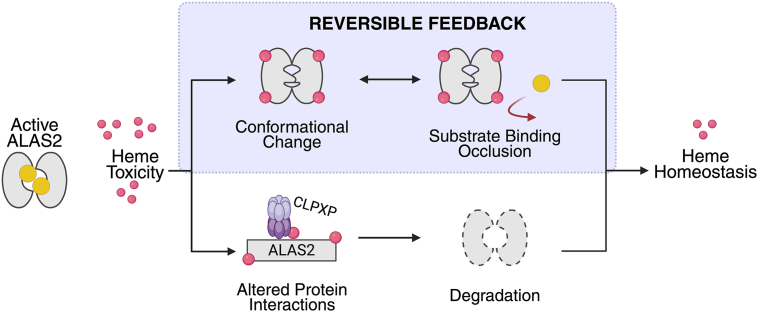 Figure 5
Peer Reviews
No public reviews on file for this paper yet. If you reviewed it on a platform where reviews are public (OpenReview, ICLR, NeurIPS, ICML), you can paste yours below so the community can read it here.
Videos
No videos yet. Explain this paper in a talk, walkthrough, or lecture? Add one.
Taxonomy
TopicsPorphyrin Metabolism and Disorders · Biochemical and Molecular Research · Heme Oxygenase-1 and Carbon Monoxide