Cognitive behavioral therapy for insomnia for individuals with multiple sclerosis (CALM): A randomized control trial protocol
Catherine F. Siengsukon, Jade Robichaud, Eryen Nelson, Allison Glaser, Garrett R. Baber, Matthew K.P. Gratton, Anna Zanotto, Milind A. Phadnis, Sharon Lynch

TL;DR
This study tests if cognitive behavioral therapy for insomnia improves sleep and quality of life in people with multiple sclerosis.
Contribution
It evaluates the efficacy of telehealth-delivered CBT-I for insomnia in individuals with MS.
Findings
CBT-I is a non-pharmacological, cost-effective treatment for insomnia in MS patients.
Improving sleep in MS may reduce disability and enhance quality of life and employment rates.
Abstract
Insomnia is a common problem for individuals with multiple sclerosis (MS) occurring in at least 40 % of individuals with MS. Sleep disturbances in people with MS have been associated with a reduction in cognitive performance, physical function, psychological well-being, quality of life, and occupational function, as well as increased prevalence of fatigue, pain, depression, and anxiety. Cognitive behavioral therapy for insomnia (CBT-I), a multicomponent treatment strategy, addresses thoughts and behaviors that can negatively impact sleep and is the recommended treatment for chronic insomnia. CBT-I is shown to be more effective than pharmacological interventions long-term for treating insomnia with improvements remaining up to 10 years following CBT-I. However, there are limited studies that have examined the effect of CBT-I on sleep outcomes and comorbid symptoms in people with MS. The…
Genes, proteins, chemicals, diseases, species, mutations and cell lines named across the full text — each resolved to its canonical identifier and authoritative record.
Click any figure to enlarge with its caption.
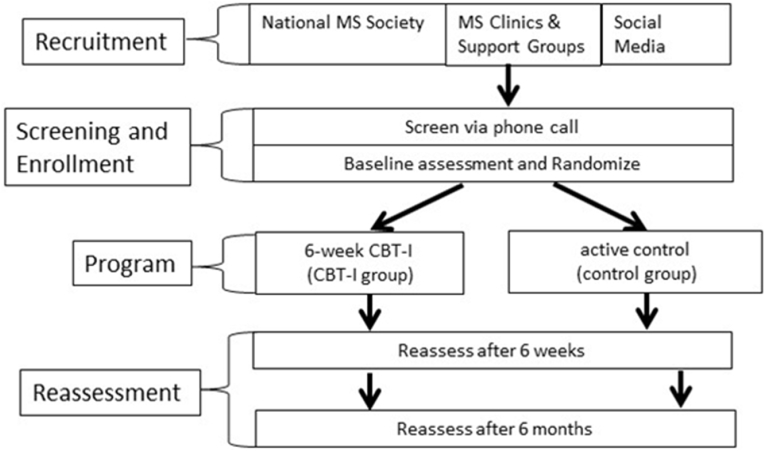 Figure 1
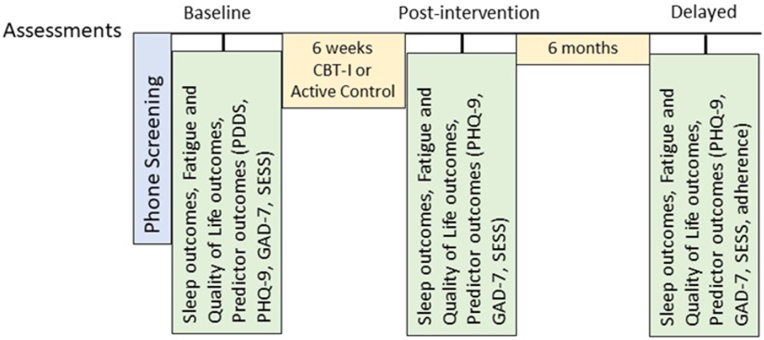 Figure 2
Peer Reviews
No public reviews on file for this paper yet. If you reviewed it on a platform where reviews are public (OpenReview, ICLR, NeurIPS, ICML), you can paste yours below so the community can read it here.
Videos
No videos yet. Explain this paper in a talk, walkthrough, or lecture? Add one.
Taxonomy
TopicsMultiple Sclerosis Research Studies · Sleep and related disorders · Digital Mental Health Interventions