How Does Less Unethical Behavior Happen? The Moderating Role of Pay Satisfaction on the Disappearance of the Moral Slippery Slope Effect
Ying Wu, Binghai Sun, Liting Fan, Sisi Tan, Honglei Ou, Yishan Lin

TL;DR
This study explores how pay satisfaction can prevent unethical behavior from escalating over time in groups or organizations.
Contribution
The study identifies accumulative pay and pay satisfaction as key factors in preventing the moral slippery slope effect.
Findings
Accumulative pay is necessary for the disappearance of the moral slippery slope effect.
High pay satisfaction leads to the disappearance of the moral slippery slope effect under accumulative pay.
Low pay satisfaction allows the moral slippery slope effect to persist even with accumulative pay.
Abstract
The moral slippery slope effect refers to the phenomenon where, within groups or organizations, the incidence of individual unethical behaviors increases and escalates over time. To systematically identify factors that drive the disappearance of this effect, three studies were conducted using a 20‐round spontaneous deception task. Study 1 compared the trend of the moral slippery slope effect under accumulative versus non‐accumulative pay conditions. Results indicated that the moral slippery slope effect disappeared under accumulative pay but persisted under non‐accumulative pay. Studies 2 and 3 further examined the moderating role of pay satisfaction in the moral slippery slope effect, specifically under accumulative pay. Results revealed that pay satisfaction significantly moderated the relationship between experimental rounds and the moral slippery slope effect: the effect persisted…
Genes, proteins, chemicals, diseases, species, mutations and cell lines named across the full text — each resolved to its canonical identifier and authoritative record.
Click any figure to enlarge with its caption.
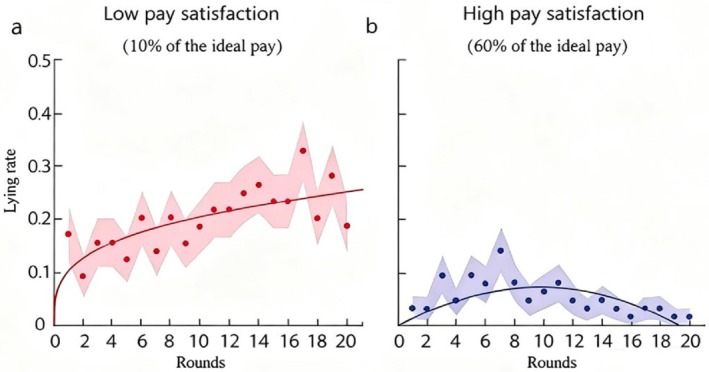 Figure 1
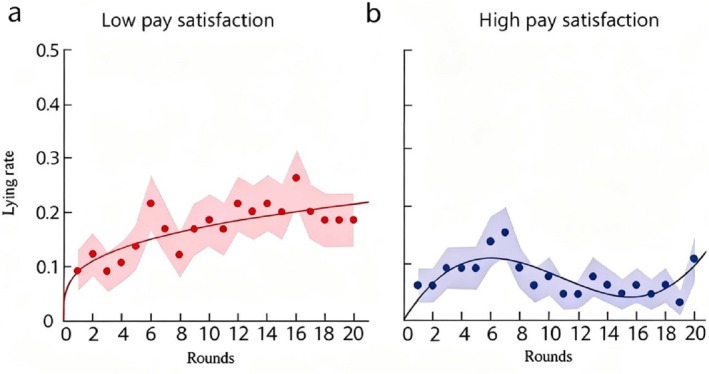 Figure 2
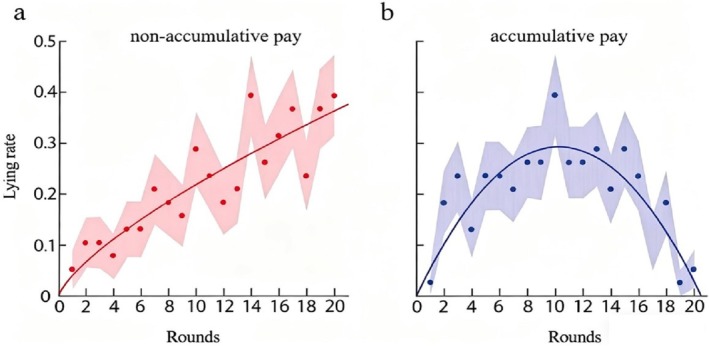 Figure 3
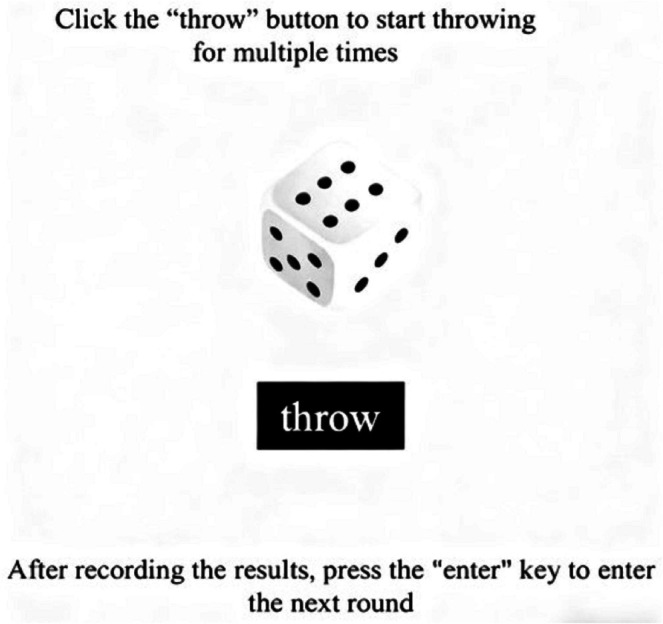 Figure 4
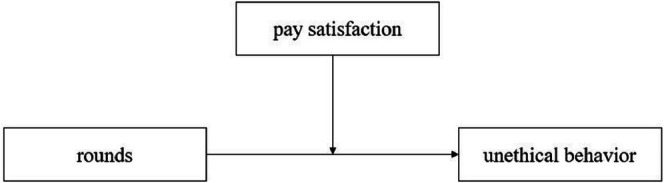 Figure 5
Peer Reviews
No public reviews on file for this paper yet. If you reviewed it on a platform where reviews are public (OpenReview, ICLR, NeurIPS, ICML), you can paste yours below so the community can read it here.
Videos
No videos yet. Explain this paper in a talk, walkthrough, or lecture? Add one.
Taxonomy
TopicsEthics in Business and Education · Psychology of Moral and Emotional Judgment · Job Satisfaction and Organizational Behavior