High‐mobility Group Protein 1/ Receptor for Advanced Glycation End Products/ Nuclear Factor‐κB Signalling Pathway Contributes to the Pathogenic Process of Striatal Neuron Impairment in the Rat Model of Parkinson's Disease
Yaofeng Zhu, Zean Du, Liping Sun, Ziyun Huang, Linju Jia, Tao Chen, Xuefeng Zheng, Wanlong Lei

TL;DR
This study shows that the HMGB1/RAGE/NF-κB pathway contributes to striatal neuron damage in a rat model of Parkinson's disease, suggesting it could be a target for treatment.
Contribution
The study identifies the HMGB1/RAGE/NF-κB signaling pathway as a novel contributor to striatal neuron impairment in Parkinson's disease.
Findings
FPS-ZM1 treatment improved learning, memory, and sensorimotor deficits in PD rats.
HMGB1, RAGE, and NF-κB expression increased in the striatum of PD rats but decreased with FPS-ZM1.
FPS-ZM1 reduced the protein and mRNA expression of HMGB1, RAGE, and NF-κB in response to dopamine depletion.
Abstract
High‐mobility group protein 1 (HMGB1) is a ligand known to bind to the receptor for advanced glycation end products (RAGE), and it can activate nuclear factor‐κB (NF‐κB) to mediate cellular damage. RAGE and Parkinson's disease (PD) are closely associated, but it remains unclear whether the HMGB1/RAGE/NF‐κB signaling pathway contributes to the pathophysiology of PD. PD was induced by administration of 6‐hydroxydopamine (6‐OHDA), while RAGE was inhibited using an inhibitor, FPS‐ZM1. The grip strength test and Morris water maze were used to evaluate sensorimotor and memory skills. Then detect the expression levels of RAGE, HMGB1, and NF‐κB in the striatal sample using immunohistochemistry, western blotting, and RT‐qPCR. (1) In PD rats, treatment with FPS‐ZM1 improved learning and memory ability and alleviated sensorimotor deficits. (2) The striatum of PD rats exhibited a significant…
Genes, proteins, chemicals, diseases, species, mutations and cell lines named across the full text — each resolved to its canonical identifier and authoritative record.
Click any figure to enlarge with its caption.
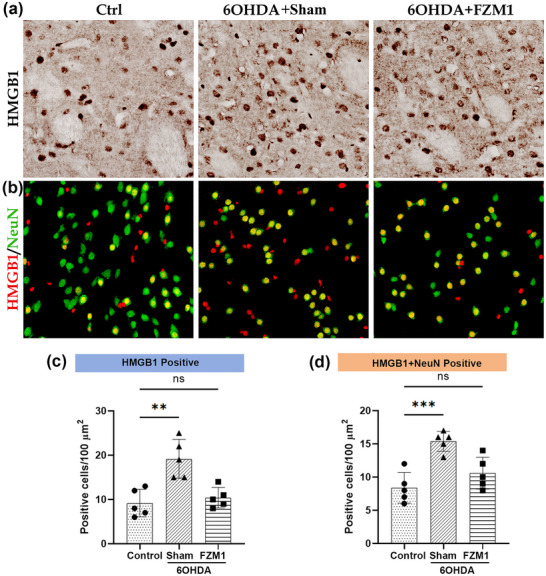 Figure 1
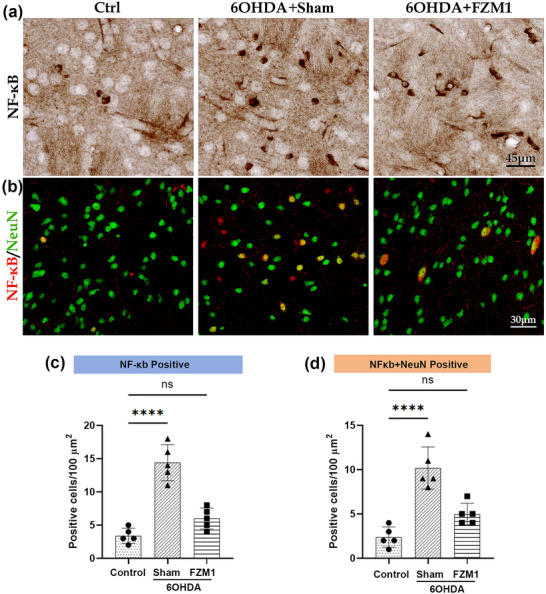 Figure 2
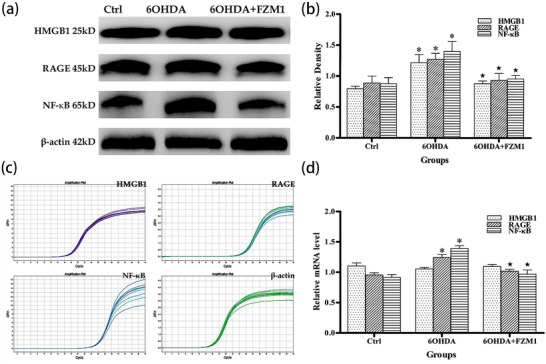 Figure 3
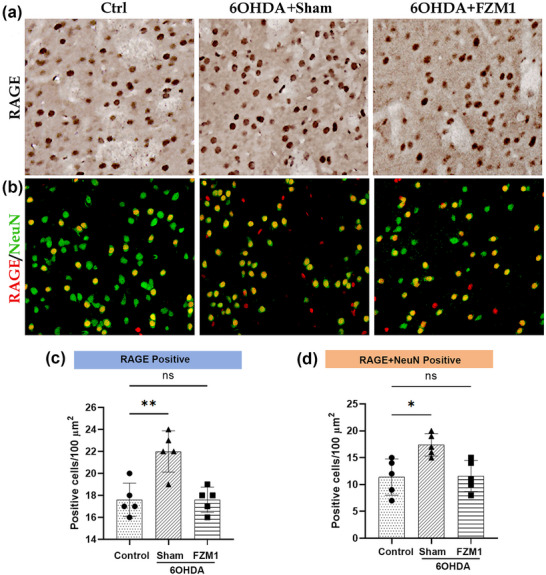 Figure 4
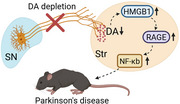 Figure 5
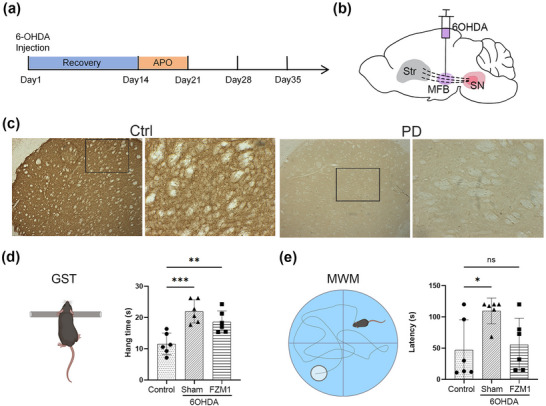 Figure 6
Peer Reviews
No public reviews on file for this paper yet. If you reviewed it on a platform where reviews are public (OpenReview, ICLR, NeurIPS, ICML), you can paste yours below so the community can read it here.
Videos
No videos yet. Explain this paper in a talk, walkthrough, or lecture? Add one.
Taxonomy
TopicsAdvanced Glycation End Products research · Parkinson's Disease Mechanisms and Treatments · Nuclear Receptors and Signaling